
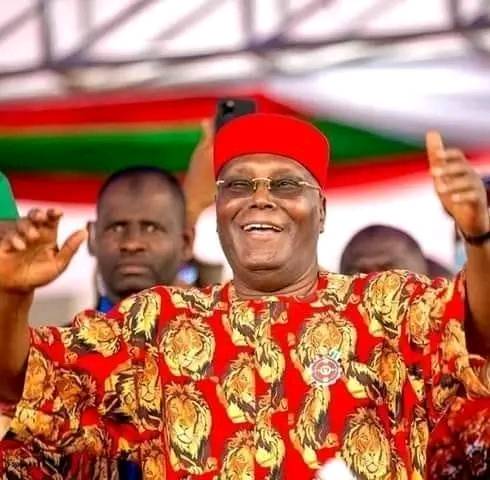
Former Vice President Atiku Abubakar has raised concerns over the recent decision by President Bola Tinubu to increase the Value Added Tax (VAT) from 7.5% to 10%.
Atiku expressed fear that this policy could worsen Nigeria’s already fragile economy and put undue pressure on the average Nigerian.
In a statement released earlier this week, Atiku said the VAT increase would become a “blazing inferno” that could destroy the essence of the Nigerian people.
He warned that the government’s move would exacerbate the cost-of-living crisis, further damaging the country’s economy.
Atiku’s statement comes in response to the Federal Government’s latest economic decisions.
The VAT hike is just one of several controversial policy changes introduced by President Tinubu’s administration.
In addition to the VAT increase, the Nigerian National Petroleum Company Limited (NNPCL) has announced a new hike in the price of Premium Motor Spirit (PMS), also known as petrol.
This price increase has left many Nigerians struggling, as fuel is essential for transportation and electricity generation in many homes and businesses.
Atiku condemned these changes, arguing that they represent a regressive approach to economic management.
“The government is heaping burdens upon the impoverished while ignoring their own excesses,” Atiku said, adding that the administration appears insensitive to the struggles of ordinary Nigerians.
The former vice president’s comments reflect the growing concerns of many Nigerians. Since President Tinubu came to power, there has been a significant rise in taxes, fuel prices, and interest rates.
These increases have affected businesses of all sizes, leading to job losses and shrinking incomes.
The rising cost of goods and services has added to the hardships that many Nigerians face, especially those already living below the poverty line.
Atiku noted that these policies have hurt the manufacturing sector, which has seen its contribution to Nigeria’s Gross Domestic Product (GDP) drop by more than 20% since December 2023, according to the National Bureau of Statistics (NBS).
“It doesn’t take an economist to see that these policies are damaging Nigeria’s future,” Atiku added, stating that the country’s growth potential is being threatened by ill-advised economic decisions.
Atiku also raised concerns about the government’s policies towards agriculture, a vital sector of Nigeria’s economy.
In August, President Tinubu introduced a new policy that allows duty-free importation of key agricultural commodities such as wheat, maize, and paddy.
The decision has angered local farmer groups who argue that it will harm domestic production by allowing foreign competition to undermine local farmers.
Atiku warned that this policy could damage Nigeria’s food security, reduce job opportunities in the agricultural sector, and slow down wealth creation.
“Local farmers cannot compete with cheap imports from Asia, Europe, and America,” Atiku said.
He added that this could force many Nigerian farmers to abandon their farms, which would have long-term consequences for the country’s sustainability and food independence.
Atiku urged President Tinubu and his team to rethink their economic policies.
He called for a shift towards more sustainable solutions that can address Nigeria’s economic challenges without putting additional strain on citizens.
“The government must focus on crafting policies that will revive the economy, not further compound the crisis,” he said.
Many economic experts have echoed similar concerns, noting that while tax increases and fuel price hikes can generate short-term revenue for the government, they often come at a great cost to the wider economy.
**The Broader Context**
The VAT increase comes at a time when Nigeria is grappling with a range of economic challenges.
In the first half of 2023, Nigeria’s inflation rate soared to over 24%, the highest in nearly two decades.
The rising cost of food, transportation, and other essential services has left many families struggling to make ends meet.