
Yahya Sinwar, the leader of Hamas and one of Israel’s most wanted men, has been killed by Israeli forces.
Sinwar, 61, was killed during an intense Israeli ground operation in Rafah, a city in southern Gaza on Wednesday. However, Israeli authorities did not confirm the Hamas leader’s death till Thursday.
Reports say Israeli officials conducted DNA tests to confirm whether Sinwar was among the militants killed in the operation. An anonymous Israeli security official revealed to the press that tests are underway to match DNA from the body found to that of Sinwar.
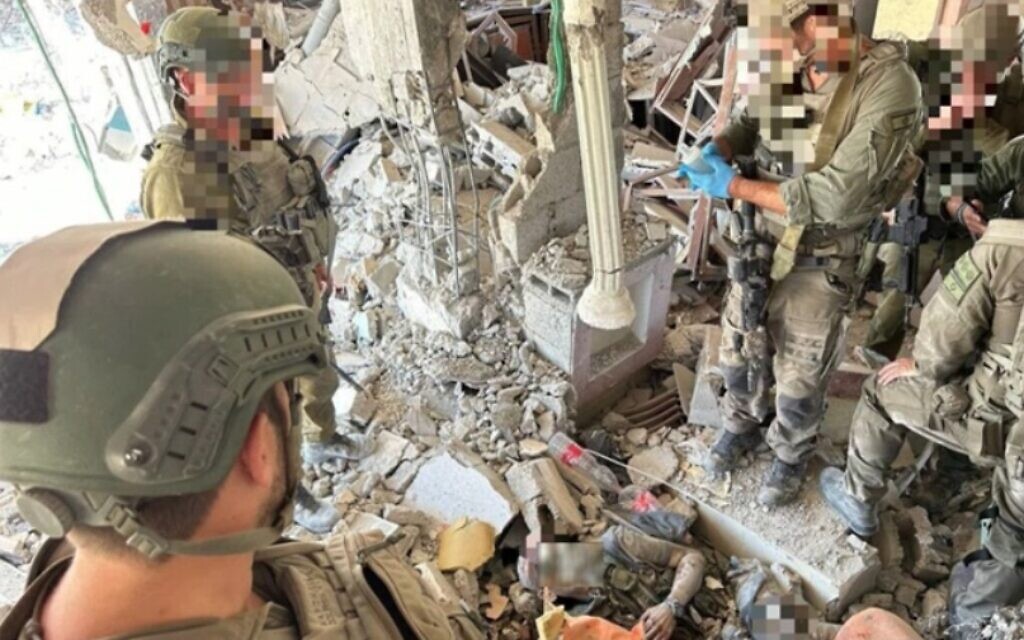
Graphic images circulating online show a body resembling Sinwar, lying in the debris of a targeted building. The body is reported to have suffered fatal injuries. The pictures have sparked widespread speculation about the Hamas leader’s fate. While some sources suggest Sinwar may have been killed, officials are cautious and awaiting the results of the DNA tests.
Sinwar has long been a target for Israel due to his role in orchestrating attacks on Israeli civilians. He is particularly infamous for his involvement in the October 7, 2023, Hamas assault, which led to the deaths of over 1,200 Israeli citizens and saw more than 250 people taken hostage into Gaza.
Israel’s Defence Minister Yoav Gallant made a strong statement regarding the ongoing military operations aimed at eliminating key Hamas figures. Quoting the Torah, he said, “You will pursue your enemies, and they will fall before you by the sword.” This quote, taken from the book of Leviticus, underscores Israel’s determination to bring those responsible for the attacks on its citizens to justice.
Gallant’s statement reflects Israel’s uncompromising stance on fighting Hamas, particularly in the wake of the devastating October 2023 attacks. Sinwar, known for his hardline military approach, has been a central figure in Hamas’ leadership and a key figure in the violent conflict between Hamas and Israel.
Yahya Sinwar was a prominent leader within Hamas, the Palestinian Islamist movement that has governed the Gaza Strip since 2007. He was released from an Israeli prison in 2011 as part of a high-profile prisoner swap. His release became a turning point in his rise to power within Hamas, where he was seen as a hardliner, favoring military confrontation with Israel over diplomatic efforts.
Born in 1962 in Khan Younis, Gaza, Sinwar quickly rose through the ranks of Hamas. He became notorious for his staunch opposition to peace talks and his insistence on using violence to resist Israeli occupation. In 2017, he became the de facto ruler of Hamas in Gaza and played a pivotal role in its military operations.
Sinwar’s leadership has been marked by increasing tensions with Israel. His involvement in planning and executing attacks on Israeli civilians has made him a prime target for Israeli forces. Over the years, he has been accused of masterminding several deadly assaults, including the 2023 attack that shocked the world.
The Israeli military has been conducting a series of operations in Gaza since the October 2023 attacks. Their goal is to dismantle Hamas’ infrastructure and neutralize its leadership. Sinwar, being one of the most influential figures within the organization, has been a primary target.
Israeli forces launched an operation in Rafah, a city in southern Gaza, where they engaged in heavy combat with Hamas militants. During this encounter, the Israeli military reported killing three fighters, and Sinwar is believed to have been among them. The strike reportedly occurred in a building used by Hamas as a base of operations.
Sinwar’s death is likely a significant blow to Hamas. Sinwar has been the face of the organization’s military wing, and his removal could weaken its command structure.
Sinwar’s hardline approach has made him both a hero to some Palestinians and a villain to Israel and its allies. His death would likely be seen as a major victory for Israel, which has been intensifying its military efforts to dismantle Hamas.
However, Sinwar’s death could also lead to further instability in Gaza. The power vacuum left by his absence could result in internal struggles within Hamas or even a shift in leadership. Some analysts fear that if Hamas’ leadership becomes more fragmented, it could lead to more radical elements gaining influence within the organization.
The possible death of Yahya Sinwar is seen as a turning point in the ongoing conflict between Israel and Hamas. It signals Israel’s continued determination to hunt down the leaders responsible for attacks on its citizens. Israeli security officials remain vigilant in their efforts to dismantle Hamas’ leadership, regardless of how long it takes.