
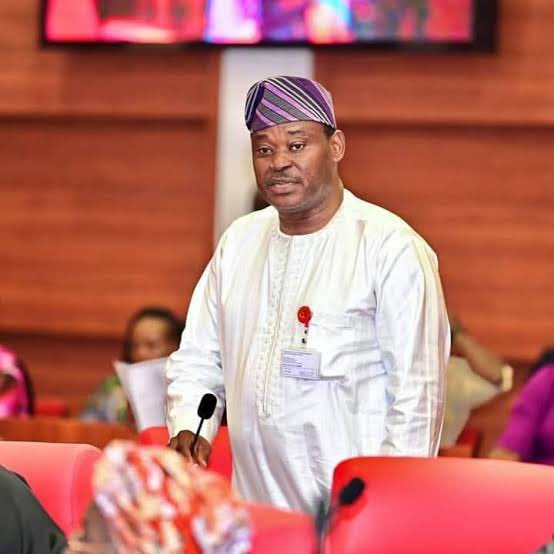
Senator Jimoh Ibrahim has defended the Federal Government’s recent decision to borrow $2.2 billion, describing it as a “minor expense” for a nation of over 250 million people.
Speaking on Channels Television on Tuesday, the lawmaker from Ondo South Senatorial District referred to the proposed loan as “lunch money,” emphasizing its insignificance in the broader context of Nigeria’s economic challenges.
“$2 billion for 250 million people to finance a deficit budget for a year ending in less than 60 days? It’s a good effort from the government. We need to encourage the government to do more,” Senator Ibrahim said.
Borrowing for Growth
The senator argued that borrowing is a vital tool for economic development. He cited the example of the Ajaokuta Steel Company as a potential area where borrowed funds could yield significant returns.
“Do you borrow to keep in your bedroom?” he asked rhetorically. “You are borrowing for development. If you fund Ajaokuta Steel, imagine how many jobs it will create, how many taxes and VAT revenues will come to the government.”
Ibrahim further claimed that Nigeria’s debt servicing rate remains reasonable when compared to global standards, urging citizens to focus on the potential economic benefits rather than the debt itself.
Comparisons to Global Debt
In defense of Nigeria’s borrowing strategy, the senator drew parallels with the United States, whose debt has surpassed $45 trillion. “America owes no one because they print dollars, the global currency,” he noted.
However, Nigeria’s situation is markedly different. Recent reports indicate that the country spent N7.4 trillion on debt servicing in just eight months, double the amount allocated to capital expenditures within the same period.
Security and Accountability
Ibrahim also lauded President Bola Tinubu’s administration for its efforts in curbing insecurity, particularly the activities of Boko Haram.
“Do you still see Boko Haram coming to Abuja as during previous administrations?” he asked, claiming the government has redirected resources effectively to tackle national threats.
On the issue of corruption, the senator suggested drastic measures, stating, “If N100 billion is allocated and anyone who mismanages it faces public execution, no one will steal again.”
He praised Tinubu’s financial integrity, asserting, “One thing about Tinubu is that he will not steal Nigeria’s money. He was already comfortable before becoming president.”
Mounting Concerns
Despite Ibrahim’s optimism, the rising cost of Nigeria’s debt servicing has raised alarm bells. In 2023, the government’s debt servicing expenses overshadowed investments in critical infrastructure, sparking concerns about fiscal sustainability.
Critics argue that while borrowing is necessary, the funds must be used transparently and effectively to ensure tangible development. A recent report by SaharaReporters revealed the imbalance between debt servicing (N7.4 trillion) and capital expenditure (N3.6 trillion), prompting calls for greater accountability.