
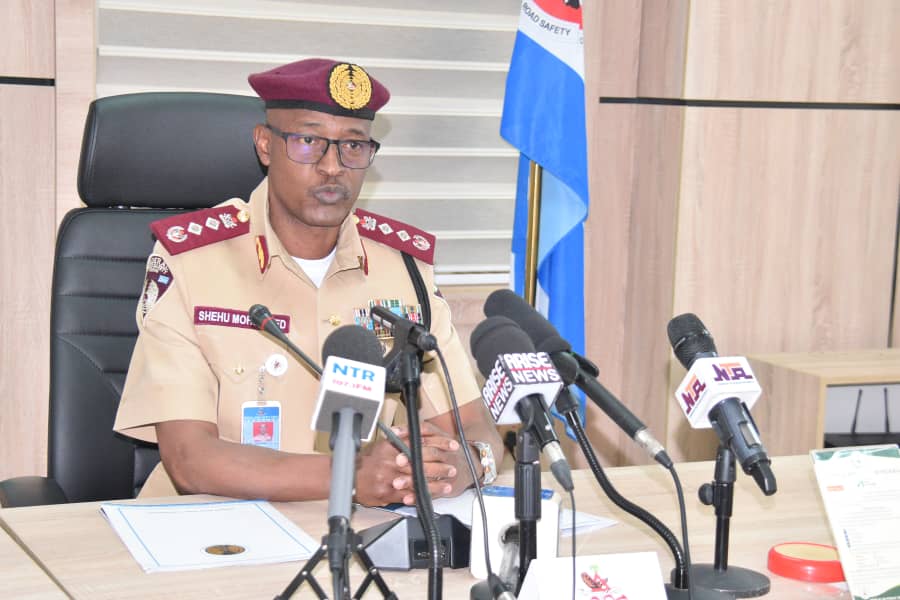
The Federal Road Safety Corps (FRSC) is cracking down on reckless drivers and fleet operators across Nigeria.
Henceforth, any driver or fleet operator involved in fatal road crashes will lose their licences and face prosecution.
This bold warning came from the FRSC Corps Marshal, Malam Shehu Mohammed, on Thursday in Abuja.
He delivered the message during the annual Safety Manager Retreat, themed “Driver Management: Enhancing Safety Through Technology.”
The retreat brought together over 2,000 safety managers from across the country.
It aims to promote best practices in fleet management and improve road safety in Nigeria’s fast-growing transport sector.
“Safety is a Shared Responsibility” — FRSC Boss Warns
In his speech, Mohammed emphasized the urgent need to hold drivers and fleet operators accountable.
“We must prioritize driver management to enhance road safety,” he said.
He called on all fleet operators to take safety standards seriously.
“Safety is a shared responsibility,” he added. “It is not just for the government but for everyone.”
Mohammed revealed that several gaps had been identified in fleet management practices across Nigeria.
He warned that stricter measures would now be enforced to ensure compliance with the Road Transport Safety Standardization Scheme (RTSSS).
New Safety Measures Unveiled
The FRSC boss outlined key measures that would take effect immediately.
“Non-compliant fleet operators will face prosecution,” Mohammed declared.
Fleet operators who deny certification teams access to their premises will also be prosecuted.
“Those who fail to meet certification standards twice will be suspended from operations,” he added.
Certification stickers will now only be issued to vehicles with functional speed-limiting devices.
The most significant change is that any driver or fleet operator involved in fatal crashes will be prosecuted.
“We will not tolerate reckless driving that costs lives,” Mohammed warned.
Police and FCCPC Back FRSC’s Tough Stance
The Nigeria Police Force (NPF) has pledged its support for the FRSC’s new strategy.
Inspector-General of Police, Mr. Kayode Egbetokun, assured the public that the police would complement the FRSC’s efforts.
Represented by Assistant Inspector General of Police (AIGP) Benneth Igwe, Egbetokun said the police would help curb crimes and deal with reckless motorists.
“We are committed to effective traffic management,” Igwe stated.
The Federal Competition and Consumer Protection Commission (FCCPC) also urged fleet operators to prioritize passenger rights.
“Passengers deserve value for their money,” said FCCPC representative Mrs. Olubunmi Otti.
She encouraged operators to improve their services and ensure customer satisfaction.
A Wake-Up Call for Fleet Operators
The FRSC’s decision has sent shockwaves through the transport sector.
Fleet operators now face increased scrutiny and accountability for the actions of their drivers.
Malam Shehu Mohammed stressed that safety managers must review their performance and improve fleet management practices.
“This is a wake-up call,” he said. “We must all do better to prevent road crashes.”
He commended operators who have complied with safety standards, noting that their efforts had led to fewer accidents.
“Your commitment to safety reflects in your business success and reduced crashes,” Mohammed acknowledged.
Technology as a Tool for Safer Roads
The retreat also focused on the role of technology in improving road safety.
Fleet operators were urged to adopt modern tools and practices to monitor driver behavior and vehicle performance.
Mohammed highlighted that technology could help enforce speed limits and reduce accidents.
“Speed-limiting devices are crucial for safety,” he said.
He encouraged operators to invest in systems that enhance road safety and protect lives.
“Lives Must Be Saved” — FRSC’s Final Word
In his closing remarks, Mohammed reminded the audience that road safety is about saving lives.
“We cannot afford to lose more lives to avoidable crashes,” he said.
He urged all stakeholders to cooperate and follow the new measures.
“Together, we can make Nigerian roads safer for everyone,” Mohammed concluded.