
A key activist group, the Centre for Anti-Corruption and Open Leadership (CACOL) and the Campaign for Democracy and Human Rights (CDHR) will not be participating in a planned protest scheduled for Tuesday, a move linked to the detention of human rights lawyer, Dele Farotimi.
Debo Adeniran, the chairman of both CACOL and CDHR, made this announcement on Monday while speaking to Daily Independent in Lagos. He revealed that both organizations would not be part of the planned protest over Farotimi’s arrest, which has sparked heated debate across the nation.
According to Adeniran, protests organized by his groups are generally only focused on national issues that have significant implications and have been overlooked by authorities. He emphasized that their decision was not because they were indifferent to Farotimi’s situation, but rather due to the nature of the issues that their organizations typically champion.
“Street protests are supposed to be for issues of national interest that are being ignored by the authorities,” Adeniran explained. “We have always believed that protests should be about matters that affect the general public on a large scale, and not just isolated incidents.”
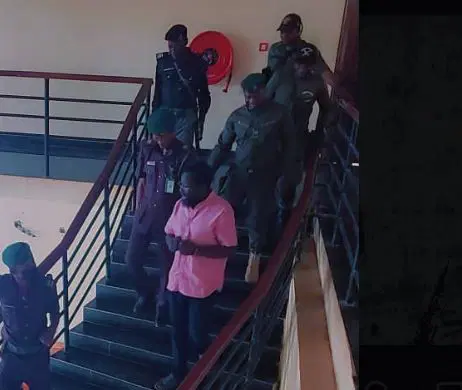
The situation surrounding Dele Farotimi began when he was detained by security forces. His arrest followed a public dispute with prominent Nigerian lawyer, Chief Afe Babalola, over accusations of criminal defamation. Farotimi’s supporters have claimed that his detention was both unnecessary and politically motivated.
Adeniran, while acknowledging the importance of the issue, questioned the circumstances surrounding Farotimi’s arrest. He pointed out that there was no prior evidence that Farotimi had refused to honor an invitation to appear before authorities. This, he said, made the detention seem excessive.
“The detention was actually unnecessary because there is no evidence of prior invitation that he refused or declined to honour,” Adeniran remarked. “This raises serious concerns about the fairness of the process.”
Despite these concerns, Adeniran made it clear that his groups would not lend their support to the protest scheduled for Tuesday. He stated that while the case of Farotimi was important, it did not meet the criteria that his organizations use when deciding which issues to support publicly.
“It’s important to understand that we are not indifferent to the matter. We believe in justice and fairness. But we must remain focused on issues that have a larger national impact,” he continued. “The situation with Farotimi should be addressed through the proper legal channels.”
Adeniran also emphasized that if the matter proceeds to trial, it should be conducted in an open, transparent, and humane manner. Farotimi, like any citizen, should be entitled to a fair trial, he insisted. “Since it is criminal defamation, his trial should be open, transparent, fair, and humane,” he said.
The activist’s remarks are significant in light of the ongoing public interest in Farotimi’s detention, as many Nigerians have called for his immediate release, citing concerns about the state’s handling of the case. Farotimi’s supporters argue that his detention was an abuse of power by authorities who seek to silence dissent.
While many have rallied around Farotimi, others have criticized his actions, particularly in light of the ongoing legal dispute with Chief Afe Babalola. Some have expressed concern that Farotimi’s comments may have gone too far, while others are convinced that his arrest is politically motivated.
The arrest and subsequent legal proceedings have drawn widespread attention to the broader issues of free speech, human rights, and the rule of law in Nigeria.
Many civil society organizations and activists have condemned the way Farotimi has been treated, but groups like CACOL and CDHR have remained cautious about publicly supporting street protests. Adeniran’s decision reflects his belief that activism should be carefully measured and focused on broader societal issues.
“This is not the kind of issue we would normally mobilize for,” Adeniran explained. “We need to focus our energy on addressing systemic problems in the country, such as corruption, inequality, and human rights violations on a national scale.”
Farotimi’s supporters, however, have expressed frustration over the lack of immediate action and are planning to go ahead with the protest on Tuesday, despite the absence of major activist groups like CACOL and CDHR.
As the debate over Farotimi’s arrest continues to unfold, questions about the limits of free speech, the power of the state, and the role of civil society in holding those in power accountable remain central to the conversation.
Adeniran’s comments have added a new layer of complexity to the ongoing discussions, with many wondering if the decision to stay out of the protest reflects a strategic choice or a belief that the issue does not warrant the kind of public mobilization that some groups are calling for.
The protest is still set to take place on Tuesday, but with the absence of support from key organisations, its impact may be less than initially anticipated. What remains clear, however, is that the controversy surrounding Farotimi’s detention is far from over, and it will likely continue to spark debates across the country.