
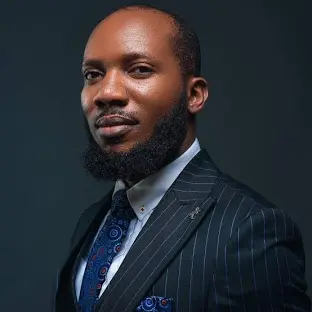
Inibehe Effiong, a prominent Nigerian human rights lawyer, has advised renowned legal icon Aare Afe Babalola not to let his ongoing defamation case against activist Dele Farotimi define his long and distinguished career.
Effiong made the comments during a Sunday appearance on Inside Sources with Laolu Akande, a popular socio-political programme on Channels Television.
He emphasized that Babalola, at over 90 years old, should reflect on his legacy before allowing the case to overshadow his years of contributions to Nigeria’s legal system.
“Afe Babalola is an institution in this country,” Effiong said. “He is a father of senior advocates. I don’t think there is any lawyer today who is older or more senior than him.”
Effiong went on to suggest that at Babalola’s age, wisdom and a sense of history should guide his actions. “I would have thought, and I say this with all sense of responsibility, that at this stage in his life, he would be mindful of his legacy,” he said.
The lawyer acknowledged Babalola’s status but warned that the case against Farotimi could harm his legacy. “I don’t want this to define him. This case should not be his legacy.”
Babalola, who has served as a Senior Advocate of Nigeria (SAN) for decades, is known for his significant influence in the country’s legal and educational fields. His law firm, Afe Babalola & Co., has handled high-profile cases over the years.
However, his legal battle with Farotimi is generating a different kind of attention. Last week, Farotimi, a lawyer and author, was arrested by the police in Lagos and later transported to Ekiti State for prosecution. Farotimi faces 16 criminal defamation charges after publishing a book titled Nigeria and Its Criminal Justice System, in which he accused Babalola of corruption and manipulating judicial outcomes.
Farotimi has pleaded not guilty to all charges, which include allegations that Babalola used his influence to procure favorable Supreme Court rulings.
Effiong described the charges against Farotimi as minor, stating that even if convicted, the penalties were unlikely to be severe. “Criminal defamation is not a serious offense. It’s not like a felony that would result in years in prison. Maybe one year, two years—it’s not that serious,” he explained.
Despite the relatively light nature of the alleged offense, Effiong expressed concern that Babalola’s pursuit of the case could harm his standing in Nigerian history. He added, “If I reach the age of 80, I will be careful about how I respond to offenses. Not every issue requires the full force of the state to handle.”
Effiong also criticized the Nigerian police for their role in Farotimi’s arrest. He accused them of overstepping their bounds and engaging in harassment. “The police in Nigeria are incapable of reform,” Effiong remarked. “They are not reformable. The police force has been privatized.”
He argued that such actions by the police were part of a broader problem within the Nigerian justice system, suggesting that the force itself contributes to the weakening of the judiciary. “The police are the major culprits in the bastardization of our judicial process,” Effiong said, adding that the police often fail to obey court orders and detain individuals illegally.
Effiong also questioned the timing and motivation behind the charges. He suggested that there was an attempt to silence Farotimi for his outspoken criticism of the Nigerian judiciary. Farotimi’s book, which openly criticizes the country’s justice system, has drawn attention for its scathing critique of corruption in the legal sector.
“It looks like those going after Dele Farotimi are determined to vindicate him,” Effiong remarked. “When someone speaks out against the judiciary in such an acerbic way, the same judiciary should be aware of its own imperfections. It should avoid any action that might seem improper, especially when the accusations are about corruption within the system.”
The human rights lawyer concluded by calling for a more thoughtful approach to the case, one that does not tarnish the reputations of both Babalola and the Nigerian judiciary.
This legal battle has ignited a wider conversation about the state of the justice system in Nigeria. Critics argue that powerful individuals use legal action to silence dissent, particularly when the accusations involve the judiciary or other state institutions. Farotimi’s arrest and trial are now being closely watched, with many questioning the motivations behind the case.
In the meantime, Effiong’s appeal for Babalola to consider the broader implications of his actions has added fuel to the debate. As the case moves forward, both the legal community and the general public will continue to scrutinize the actions of those involved.
The outcome of this case could have lasting effects on the reputations of both Babalola and Farotimi, and perhaps more significantly, on the future of free speech and judicial accountability in Nigeria.
As Effiong put it, “We need to be careful. This case should not define the legacy of someone who has contributed so much to the legal profession.”