
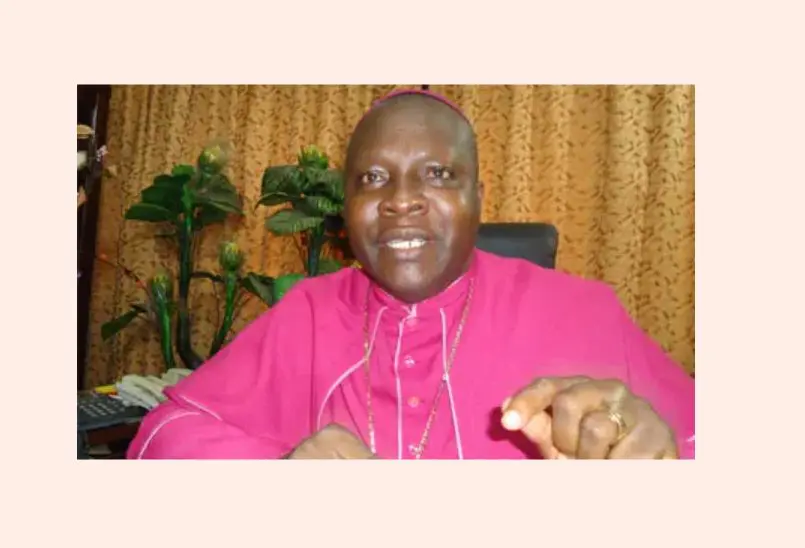
As Lagos State approaches the 2027 gubernatorial elections, a leading religious figure has made a bold call for change.
The Archbishop of the Methodist Church Nigeria (Lagos), Most Rev. Isaac Ayo Olawuyi, has called for a Muslim governor to take the reins of Lagos come 2027.
In his statement, Archbishop Olawuyi argued that it would be 12 years of Christian leadership in the state, which has seen Christian governors since 2015.
He made this call during the 22nd Annual Thanksgiving Service of the Lagos State House of Assembly, an event that also featured the theme “The Voice of Mercy.”
Olawuyi emphasized the importance of religious tolerance, suggesting that after 12 years of Christian leadership, it is time for Lagosians to consider electing a Muslim to lead the state.
“This state has witnessed Christian leadership for over a decade, with both Akinwunmi Ambode and Babajide Sanwo-Olu serving as governors,” Olawuyi said. “Now, it is time to give our Muslim brothers a chance to lead.”
The 2027 elections will mark the end of Sanwo-Olu’s eight-year tenure, while Ambode will be remembered for his one-term governance between 2015 and 2019.
For nearly two decades, from 1999 to 2015, Lagos had Muslim governors, with Bola Ahmed Tinubu and Babatunde Fashola serving consecutive terms.
Archbishop Olawuyi continued, “We must consider the religious balance in our state. We want to pray that when it’s time for the election, it would be a time for us to elect the right person who will govern us effectively.”
His call has sparked conversation about the future of Lagos’ leadership, reflecting the ongoing discussions about the intersection of politics and religion in the state.
The history of Lagos’ political leadership is deeply intertwined with religious affiliations.
While the state has largely seen Christian leadership since 2015, there remains a significant Muslim population that has expressed concerns about being underrepresented in the state’s political scene.
In Lagos, religion often plays a central role in the political discourse. Muslim leaders and groups have occasionally raised concerns about the lack of Muslim governors, especially when the Christian leadership was seen as largely unchallenged.
The tenure of governors like Tinubu and Fashola, both Muslims, was marked by significant infrastructural development in Lagos. However, with the rise of Christian leadership in more recent years, there has been growing talk of balancing power across religious lines.
Olawuyi’s statement advocates for a shift in this balance, calling for a Muslim governor to reflect the diverse population of Lagos and to ensure fairness in leadership.
The Archbishop’s comments are part of a broader call for religious tolerance and unity in Lagos.
Olawuyi spoke of the importance of mercy and unity, urging the people of Lagos to come together in the spirit of understanding.
“We must show mercy to one another,” Olawuyi added. “Mercy is the key to progress. When we allow mercy to guide us, we break all barriers.”
The Archbishop’s message resonates with the spirit of coexistence and peaceful collaboration that has characterized much of Lagos’ social and political life. He believes that choosing a Muslim governor would reflect the diversity and tolerance that the state has long been known for.
The call for religious balance was echoed by other speakers at the Thanksgiving Service, including Lagos State House of Assembly Speaker Mudashiru Obasa.
Obasa, in his speech, acknowledged the difficulties facing Nigeria and Lagos but also emphasized hope and resilience.
“Though the country has faced challenges, especially in the past year, we have faith that our leaders are working tirelessly to overcome them,” Obasa said. “This is a time to show hope and faith in the leadership of Lagos.”
The Speaker, while not directly commenting on the Archbishop’s call, reinforced the importance of unity and support for elected leaders. He called on Lagosians to renew their passion for the state’s development in the coming year.
A central message at the event was the theme of mercy, which Archbishop Olawuyi and Speaker Obasa both emphasized in their speeches.
“Mercy is essential for true leadership,” Olawuyi stated. “It is through mercy that we find reconciliation and the ability to work together despite our differences.”
In these difficult times, the Archbishop’s words remind the people of Lagos of the need for compassion, understanding, and forgiveness, both in politics and in everyday life.
Olawuyi also expressed hope that Lagosians would embrace the spirit of mercy as they prepare for the 2027 elections. He emphasized that while the state has had Christian governors for over a decade, it is important to consider the possibility of Muslim leadership.
Olawuyi’s call for a Muslim governor in 2027 is sure to ignite debate across Lagos.
Some will see it as a necessary step toward balance, while others may view it as a challenge to the Christian dominance in Lagos’ political leadership.
Religious politics in Nigeria can be sensitive, and Olawuyi’s statement is likely to spark discussions about the role of religion in the state’s governance.
Whether Lagos will embrace this proposal remains to be seen, but it is clear that the Archbishop’s words have given rise to a critical conversation about religious representation and tolerance in the state’s leadership.