
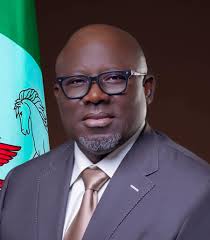
Delta State Governor, Chief Sheriff Oborevwori, has sharply criticized President Bola Ahmed Tinubu’s economic policies, describing them as a “pathway to poverty” for the people of Nigeria.
In a pointed statement, Governor Oborevwori condemned the recent economic measures introduced by the APC-led federal government, especially the removal of the petroleum subsidy and the floating of the Naira.
He accused these policies of worsening hunger, poverty, and unemployment across the country.
The governor argued that while the government claimed the measures would benefit the economy in the long run, the reality has been far worse.
Soaring inflation and a devalued Naira, he said, have overshadowed any potential positive impacts.
Oborevwori’s remarks came after a recent speech by former Deputy Senate President, Senator Ovie Omo-Agege, who had praised the economic strategies of the APC administration.
Omo-Agege had criticized Governor Oborevwori, accusing him of mismanaging Delta State’s finances despite receiving significant federal allocations.
In response, Oborevwori questioned the value of these allocations when the country is facing high inflation and widespread poverty.
He pointed to reports from the World Bank and the International Monetary Fund (IMF), which have painted a grim picture of Nigeria’s economic state.
According to these reports, Nigeria is now the poverty capital of the world, with over 130 million people living below the poverty line.
Oborevwori also took aim at Omo-Agege’s praise of the federal government’s economic model.
“Is this the model that Omo-Agege is recommending for Delta to copy?” he asked. “A model that has unleashed economic hardship on the people?”
The governor was clear in his stance that Delta State would not follow the path set by the APC government.
He argued that this economic model has only deepened the suffering of ordinary Nigerians, and Delta would pursue a different approach.
Oborevwori’s comments highlighted the growing tension between state and federal leaders over how to tackle the nation’s economic problems.
For many Nigerians, the country’s economy has been in freefall since the federal government introduced its controversial reforms earlier this year.
The removal of the petroleum subsidy, which kept fuel prices lower, has led to massive increases in the cost of living.
Many Nigerians have struggled to afford basic goods, such as food and transportation, as inflation has skyrocketed.
At the same time, the Naira has lost significant value against international currencies, further driving up the cost of imported goods.
These economic hardships have created widespread discontent among Nigerians, with many blaming the government’s policies for their suffering.
In this context, Oborevwori’s criticisms reflect growing disillusionment with the federal government’s approach to managing the economy.
He emphasized that while federal allocations to states like Delta have increased, they are not enough to counteract the effects of high inflation and devaluation.
“Inflation is eating up any gains from federal allocations,” Oborevwori said. “How can people benefit when the value of money is constantly shrinking?”
The governor also pointed to the devastating consequences of mass unemployment in the country.
With millions of young Nigerians unable to find work, he argued that the current economic model only deepens the gap between the rich and the poor.
Oborevwori concluded by affirming that Delta State will continue to prioritize the welfare of its people over following what he views as flawed national policies.
“We cannot afford to ignore the suffering of our people,” he said. “Delta will not adopt a model that has brought only hardship to Nigerians.”