
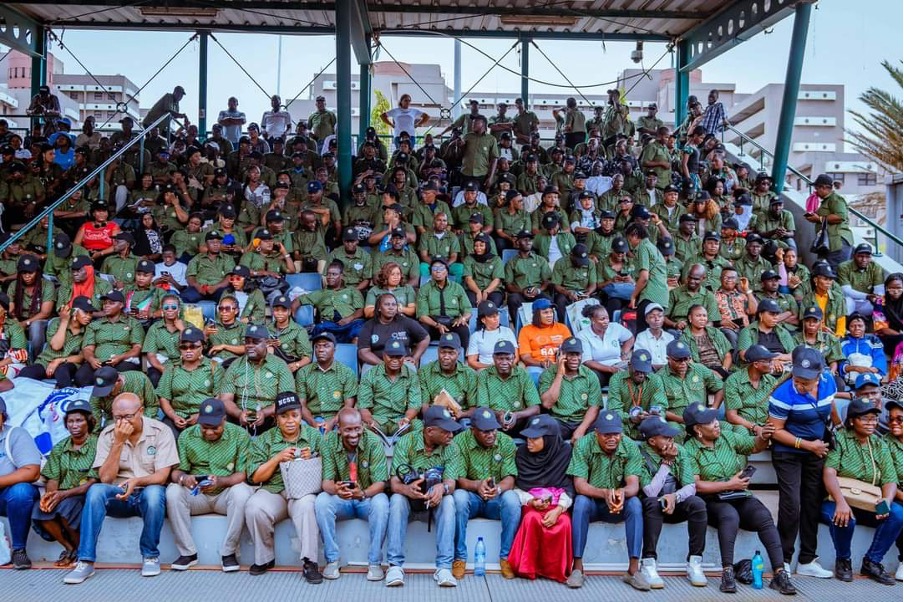
The Nigeria Labour Congress (NLC) has lauded the Dangote Refinery for reducing fuel prices, describing the move as a significant relief for Nigerians grappling with rising living costs. The commendation comes as the refinery’s output begins to reshape the petroleum landscape in Nigeria, introducing competition and price stability.
Speaking to journalists on Tuesday, Funmi Sessi, Chairman of the Lagos Council of the NLC, expressed optimism that the price adjustment would lower transportation costs and ease the financial burdens of many households. “This adjustment promises to offer much-needed relief for millions of Nigerians who have been grappling with high fuel prices and the rising cost of living,” she said.
A Timely Intervention
Fuel prices in Nigeria have been a contentious issue, exacerbated by subsidy removals and the country’s heavy reliance on imported petroleum products. The commissioning of the Dangote Refinery, with a capacity of 650,000 barrels per day, is seen as a game-changer in addressing these challenges.
Sessi noted that the refinery’s operations have not only reduced Nigeria’s dependence on imports but have also created a competitive environment in the downstream petroleum sector. She highlighted that the refinery’s current output dwarfs the combined 210,000 barrels per day produced by the Port Harcourt Refinery and another refurbished facility.
“With Dangote producing such a massive output, it has introduced healthy competition in the sector, and we are already seeing a reduction in petroleum prices,” Sessi explained. “If not for Dangote Refinery, we believe the government would still be importing fuel.”
Exporting Stability
Beyond addressing domestic needs, the Dangote Refinery has begun exporting petroleum products to neighboring countries like Ghana and Togo. According to Sessi, this development not only strengthens Nigeria’s regional influence but also contributes to stabilizing the nation’s currency.
“This level of exportation shows that Nigeria is becoming a major player in the petroleum sector, thanks to Dangote’s efforts,” she said. “This will help stabilise our currency and reduce the strain on foreign reserves caused by fuel importation.”
NLC’s Call for Broader Reforms
While applauding the refinery’s achievements, the NLC called for broader reforms to ensure that the benefits of reduced fuel prices trickle down to ordinary Nigerians. The labour body emphasized the need for improved public transportation systems and effective regulatory oversight to prevent exploitative practices by market players.
“We appreciate Dangote’s timely intervention, but there is still work to be done. The government must ensure that these gains are felt across all sectors, particularly in reducing transportation costs and the prices of goods and services,” Sessi stated.
Background and Industry Impact
The Dangote Refinery, located in the Lekki Free Zone of Lagos, is the largest single-train refinery in the world. Commissioned in 2023, it was built with the aim of addressing Nigeria’s long-standing issues with fuel importation and refining capacity. For decades, the country has faced criticism for exporting crude oil while importing refined petroleum, a practice that strained foreign reserves and exposed the economy to global price fluctuations.
The refinery’s operations are part of a broader strategy to reposition Nigeria as a refining hub in Africa. By leveraging its state-of-the-art facilities, the refinery has not only met domestic demand but also positioned itself as a key supplier to West Africa.
According to industry experts, the refinery’s success could encourage further private-sector investments in the oil and gas industry, creating jobs and boosting economic growth.
A Growing Partnership
The NLC’s commendation of the Dangote Refinery underscores the growing partnership between private enterprises and labour organizations in addressing Nigeria’s economic challenges. While labour unions have often been at odds with corporate interests, this collaboration highlights the shared goal of improving the welfare of Nigerian citizens.
“This is an example of what can be achieved when the private sector takes the lead in solving national problems,” Sessi remarked. “We hope to see more investments like this that directly benefit the masses.”