
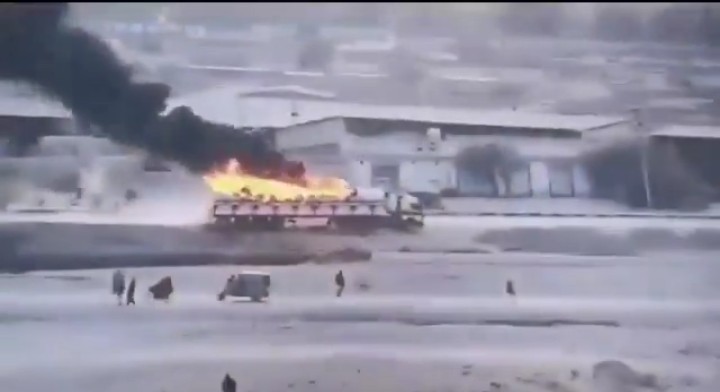
Afghan Taliban forces have launched a series of strikes against neighboring Pakistan, Afghanistan’s Ministry of Defence confirmed on Saturday. The attacks are widely seen as retaliation for a Pakistani air raid earlier in the week, highlighting escalating tensions along the disputed Durand Line.
The Afghan Defence Ministry’s statement, while not directly naming Pakistan, revealed that multiple locations “beyond the hypothetical line” had been targeted. This term, often used by Afghan officials, refers to the contentious border demarcation drawn during British colonial rule—a line Afghanistan has never officially recognized.
“Several points beyond the hypothetical line, serving as centers and hideouts for malicious elements and their supporters who organized and coordinated attacks in Afghanistan, were targeted in retaliation from the southeastern direction of the country,” the ministry stated.
When pressed for clarity, Defence Ministry spokesperson Enayatullah Khowarazmi refrained from naming Pakistan directly. “We do not consider it to be the territory of Pakistan, therefore, we cannot confirm the territory,” he told reporters.
A Historic Border Dispute
The Durand Line, carved through rugged tribal areas in the 19th century, has long been a flashpoint between Afghanistan and Pakistan. The mountainous region has historically served as a sanctuary for militants and smugglers, often beyond the control of either state. Pakistan considers the border internationally recognized, but Afghanistan disputes its legitimacy, claiming the territory as part of its historical domain.
This latest exchange of fire underscores decades of mutual mistrust. While Pakistan alleges that attacks on its soil often originate from Afghan territory, the Taliban has consistently denied such claims.
The air strikes carried out by Pakistan earlier this week reportedly targeted militant hideouts near the border. However, Afghan officials accused Pakistan of killing civilians, prompting warnings of retaliation.
“Any attack on Afghan soil, especially one that harms civilians, will be met with an appropriate response,” an Afghan official had warned on Wednesday, just days before the retaliatory strikes were confirmed.
No Details on Casualties
The exact impact of the Taliban’s strikes remains unclear. Neither side has disclosed casualty figures or specified the locations of the attacks. Pakistani authorities, including the military’s public relations wing and the Ministry of Foreign Affairs, have yet to respond to inquiries.
Photos released by Afghan sources show damaged vehicles near the border, remnants of the confrontation. Taliban security personnel were seen patrolling the affected areas, signaling a readiness for further conflict if provoked.
Meanwhile, residents near the border have reported increased military activity, with many fearing further escalation. “We hear explosions and see military vehicles moving, but no one tells us what’s happening,” said a local resident in Khyber Pakhtunkhwa province, speaking on condition of anonymity.
Strained Relations and Escalating Conflict
The relationship between Afghanistan and Pakistan has grown increasingly strained since the Taliban’s return to power in 2021. While Pakistan initially welcomed the Taliban’s takeover, hoping it would secure their shared border, the opposite has occurred.
Pakistani officials have accused the Taliban of harboring groups like Tehrik-i-Taliban Pakistan (TTP), an offshoot of the Afghan Taliban responsible for numerous attacks within Pakistan. Islamabad insists that these militants operate from safe havens in Afghanistan, a claim vehemently denied by the Taliban government.
“The Afghan Taliban must control their territory,” a Pakistani official remarked earlier this year, following a surge in cross-border attacks. “We have repeatedly asked for cooperation, but our concerns are ignored.”
Conversely, the Taliban accuses Pakistan of undermining Afghanistan’s sovereignty through unauthorized military operations and supporting rival factions.
Implications for Regional Security
This recent flare-up has raised alarms about the broader implications for regional stability. Both nations are pivotal players in South Asia’s geopolitics, and prolonged hostilities could invite intervention from external powers, particularly China and the United States, which have vested interests in the region.
Security analysts warn that the situation could spiral into a prolonged border conflict if not addressed diplomatically. “The lack of trust between the two governments, compounded by the history of disputes over the Durand Line, creates a volatile mix,” said Dr. Ayesha Khan, a regional security expert. “Any miscalculation could lead to significant regional fallout.”
International observers, including the United Nations, have called for restraint. “We urge both parties to resolve their differences through dialogue,” a UN spokesperson said on Saturday.
The Human Cost
As tensions mount, civilians in border regions continue to bear the brunt of the conflict. Reports of displacement are emerging, with families fleeing their homes in fear of further violence.
“This area has always been dangerous, but now it’s unbearable,” said a resident from Nangarhar province, on the Afghan side of the border. “We just want peace, but instead, we’re caught between two governments fighting over lines on a map.”
Meanwhile, humanitarian agencies warn that the conflict could worsen the already dire conditions in Afghanistan, which is grappling with a severe economic crisis and widespread food insecurity.
Looking Ahead
Despite the immediate retaliation, analysts believe neither side is keen on prolonged hostilities. Pakistan, facing its own internal challenges, including economic instability and political unrest, may seek to de-escalate tensions. Similarly, the Taliban, still consolidating power, is unlikely to invite further international scrutiny by engaging in a protracted border war.
However, the absence of clear communication and the deep-seated mistrust between the two neighbors make reconciliation a formidable challenge.
For now, the shadow of conflict looms over the Durand Line, leaving civilians and soldiers alike to brace for what may come next. As one Afghan official put it, “The border is not just a line; it’s a wound that refuses to heal.”