
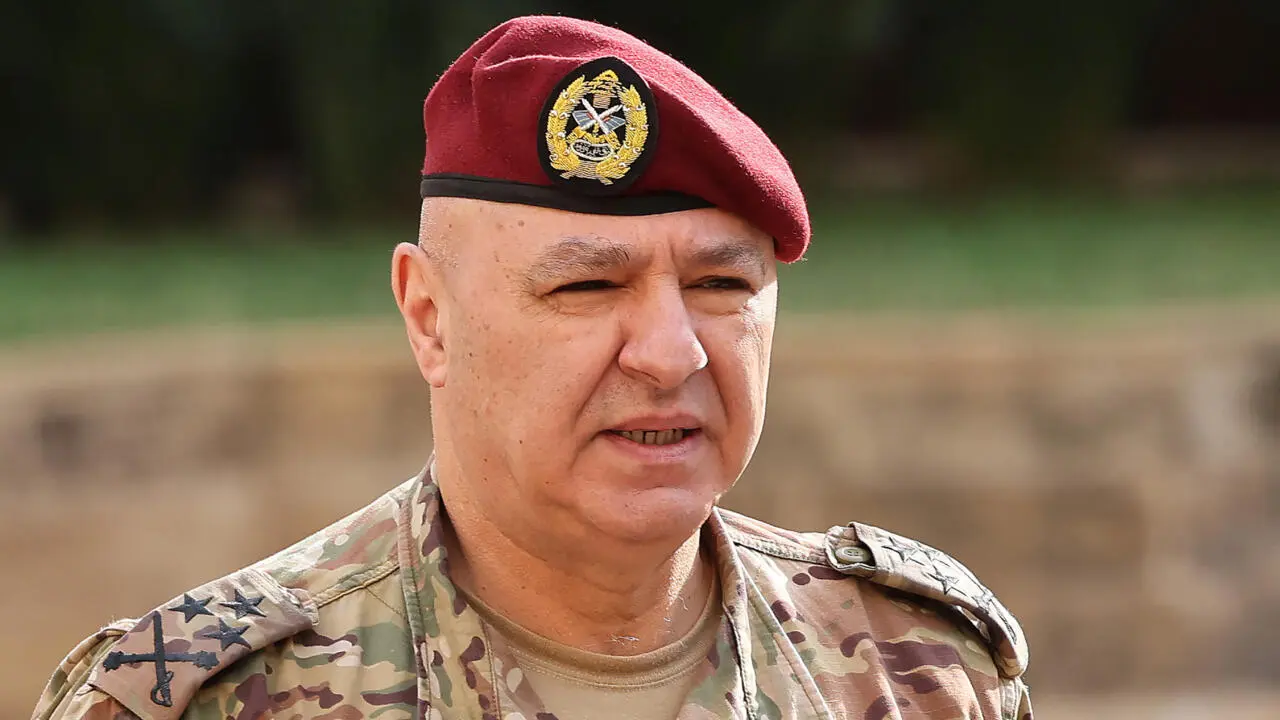
Lebanon’s protracted presidential impasse officially came to an end this week, as Army Chief Joseph Aoun was elected the country’s 14th president after an intense two-round parliamentary voting process. The election marks the conclusion of over two years of political deadlock that left Lebanon without a president, further exacerbating the country’s already complex and precarious political situation.
Joseph Aoun’s election follows a concerted effort by key international players, including the United States and Saudi Arabia, to rally support for the military leader. Aoun, who has long been associated with pro-Western policies, was sworn in on Thursday after receiving 99 votes from Lebanon’s 128-member parliament. This victory ended a seemingly unresolvable political vacuum that began when Michel Aoun, Lebanon’s previous president, stepped down in October 2022. The former president’s tenure was marked by growing political tensions, particularly between pro-Western factions and the Iran-backed Hezbollah group.
Lebanon’s parliament had failed to elect a new president on 12 separate occasions over the last two years, amid bitter divisions over the country’s future direction. The crisis had left Lebanon unable to address crucial national issues, including economic collapse, security concerns, and the ongoing influence of regional powers.
In his first appearance as president, Joseph Aoun arrived at parliament dressed in civilian attire, signaling the end of his military role. As the army chief turned head of state, his transition was widely seen as a necessary move to bridge the gap between Lebanon’s divided political camps. “Today marks the beginning of a new chapter for Lebanon. We are committed to rebuilding trust and securing a better future for all Lebanese,” Aoun declared after taking the presidential oath.
The U.S.-brokered ceasefire agreement between Hezbollah and Israel, which was reached last November, has played a significant role in shaping the political landscape. The ceasefire, which followed a devastating war between Hezbollah and Israel, greatly weakened Hezbollah’s position, especially after Israel’s assault on the group’s strongholds. This shift, combined with the downfall of Syrian President Bashar al-Assad—an ally of Hezbollah—has altered the balance of power in the region.
A Strategic Alliance and New Political Dynamics
Hezbollah’s role in Joseph Aoun’s election was crucial, though not without complexity. While the Shiite militant group initially withheld its votes during the first round of voting, it ultimately cast its ballots in favor of Aoun in the second round. A senior Hezbollah official, speaking on condition of anonymity, explained: “The shift was strategic. Our priority was to stabilize Lebanon in the face of mounting regional tensions and to ensure that the Lebanese Army could act as a neutral force in maintaining peace.”
Aoun’s election follows two years of failed attempts to elect a president, with the political gridlock being largely a consequence of Lebanon’s confessional power-sharing system, which mandates that the presidency be held by a Maronite Christian. This system has long been a source of tension in Lebanon, as different factions—primarily Hezbollah, Amal, and various pro-Western political groups—struggle for influence.
The U.S. and Saudi Arabia’s backing of Joseph Aoun is part of a broader geopolitical contest between Western and Iranian-aligned powers over Lebanon’s political future. Washington and Riyadh have been working tirelessly to ensure that a president with clear pro-Western inclinations takes office, fearing the rising influence of Iranian-backed groups in Lebanon and the wider region.
A New Chapter for Lebanon’s Military and Political Future
Joseph Aoun’s leadership will likely be tested on several fronts. As the new head of state, Aoun inherits a country mired in a deep economic crisis, with soaring inflation, a collapsing currency, and widespread poverty. The Lebanese economy has been in freefall since the catastrophic Beirut port explosion of 2020, which exposed the systemic corruption and political paralysis at the heart of Lebanon’s governing institutions.
Despite these challenges, Aoun’s background in the military could bring a new sense of stability and discipline to the presidency. His supporters argue that his military experience has equipped him with the ability to manage Lebanon’s security concerns, particularly with regard to Hezbollah’s influence in the south and its ongoing border dispute with Israel.
“We need a president who understands the military’s role in national security,” said Riad Salameh, a Lebanese political analyst. “Joseph Aoun is someone who can bring together all the factions to work towards peace and stability, something Lebanon desperately needs.”
Under Lebanon’s confessional system, Aoun’s presidency is expected to balance the interests of various religious and political groups. This delicate task will require him to manage a fragile coalition of pro-Western factions, Hezbollah, and other local political players, all of whom have competing agendas.
Lebanon’s Role in Regional Politics
Joseph Aoun’s presidency also carries significant implications for Lebanon’s role in the wider Middle East. The country’s proximity to Syria, Israel, and Hezbollah-controlled areas of southern Lebanon places it at the center of a volatile geopolitical landscape.
The Lebanese Army’s involvement in the Israel-Hezbollah ceasefire agreement also highlights Aoun’s pivotal role in regional security. The ceasefire stipulates that the Lebanese Army must deploy to southern Lebanon, an area long controlled by Hezbollah, in a bid to secure the border with Israel. Aoun’s army will be tasked with overseeing the demilitarization of the region and ensuring that both Hezbollah and Israeli forces respect the ceasefire terms.
“The Lebanese Army’s role in this process cannot be overstated,” Aoun said in his inaugural speech. “We are committed to upholding Lebanon’s sovereignty and ensuring peace along our borders with Israel.”
In the broader context, Aoun’s presidency will also be instrumental in Lebanon’s relations with Syria and Iran. His pro-Western stance could lead to further tensions with Hezbollah, which remains closely aligned with Tehran. Yet, Aoun’s ability to navigate these tensions will be critical to Lebanon’s stability and its future in the Middle East.