
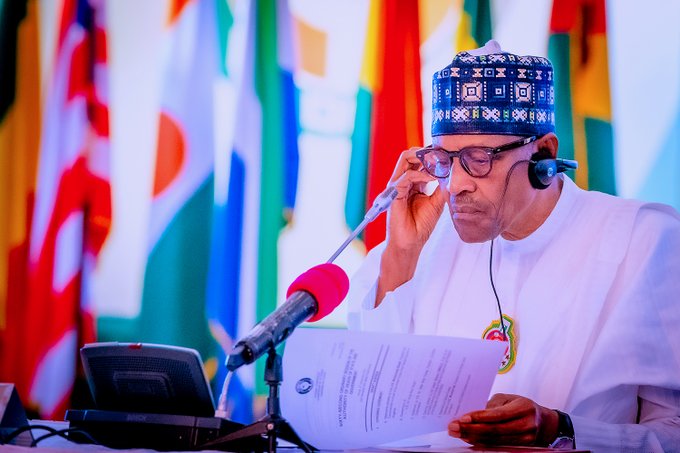
Former President Muhammadu Buhari received a royal welcome from the Emir of Daura, Alhaji Umar Farouk Umar, shortly after his return from France, where he testified in the ongoing arbitration case regarding the $6 billion Mambilla Hydroelectric Power Project. The highly anticipated visit took place on January 25, 2025, marking the conclusion of Buhari’s official trip abroad to testify in a case that could have profound implications for Nigeria’s infrastructure projects.
The Mambilla Hydroelectric Power Project, awarded to Sunrise Power and Transmission Limited during former President Olusegun Obasanjo’s tenure in 2003, has been embroiled in controversy for years. The arbitration revolves around allegations that Nigeria breached its contractual obligations, leading to the ongoing dispute over the fate of the power project. Buhari’s testimony, which is a critical component of Nigeria’s defense, aimed to clarify the involvement of the Nigerian government in the contract and negotiations surrounding it.
During his visit to Buhari’s residence in Daura, the Emir of Daura, who is a prominent figure in Northern Nigerian politics, reaffirmed his support for the former president. “It is an honor to receive His Excellency back from his trip to France. We are proud of the role he played in representing Nigeria’s interests in this crucial matter,” said the Emir, who was visibly pleased to welcome Buhari back to the country.
The Background of the Mambilla Case
The Mambilla Hydroelectric Project, which promises to be one of Nigeria’s largest sources of electricity upon completion, has faced numerous challenges over the years. The dispute arose when Sunrise Power, a Chinese-backed company, accused Nigeria of failing to fulfill contractual terms, thereby jeopardizing the future of the $6 billion initiative. Both Buhari and Obasanjo have denied any personal involvement in negotiating or authorizing any agreements related to the project.
During Buhari’s visit to France, he was accompanied by Obasanjo, who also testified in the arbitration case. The two former leaders have consistently defended their actions, asserting that no binding agreements were made on their watch. Despite the growing controversy, the testimonies of both leaders were considered essential in determining the direction of the case, which has dragged on for years.
“It is important to state that any claims of unauthorized agreements or settlements are unfounded,” Buhari declared before his departure to France, underlining his firm stance on the matter.
Symbol of Unity or Political Gesture?
The royal visit from the Emir of Daura holds symbolic significance beyond the realm of politics. The meeting between the Emir and Buhari serves as a testament to the enduring respect and camaraderie between traditional leaders and political figures in Nigeria, especially in the Northern region. The relationship between Buhari and the Emir goes beyond mere formalities, and their frequent exchanges illustrate the strong ties that bind Nigeria’s political elites with its traditional institutions.
In his remarks, the Emir expressed his admiration for Buhari’s continued commitment to national development despite the challenges. “Our country’s leaders must always demonstrate resilience in the face of adversity,” the Emir stated, reinforcing the narrative of Buhari as a steadfast figure in Nigeria’s political landscape.
The Emir also spoke of the importance of maintaining peace and unity within Nigeria’s diverse regions. His visit to Buhari was not only a reflection of mutual respect but also an affirmation of the Emir’s commitment to the nation’s progress. “We, as traditional rulers, stand behind our leaders in moments of difficulty and hope for the betterment of all Nigerians,” he added.
Public Sentiment and Controversy
While the visit between the Emir and Buhari was one of respect and solidarity, some Nigerians took to social media to express differing opinions. A range of reactions emerged from various sectors of society, with some questioning the motives behind the visit, particularly in the context of the ongoing power project dispute. On social media platforms, some commentators suggested that the visit was more than a mere gesture of respect. One social media user quipped, “The Emir must have been given a generous gift to come visit,” sparking a lively debate about the role of traditional institutions in Nigerian politics.
However, others defended the Emir, noting the important role traditional rulers play in fostering unity within the country. “It is our tradition to honor those who lead us. The Emir’s visit is a sign of respect,” one commenter wrote.
Nigerian Political Landscape at a Crossroads
As Buhari settles back into life in Nigeria, many are focusing on the future of the Mambilla Hydroelectric Project and the broader implications for Nigeria’s energy sector. If the arbitration case results in a ruling against Nigeria, the government may be forced to pay significant penalties. The outcome of this case could affect Buhari’s legacy, especially as it pertains to his administration’s handling of key infrastructure projects.
Nigeria’s energy crisis has long been a thorn in the side of the country’s development agenda. The Mambilla Hydroelectric Power Project, if completed, has the potential to significantly boost Nigeria’s power supply, which remains a critical issue for both citizens and businesses. For many Nigerians, the outcome of this arbitration case will have far-reaching consequences for the future of the nation’s energy sector.
Buhari’s Return and National Attention
While Buhari’s return from France signifies the end of his direct involvement in the case, the spotlight now shifts to how the Nigerian government will proceed with the project in the face of growing challenges. As the country continues to grapple with issues of infrastructure, energy, and political stability, the Emir of Daura’s visit reminds Nigerians of the delicate balance between traditional leadership and political power.
Some observers believe that Buhari’s trip to France and his subsequent meeting with the Emir signals a period of reflection for the country’s political leadership. “The visit is a reminder of the respect that traditional rulers continue to command in our society,” noted a political analyst. “It shows that even in moments of crisis, Nigeria’s leadership, both traditional and political, can come together to guide the nation forward.”