
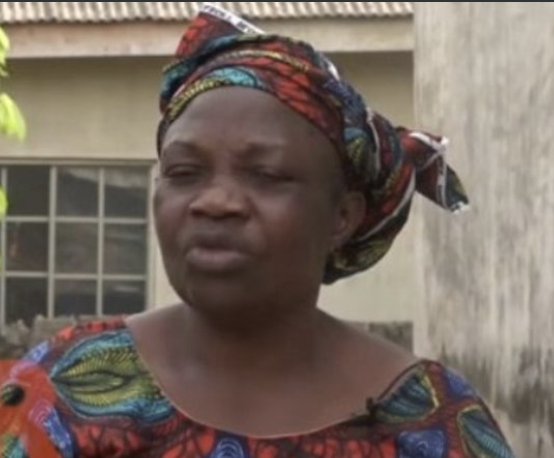
In an impassioned call for justice, Comfort Ayanwole, the mother of Oluwabamise Ayanwola, a 22-year-old woman whose tragic death has stirred outrage in Lagos, has openly accused the Lagos State government of complicity in her daughter’s death. Her scathing remarks come as the long-awaited trial of the Bus Rapid Transit (BRT) driver accused of her daughter’s abduction and murder faces persistent delays, frustrating the family’s pursuit of justice.
Oluwabamise, a talented fashion designer, was last seen on February 26, 2022, when she boarded a BRT bus at Chevron Bus Stop, Ajah. The bus was headed towards Oshodi, but things took a chilling turn during the journey. According to reports, Bamise noticed that the bus driver was not picking up other passengers at the scheduled stops along the route. Concerned about her safety, she messaged a close friend, detailing her fears and sending voice notes to convey the unsettling situation. Tragically, that was the last communication from Bamise. Hours later, she was discovered dead on Carter Bridge, a public thoroughfare in Lagos, under mysterious circumstances.
Despite the gravity of the case, the trial of the accused driver has been marred by significant delays, a situation that has only intensified the family’s grief. In a recent interview with SaharaReporters, Bamise’s mother expressed her deep frustration with the slow pace of the judicial process and the perceived lack of interest and support from the Lagos State government.
“What I don’t understand is that the lawyer representing the accused driver keeps confusing the whole situation. He behaves like he is the master even on the judges,” the grieving mother said, her voice filled with frustration. “He may decide not to show up. And anytime he comes, he always asks for adjournment. He has forgotten that he is a father and will also die one day. This is the third month and still no headway.”
Her words reflect the anger and helplessness that have plagued the family since the day Bamise disappeared. “If not for the behaviour of the lawyer and lack of state government commitment on the case, we should have progressed by now,” she added. “This incident happened inside a government bus, and yet no one seems to be pushing for justice. The people in the government have children like Bamise. Why can’t the government fight for me and get justice?”
Bamise’s family has been vocal in their calls for accountability, with her mother hinting at a deeper conspiracy. “If the government is not complicit in my daughter’s death together with the driver, an honest judgment should have been given by now,” she said. “I don’t know what the delay is, and they are treating us like we are voiceless, with no support.”
The delay in bringing the alleged perpetrator to justice has drawn attention to broader concerns regarding the efficiency of the justice system in Lagos. The family’s frustration has been compounded by what they perceive as a lack of urgency in the prosecution of the case, with each adjournment seemingly pushing justice further out of reach.
This is not the first time the family has voiced dissatisfaction with the government’s handling of the case. In September 2023, Bamise’s sister also spoke out, accusing the Lagos State government of abandoning the pursuit of justice for her late sister. Her remarks were made amid growing concerns about the high-profile nature of the case and the failure to bring the driver to trial.
The tragic death of Bamise has not only rocked her family but also sparked a wider conversation about the safety of public transport in Lagos, especially the BRT system, which is meant to be a reliable mode of transport for commuters. The incident has raised critical questions about accountability within the government-run transport system and whether proper safeguards were in place to protect passengers.
The echoes of their cry for justice resonate with other families who have faced similar struggles in seeking accountability for the deaths of their loved ones. The frustrations expressed by Bamise’s family are shared by many Nigerians who feel that justice is often delayed or denied due to systemic inefficiencies, corruption, and negligence.
Her plea is a poignant reminder that justice delayed is justice denied—and the silence that surrounds these cases only deepens the wounds of the families affected. As Bamise’s case drags on, it raises uncomfortable questions about the government’s role in protecting its citizens and upholding the rule of law.
Bamise’s case has ignited a series of discussions about public transport safety, especially in Lagos, where millions rely on the BRT system daily. In recent years, concerns over the safety of commuters have been amplified by high-profile incidents like this one, prompting calls for reform in the management of public transportation systems in the state. Additionally, the role of law enforcement and judicial bodies in ensuring timely justice remains a hot topic, as families of victims continue to voice dissatisfaction with the pace of legal proceedings.