
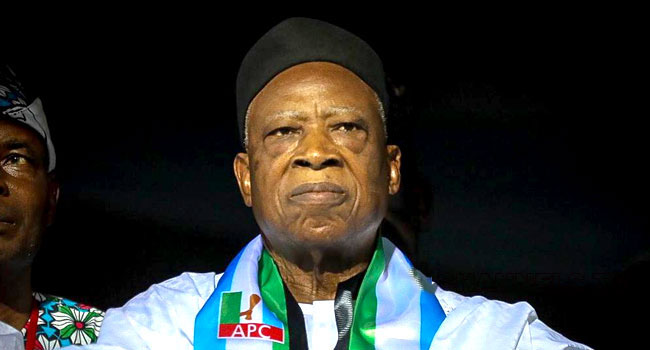
Key leaders of the ruling All Progressives Congress (APC) gathered at the party’s National Secretariat in Abuja for its highly anticipated National Executive Committee (NEC) meeting, amidst tight security measures that restricted both vehicular and human movement in the area. The meeting marks the first since President Bola Tinubu assumed office in May 2023, highlighting the party’s ongoing efforts to address internal challenges and chart a course for the future.
The National Secretariat of the APC, located on Blantyre Street, was heavily secured by a combined team of armed soldiers and security personnel from the Guards Brigade. All roads leading to the venue were cordoned off, and journalists, despite being included on an accredited list issued by the party’s spokesperson, Felix Morka, were kept at a distance from the meeting.
The strict security measures appeared to highlight the importance of the meeting, as tensions within the party have been rising in recent months. The APC has faced growing criticism for its lack of internal democracy, and the absence of several key party figures at the meeting has added to the speculation about the state of the party’s unity.
Several high-profile APC leaders were in attendance, reflecting the importance of the NEC meeting in the party’s decision-making process. Early arrivals included members of the National Working Committee (NWC), the Forum of State Chairmen, as well as prominent figures such as former Governor of Zamfara State, Abdulaziz Yari; Minister of Budget and National Planning, Atiku Bagudu; and Deputy Speaker of the House of Representatives, Benjamin Kalu.
Governors from across Nigeria were also present, including those from Edo, Benue, Ondo, Ekiti, Kaduna, Jigawa, Nasarawa, Yobe, Niger, Lagos, Kogi, Ogun, Imo, and the Deputy Governor of Ebonyi. Former governors from Kogi, Kebbi, Niger, Zamfara, and Plateau states were also in attendance, further highlighting the broad representation of party leaders at the meeting.
However, the meeting was marked by the noticeable absence of some key figures, including former President Muhammadu Buhari, former Governor of Kaduna State, Nasir El-Rufai, and former Governor of Rivers State, Rotimi Amaechi. Their absence raised eyebrows, especially given their previous roles in the party and their significant influence within the APC.
The leader of the APC, President Bola Tinubu, Vice President Kashim Shettima, Senate President Godswill Akpabio, and Speaker of the House of Representatives, Tajudeen Abbas, arrived at the venue shortly after noon. Their presence signalled the importance the leadership places on the discussions taking place within the party, particularly in relation to internal challenges and the direction of the APC under Tinubu’s presidency.
The meeting was presided over by APC National Chairman Abdullahi Ganduje, who has been instrumental in overseeing the party’s activities since his election to the position. Ganduje’s leadership has come under scrutiny in recent months, with some party members questioning his ability to effectively manage internal disputes and unify the party.
One of the key issues that has been a point of contention within the APC is the question of internal democracy. Several prominent figures within the party, including former Governor Nasir El-Rufai and ex-National Vice Chairman Salihu Lukman, have expressed concerns about the lack of transparency and inclusiveness in the party’s decision-making processes. They argue that this absence of internal democracy has led to a concentration of power in the hands of a few individuals, undermining the party’s credibility and long-term viability.
The absence of key figures such as former President Muhammadu Buhari, Nasir El-Rufai, and Rotimi Amaechi is notable. Buhari, as the former president, played a significant role in the APC’s rise to power, and his absence from the meeting has sparked speculation about his level of involvement in the party’s future activities.
El-Rufai, a prominent figure in Nigerian politics, has been a vocal critic of the APC’s internal processes. His absence raises questions about his future role in the party and whether he continues to align with Tinubu’s vision for the APC. Similarly, Amaechi, a former Minister of Transport and one of the party’s key figures, has been largely silent in recent months, leading to uncertainty about his position within the APC.
As the APC moves forward, the question of how it addresses internal democracy and unifies its members will be central to its ability to maintain power and influence in Nigerian politics. The next steps for the party will be closely watched by both its supporters and critics alike, as the political landscape in Nigeria continues to evolve.