
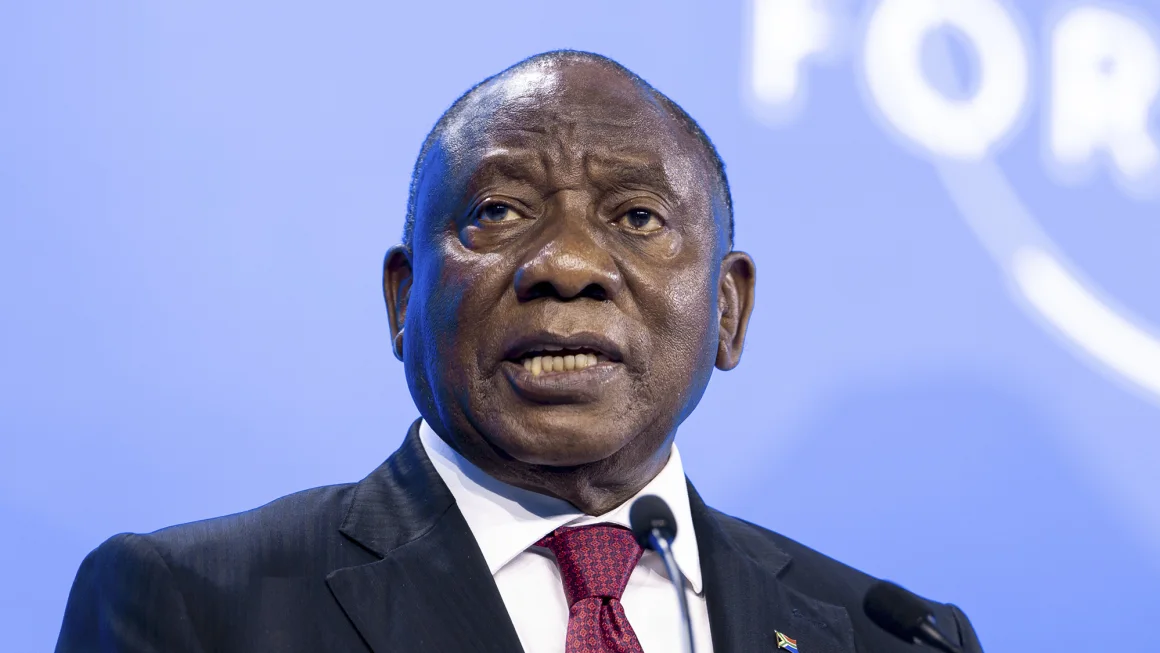
In a move that has intensified the already strained relationship between the United States and South Africa, the US State Department has ordered a pause on most foreign assistance to South Africa. The decision, which directly implements an executive order signed by President Donald Trump, has caused waves of controversy and raised questions about the future of US-South African relations.
The directive, issued on Thursday, enforces Executive Order (EO) 14204, which targets what the Trump administration has described as “egregious actions” by South Africa, particularly focusing on racial discrimination. According to the memo, signed by the US Secretary of State, Marco Rubio, all US agencies are now instructed to halt the disbursement of aid, with only a few exceptions.
“To effectively implement EO 14204, all bureaus, offices, and missions shall pause all obligations and/or dispersion of aid or assistance to South Africa,” the cable from the State Department stated. The order follows a broader reassessment of US foreign aid policies, which had paused certain assistance for review in January.
This move marks the latest in a series of escalating tensions between the two nations, beginning when President Trump accused South Africa of using its land reform laws to discriminate against white citizens—a claim that South African President Cyril Ramaphosa has vehemently denied as misinformation.
The executive order at the centre of this decision, EO 14204, was issued by President Trump on February 7th, citing what it described as “unjust racial discrimination” against white South Africans, particularly the Afrikaner minority. The Afrikaners, descendants of Dutch colonisers, were key figures in the apartheid regime that denied basic rights to the Black majority until the country’s transition to democracy in 1994.
Trump’s administration argued that the new land laws, which allow the South African government to expropriate land without compensation, disproportionately affect white farmers. While the policy has been aimed at redressing historical land inequality in South Africa, it has sparked debates both locally and internationally about how to balance justice for the Black majority with the rights of white landowners.
Despite South African leaders, including Ramaphosa, strongly rejecting Trump’s claims as false, the US administration has decided to take action, halting most forms of aid to South Africa, a country with which the US has maintained generally positive relations for decades.
There is widespread speculation that Elon Musk, the South African-born billionaire and one of Trump’s key allies, may have influenced this decision. Musk, who has been outspoken against what he perceives as South Africa’s “openly racist policies,” has used his platform to criticise his homeland, calling out what he sees as systemic racial inequality. Musk’s alignment with Trump’s administration, particularly regarding foreign policy and government efficiency, has led many to believe that his views on South Africa have played a role in shaping the current US stance.
Musk, who leads the US government’s efforts to streamline operations and reduce inefficiency, has often criticised South Africa’s policies, particularly in relation to land redistribution and racial policies. Although there is no direct confirmation of Musk’s involvement in EO 14204, his influence as a business and political figure makes it plausible that his opinions have had an impact on US foreign policy.
According to the cable from the US State Department, the impact of EO 14204 on South Africa’s foreign aid is substantial. While most assistance programs have been paused, there are exceptions. The US’s global HIV/AIDS program, known as Pepfar, will continue without further review, as it provides life-saving treatment to millions of South Africans. However, for all other aid programs, South Africa will need to submit specific requests for permission to continue receiving support, and these requests will only be considered under stringent conditions.
The decision to continue funding Pepfar is likely a reflection of the program’s vital role in the global fight against HIV/AIDS, with South Africa having one of the highest rates of HIV infection in the world. While Pepfar is not directly tied to the political concerns raised by Trump’s executive order, the rest of the aid landscape remains uncertain as a result of the suspension.
The US has long been a significant contributor to South Africa’s development, particularly in sectors such as health, education, and poverty alleviation. This suspension will have a serious impact on many of these programs, which have supported both South African citizens and the government’s broader goals of reducing inequality and improving public services.