
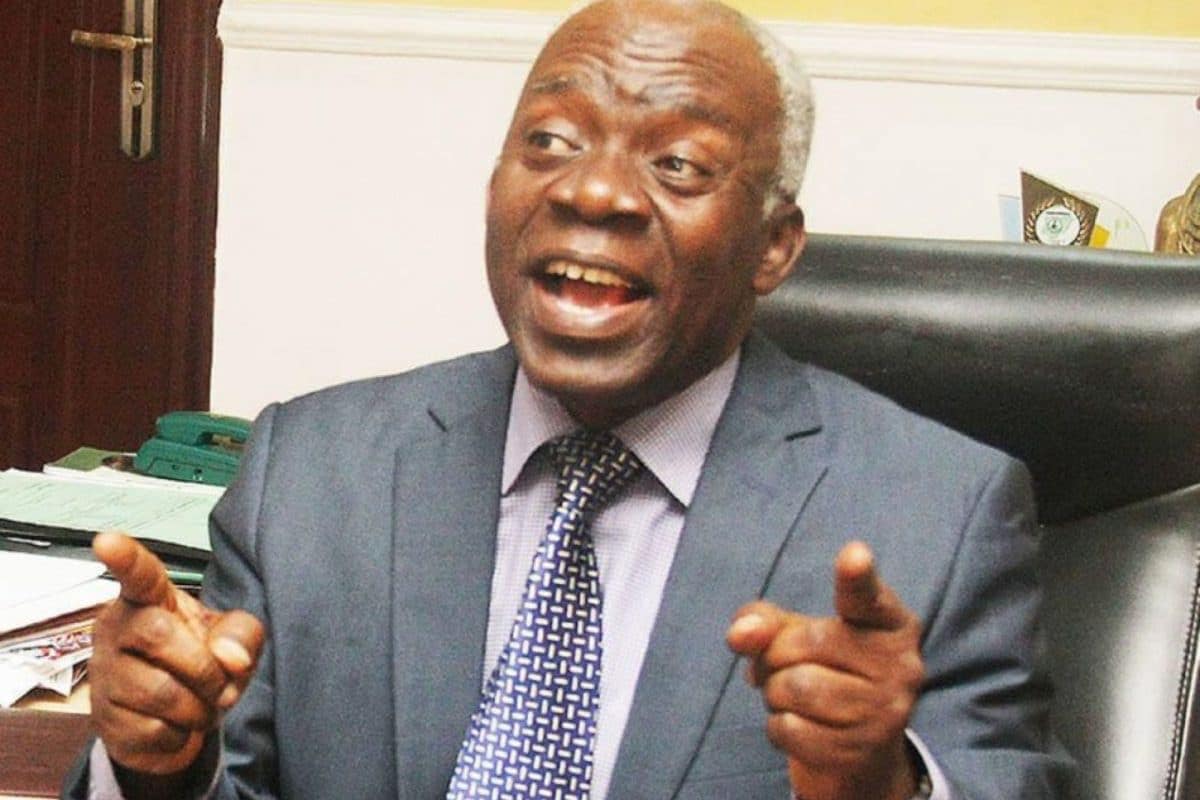
Human rights lawyer, Femi Falana, has issued a strong warning against any official investigation by security agencies into Senator Natasha Akpoti-Uduaghan’s participation in the Inter-Parliamentary Union (IPU) meeting held in New York. The prominent lawyer argues that such an inquiry could lead to unnecessary embarrassment for Nigeria on the global stage.
Falana’s statement comes in response to allegations made by Senate President Godswill Akpabio, who claimed that Akpoti-Uduaghan’s actions at the IPU meeting had humiliated both the government and people of Nigeria. Akpoti-Uduaghan, who represents Kogi State in the Nigerian Senate, attended the IPU meeting in March 2025, where she made public comments about her recent suspension from the Senate.
The rift between Senator Akpoti-Uduaghan and Senate President Akpabio escalated earlier this year when Akpoti-Uduaghan accused Akpabio of sexual harassment. The tension between the two senators reportedly came to a head during a seating arrangement altercation in the Senate, which led to Akpoti-Uduaghan being suspended for what the Senate called “gross misconduct.”
In response to her suspension, Akpoti-Uduaghan spoke out at the IPU meeting on March 11, 2025, claiming that the suspension was an attempt to silence her over the sexual harassment allegations. She detailed how her actions in raising the harassment issue had led to retaliation from some of her colleagues in the Senate.
Her comments at the international body have now sparked controversy, with Akpabio accusing the senator of publicly embarrassing Nigeria by reporting the matter to the IPU. This has triggered an official response from Nigeria’s security agencies.
Following the Senator’s statements at the IPU meeting, reports surfaced over the weekend indicating that Nigeria’s Department of State Services (DSS) and the National Intelligence Agency (NIA) had launched investigations into how Akpoti-Uduaghan was able to attend the meeting without official nomination or approval.
The investigation has been met with significant backlash, particularly from human rights advocates like Femi Falana. Falana has questioned the necessity of such a probe, arguing that it would do more harm than good to Nigeria’s international reputation.
In a statement issued on Sunday, Femi Falana criticized the planned investigation, calling it a “futile attempt” that could expose Nigeria to unnecessary ridicule. He suggested that the security agencies may be overstepping by delving into what he referred to as an internal Senate issue. According to Falana, the actions of the DSS and NIA could ultimately embarrass the country and its officials, especially those within the Bola Tinubu administration.
“Contrary to the jaundiced views of the Senate leader, it is the official probe of the circumstances of her trip by security forces that will expose Nigeria to needless embarrassment and undeserved ridicule,” Falana said in his statement. He went on to remind the government that similar actions taken in the past by Nigerian officials, particularly under military regimes, had once led to international embarrassment, citing instances where Nigerians were accused of misusing travel privileges.
Falana also pointed out that this situation could particularly embarrass some members of the current administration, who had previously faced similar accusations during Nigeria’s military dictatorship era. He referenced the Sani Abacha-led military junta, under which government officials were often criticized for misusing their positions for personal gain.
The controversy involving Akpoti-Uduaghan’s suspension and her subsequent comments at the IPU meeting highlights a growing divide within Nigeria’s Senate. The sexual harassment allegations, which Akpoti-Uduaghan made against Akpabio, have fueled political tension. As Senate President, Akpabio holds significant influence over the Senate’s operations and decisions, which has led some observers to speculate that the suspension could be politically motivated.
Akpoti-Uduaghan’s decision to speak out at the IPU meeting was viewed by many as a direct challenge to the Senate leadership. She accused Akpabio of trying to suppress her voice for raising the serious issue of sexual harassment. Her remarks at the international forum were framed as part of her struggle for justice, and she positioned her suspension as an act of retaliation for her outspoken stance.
In the wake of her speech, Akpabio condemned Akpoti-Uduaghan’s actions, claiming that they brought shame upon the nation. According to Akpabio, her decision to bring the issue to the international community was not only politically damaging but also harmful to Nigeria’s image on the world stage.
The intervention of the DSS and NIA in the matter has been controversial, particularly because the IPU meeting, while important, is not an official government event. It was originally seen as a platform for discussing parliamentary matters, but it has now become a battleground for political and personal conflicts. The probe by security agencies has raised questions about the appropriate role of the government in addressing internal Senate matters, with some arguing that it should be left to the Senate itself to resolve disputes among its members.
Many legal experts, including Falana, believe that the government’s involvement in this case risks deepening the political crisis and creating more unnecessary drama. The lawyer warned that the probe might divert attention from the underlying issues and only serve to deepen divisions within the Senate.
The ongoing controversy also touches on larger issues of governance, accountability, and the protection of women in politics. Akpoti-Uduaghan’s claims of sexual harassment raise important questions about how female politicians are treated within the Nigerian political system. The way the Senate responds to these allegations, as well as the government’s actions in response to the international fallout, will have lasting implications for Nigeria’s democratic processes.
Human rights groups have called for a more transparent investigation into the sexual harassment allegations, urging that the issue be handled with the seriousness it deserves. However, the politicization of the matter, with accusations of retaliation and silencing, has complicated the narrative and raised concerns about the safety and rights of female politicians in the country.
As the investigation into Akpoti-Uduaghan’s attendance at the IPU meeting continues, there is widespread speculation about how the matter will be resolved. For now, it remains unclear whether the government will proceed with the probe or heed Falana’s warning and drop the investigation altogether.