
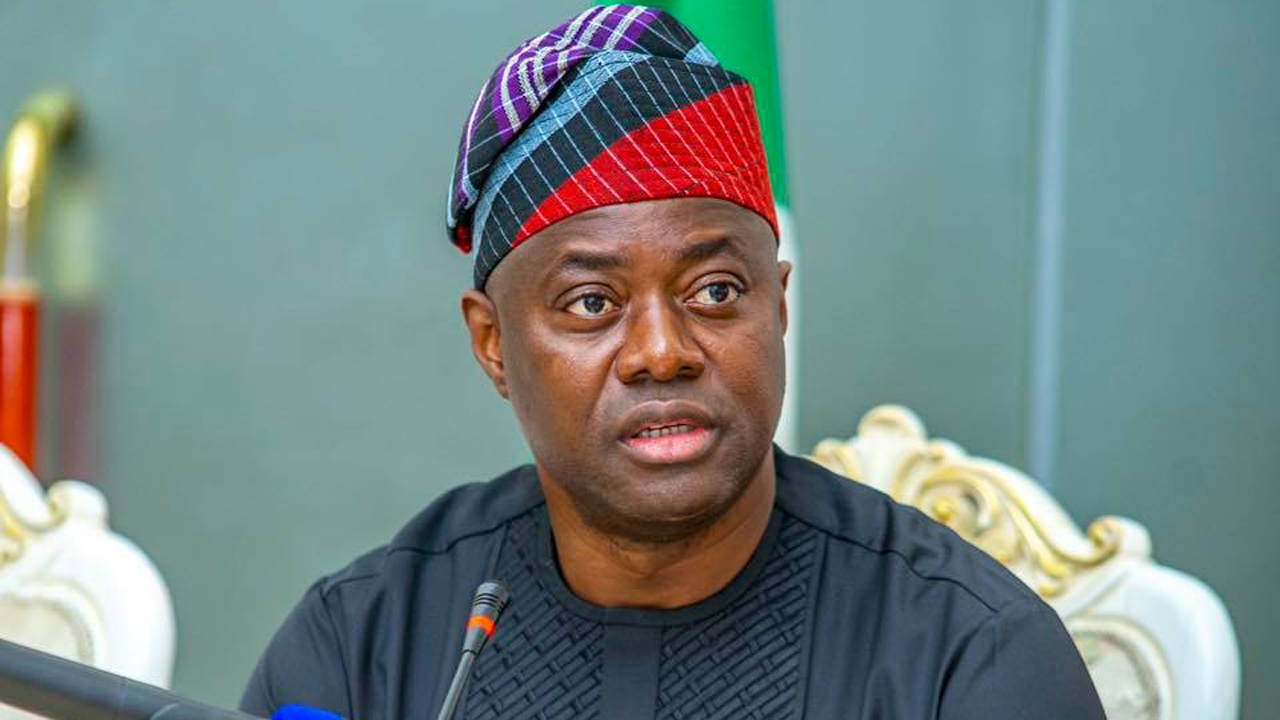
The Oyo State government has vowed to take legal action against the establishment of a Sharia panel in Oyo town, declaring it unconstitutional. The panel, which has already started sittings at the Central Mosque in Akesan, is being questioned by the state government, which insists that only state or federal authorities have the legal power to establish judicial bodies.
Governor Seyi Makinde’s administration has made it clear that it does not recognize the Sharia panel as lawful, asserting that such judicial bodies can only be set up by recognized state or federal institutions. The government is prepared to challenge the panel’s existence in court.
This announcement was confirmed by Dr. Sulaimon Olanrewaju, the Chief Press Secretary to Governor Makinde, in response to inquiries about the panel’s operations. Olanrewaju explained that the state government was determined to test the legality of the panel, referring to the Nigerian Constitution to determine whether it permits the establishment of a Sharia panel or court.
“The governor was clear from the outset: if it’s a constitutional matter, we must refer to the Constitution. Does it permit the establishment of a Sharia panel or court? If proponents claim it does, we will test it in court. We believe it doesn’t,” Olanrewaju said.
He further emphasized that a panel which adjudicates on people’s matters must be legally recognized by the state or federal government to be valid. According to him, the Sharia panel in Oyo is not supported by either the state or federal government and, as such, cannot operate lawfully.
“A panel that adjudicates on people’s affairs must have state backing. Otherwise, it’s illegal,” Olanrewaju added.
The controversy surrounding the panel comes amidst ongoing debates about the role of Sharia law in Nigeria’s legal system. The Sharia system is a part of Nigeria’s legal framework, particularly in some northern states where it is applied in personal matters like marriage, inheritance, and family disputes. However, its use has often sparked controversy in areas where it is not widely practiced, particularly in the southern regions.
The Sharia panel in Oyo was set up by the Sharia Committee of Oyo Land, which is headed by Dr. Rafiu Bello. The panel is designed to address marital disputes, inheritance issues, and land conflicts, particularly for Muslims who voluntarily seek resolution under Islamic law. Bello confirmed that the panel had already begun operating, holding sessions every Thursday at the mosque to address these issues.
“Nigerian law permits Sharia, and our panel is open to all, though designed for Muslims who voluntarily seek resolution under Islamic law,” Bello stated. He added that similar Sharia panels are already functioning in other parts of Oyo State, including Ogbomoso, Kisi, Saki, and Ibadan.
Despite this, the establishment of the panel in Oyo town has faced criticism, particularly from the Christian community. The Supreme Council for Shari’ah in Nigeria had initially suspended the panel’s inauguration in January following public protests. However, Bello revealed that the panel had quietly resumed its activities, continuing its sessions without public announcement.
“We had to proceed discreetly after the initial delay,” Bello explained, noting that while the panel operates under Islamic law, it remains voluntary for any Muslim seeking its services.
The announcement of the Sharia panel’s operations has sparked mixed reactions. While Muslim leaders and some community members have supported the initiative, the Christian community has raised concerns over the panel’s potential to undermine Nigeria’s secular legal system.
Rev. Joshua Akinyemiju, the Chairman of the Christian Association of Nigeria (CAN) in Oyo State, expressed surprise upon learning that the panel had resumed operations. Akinyemiju, who had been aware of earlier plans to establish the panel, noted that protests had forced a postponement of the panel’s inauguration in January.
“I knew they planned this earlier, but after protests, it was postponed indefinitely. If they’ve proceeded secretly, we will investigate,” Akinyemiju said.
The controversy surrounding the Sharia panel raises important questions about the balance between religious law and Nigeria’s secular constitution. While the Nigerian Constitution guarantees freedom of religion and allows for the application of Sharia law in certain states, there are concerns about how such religious laws interact with the country’s broader legal framework, especially in states where Sharia is not part of the formal judicial system.
Oyo State, located in the southwestern region of Nigeria, is predominantly non-Muslim, with Christianity being the largest religion. The establishment of a Sharia panel in such a region has led to fears among some residents and religious leaders that it could pave the way for the spread of Islamic law in a state where it is not traditionally practiced.
The Oyo State government’s decision to challenge the panel in court is an effort to assert its authority over legal matters within its jurisdiction. The state government believes that only established state or federal judicial bodies have the power to create and run such panels, arguing that the panel in question does not have the legal backing to operate within the state.
The state government’s legal challenge will likely spark further debate about the role of Sharia law in Nigerian society, particularly in non-Muslim-majority regions. The outcome of the case could have significant implications for the future of Sharia panels in Nigeria and the extent to which religious laws can be implemented alongside the country’s secular legal system.
For now, the Sharia panel in Oyo town continues to function, though it faces increasing scrutiny from both the state government and religious groups. The legal challenge by the Oyo State government will determine whether the panel’s activities will be allowed to continue or whether it will be forced to cease operations.
The Sharia legal system has been a contentious issue in Nigeria, particularly since the northern states adopted it in the early 2000s. The application of Sharia law has been confined to personal matters such as family law, inheritance, and marital disputes, and is generally accepted by the Muslim population. However, the introduction of Sharia in non-Muslim-majority regions has raised concerns about the separation of religion and state, and the potential for religious discrimination.
In Oyo State, where the majority of residents are Christian, the establishment of a Sharia panel is seen by some as an overreach of Islamic law into a predominantly Christian region. The state’s legal challenge is part of broader efforts to uphold the secular nature of Nigeria’s legal system and prevent the establishment of religious-based judicial bodies without state or federal approval.
The case could set a precedent for how Sharia law is treated in non-Muslim-majority regions of Nigeria, particularly in areas where the population may not be in favor of its implementation. It remains to be seen whether the Oyo State government’s legal challenge will succeed in halting the operations of the Sharia panel or whether the panel will continue its work in defiance of state objections.