
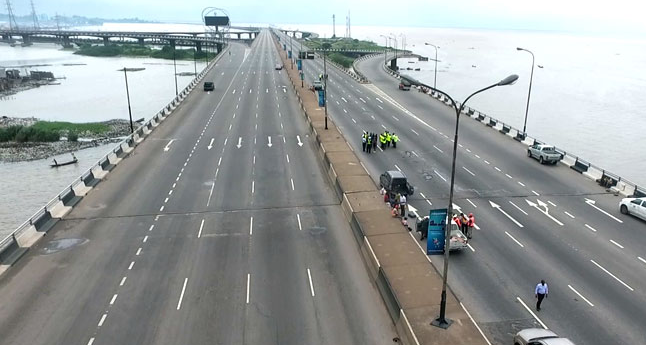
The Federal Government has announced the immediate reopening of the Independence Bridge (Ahmadu Bello Way-Marina bound) to vehicular traffic. The decision comes after several days of public outcry following the initial closure of the bridge for repairs.
In a statement released on Wednesday, the Minister of Works, Senator Dave Umahi, confirmed that the bridge, which had been closed for essential maintenance since April 1, would now be reopened to ease the heavy traffic congestion caused by its closure. The closure, which was initially set to last until May, had left commuters frustrated and caused significant disruption to transportation in Lagos.
Senator Umahi, through a statement issued by the Federal Controller of Works in Lagos, Mrs. Olukorede Kesha, clarified that although the bridge would be reopened, necessary repairs would be carried out at a later date. He explained that palliative works had already been initiated to ensure the bridge remains motorable for the time being.
“The Federal Government has heard the concerns of Lagosians, and we understand the hardship that this closure has caused. After thorough consideration and in the interest of the public, we have decided to reopen the bridge while we continue to carry out repairs,” Umahi said. “We regret the inconvenience this closure has caused and ask for your understanding as we strive to improve the infrastructure of the state.”
The Independence Bridge, an essential route for commuters traveling between the island and mainland parts of Lagos, was closed to allow for maintenance works aimed at addressing its dilapidated state. However, the unexpected decision to shut the bridge for such a prolonged period led to confusion and panic among residents who depend on it for their daily activities.
As news of the closure spread, Lagosians took to social media to voice their frustrations, with many lamenting the severe traffic jams that had worsened in the city. The closure of the bridge had created bottlenecks at several other routes, leading to longer commute times and increased stress for both private car owners and commercial drivers.
Some residents, particularly those who rely on public transport, expressed concerns that the closure would further exacerbate the already difficult transportation situation in the city. Many drivers, especially those in the commercial transport sector, claimed that the closure of the bridge was having a negative financial impact on their businesses due to the longer travel times and increased fuel consumption.
“It’s been really difficult for me. I take this route every day to get to work, and now I have to find alternative routes that take much longer and cost more money,” said Olamide Akin, a Lagos resident who works in the Marina area. “The traffic is terrible, and it’s affecting my work. I hope the government can address these issues quickly.”
In response to the public outcry, the Federal Government emphasized that the decision to close the bridge was made after careful consideration of the bridge’s safety concerns. According to officials, the closure was necessary to ensure the bridge did not suffer further damage, which could have led to more severe and costly repairs.
“While we understand the inconvenience caused, this closure was necessary for the long-term safety of the people. The structural integrity of the bridge was at risk, and the closure was vital to avoid a potentially catastrophic situation,” Umahi stated in the statement.
To mitigate the effects of the closure, the government announced that temporary measures, including the deployment of traffic management officers and the provision of alternative routes, would be put in place to ensure smooth flow of traffic in and around the area. Additionally, the Federal Road Safety Corps (FRSC) was instructed to monitor the situation closely and ensure that all motorists adhered to traffic rules, particularly in the wake of the change in route options.
The decision to reopen the bridge has been welcomed by many residents who have expressed relief at the government’s swift response. However, some are still concerned about the long-term impact of the bridge’s condition on traffic and safety in Lagos.
“I’m glad the bridge is open again, but I wonder how long this will last before it gets worse again. The government needs to come up with a lasting solution to avoid future disruptions,” said Chijioke Nwosu, a businessman who regularly travels through the bridge.
The Federal Government has assured the public that the bridge’s rehabilitation will take place in phases to ensure that traffic disruptions are kept to a minimum. Although the repairs will be carried out at a later time, officials are working on a comprehensive plan to carry out the maintenance works with minimal impact on the flow of traffic.
“Repairs will continue, but we are committed to ensuring that they do not cause unnecessary disruptions. We are working on a schedule that will accommodate traffic while carrying out the much-needed repairs,” Umahi explained.
Despite the reopening, experts have called for more proactive measures to address the state of Lagos’ infrastructure. They stress that the city’s road network needs significant investment to accommodate the ever-growing population and the increasing number of vehicles on the road.
“The closure of the Independence Bridge was just one example of the many challenges facing Lagos’ transport system. While the reopening is a relief, the government needs to invest in more sustainable solutions to ease traffic congestion and ensure that Lagosians do not continue to face such challenges in the future,” said Olumide Ajayi, an urban planning expert.
As Lagos continues to grapple with its infrastructural challenges, the government’s decision to reopen the Independence Bridge will provide temporary relief to many. However, it remains to be seen whether the long-term repairs will be carried out effectively without causing further disruptions. In the meantime, Lagosians are hopeful that the government will continue to address the issues surrounding the city’s transport infrastructure and work towards a more efficient and sustainable road network.