
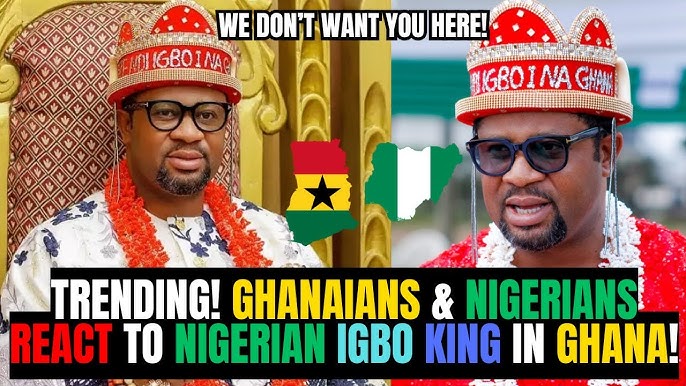
Hundreds of young people in Ghana have taken to the streets to protest the recent installation of an Igbo king by the Nigerian community living in the country.
The protests, which began in Accra and parts of the Eastern Region, were sparked by the coronation of the “Eze Ndi Igbo Ghana”—a traditional title held by Igbos in the diaspora to promote unity among their people.
Though the title is seen as symbolic by the Nigerian Igbo community, many Ghanaians view it as a threat to their traditional leadership system. Protesters carried placards with messages like “No Foreign Thrones in Ghana” and “Honor Our Heritage,” expressing concern that allowing foreign kings could damage Ghana’s cultural integrity.
Organisers of the protest said that while Ghana remains welcoming to foreigners, establishing royal titles by non-Ghanaians could stir future disputes over land ownership, cultural authority, and local leadership.
“This is not about hate,” one protest leader said, “but about protecting our heritage and preventing future tensions.”
Some civil society leaders and traditional rulers have urged calm, calling for dialogue instead of division. However, the protests reflect deeper concerns about cultural identity, immigration, and how far inclusion should go.
Igbo leaders have responded by saying their king holds no political power and is only a unifying figure for Igbos living in Ghana. They insisted that the position is purely cultural and does not challenge Ghanaian authority.
So far, the Ghanaian government has not made an official statement. However, experts warn that failure to address the issue carefully could lead to misunderstandings and damage the peaceful relations between Ghanaians and other West African communities living in the country.