
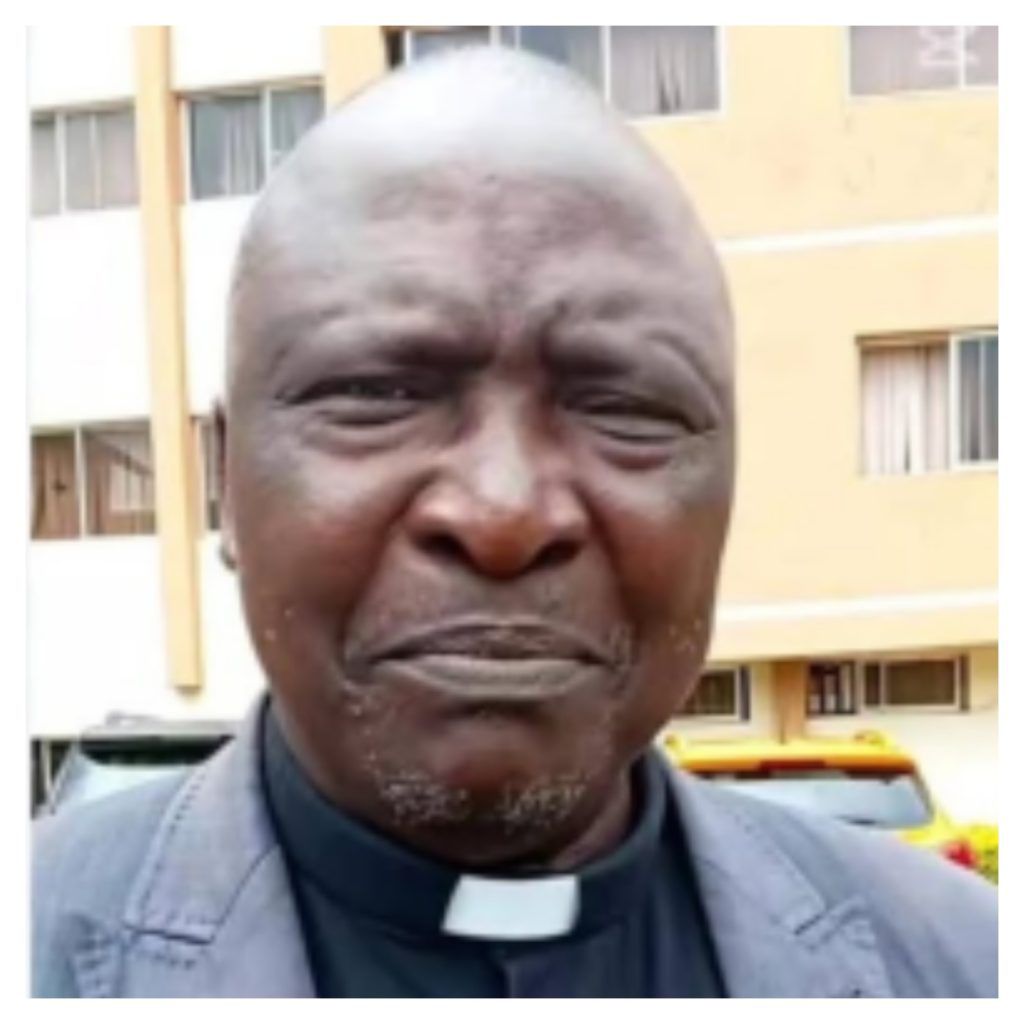
A senior cleric in Plateau State, Rev. Ezekiel Dachomo, has narrated a deeply troubling experience in which he alleged that some Muslim individuals he had sheltered and supported later killed members of his family. The shocking account, shared in a video posted by the group Equipping the Persecuted, has generated strong reactions and renewed conversations around insecurity, inter-communal tension, and long-standing mistrust among different communities in Plateau State.
Rev. Dachomo, who serves as the Regional Chairman of the Church of Christ in Nations (COCIN) in Barkin Ladi Local Government Area, said he hosted a family of Muslims in his home out of compassion and provided them with food and a safe place to stay. According to him, despite his generosity, the same people later turned against his family and carried out gruesome killings in his village.
In the video, the cleric explained that he had offered help to the Muslim family because they were stranded and had nowhere else to go. He said he bought food with his own money to feed them and even allowed them to use a church building to pray.
“I bought foodstuffs with my money to feed them in my house, and they used the church to pray to Allah. Is that not love?” he asked.
He alleged, however, that the people he helped later participated in violent attacks in his village. According to him, they killed his grandmother and removed her heart. He also claimed that they killed his uncle and removed his tongue. In addition, he said his childhood friend, together with the friend’s wife and five children, were burned to death in another attack.
“These same people were the ones who killed my grandmother and removed her heart. The same people killed my uncle and removed his tongue,” he said. “The same people burned my best friend, his wife, and his five children.”
The cleric insisted that these killings were part of repeated attacks on his community. He also said that while attackers frequently visited Christian villages, his community had never gone to attack the neighbouring Ruga settlements.
Plateau State has experienced years of deadly clashes between farming communities—who are mostly Christian and indigenous to the area—and groups of herders, many of whom are Muslim and of Fulani origin. These clashes have often been tied to disputes over land, cattle grazing routes, and competition for natural resources.
Barkin Ladi, Riyom, Bassa, Jos North and other local government areas have witnessed several cycles of violence since the early 2000s. Many communities have been displaced, properties destroyed, and thousands of people have lost their lives in different attacks and reprisals.
While the government has made efforts to restore peace—including military operations, peace committees, and community dialogue—reports of killings and kidnappings continue to surface from time to time. Human rights groups have documented attacks on both Christian and Muslim communities, noting that victims exist on all sides of the conflict.
However, the issue remains sensitive, with each community often accusing the other of aggression, land grabbing, or harbouring criminal elements.
Rev. Dachomo used his personal story to raise wider concerns about trust between Christians and Muslims in troubled parts of Plateau. He alleged that some of the young boys known as Almajirai, who rely on the kindness of Christian households, are sometimes used to attack the same communities during outbreaks of violence.
“No matter how kind you are, they’re conditioned not to see you as human,” he claimed.
He questioned why Christians, in his view, are always expected to seek peace, while some groups that live among them allegedly refuse to reciprocate. He also accused some individuals of taking over lands belonging to Christian villagers.
“Even on my land, they have grabbed the land. To go and retrieve the land will be a case,” he said.
The cleric appealed to the Senate Committee handling security issues to take urgent action to help displaced communities return to their ancestral lands. Many villages in Plateau have been abandoned due to frequent attacks, leading to internal displacement and long-running land disputes.
“I appeal to the Senate Committee to do what they can. They know what they can do but they will not do it,” he said. “But I am praying that God should lead the Committee to present on this security matter to allow us to return to our lands that have been grabbed by terrorists.”
He also warned those who, according to him, travel abroad to deny claims of genocide on the Plateau. He insisted that God would judge them for allegedly making false statements.
“Those who have been going to America to say there is no genocide in Plateau State, let us wait and see how God will handle them,” he said.
While Rev. Dachomo’s testimony has stirred emotions online, it also highlights the broader challenges the state continues to face. Security experts often stress that violence in Plateau is usually driven by multiple factors, including land disputes, farmer-herder misunderstandings, criminal banditry, and political manipulation.
In recent years, the federal and state governments have deployed more security personnel to trouble spots, including Operation Safe Haven, which combines military and police units. Despite these efforts, attacks on villages, ambushes on roads, and retaliatory violence continue to occur.
Community leaders from both Christian and Muslim groups have repeatedly called for honest dialogue, better security patrols, and a clear system for resolving land ownership disputes. Many observers say the cycle of accusations and reprisals will continue unless all sides commit to peace and justice.
As the video spreads on social media, many Nigerians have urged caution and called for thorough investigation into the cleric’s claims. Some warned against generalising the actions of criminals to entire religious groups, while others said his allegations echo the lived experiences of many survivors of rural attacks.