
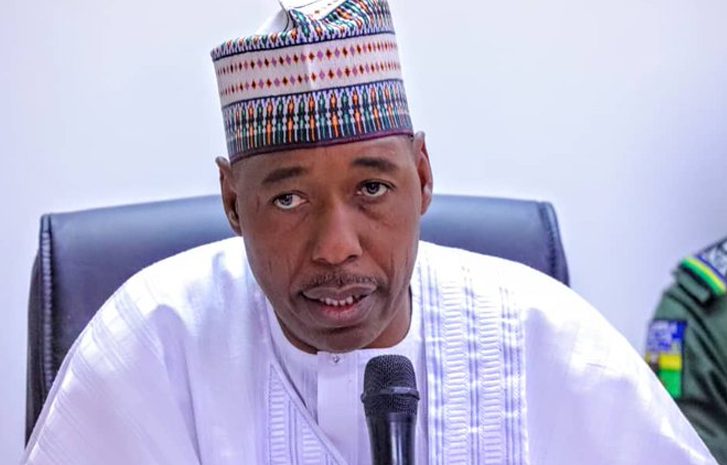
Governor Babagana Zulum of Borno State has insisted that the ongoing Boko Haram insurgency in the northeast of Nigeria is not a religious crisis, emphasizing that the terrorist group has killed both Muslims and Christians.
Zulum made the statement during a meeting with leaders of both Islamic and Christian faiths in the state. He described the insurgency as an assault on Nigeria’s civilization and humanity, stressing that narratives suggesting a religious dimension to the conflict are misleading.
“The Boko Haram conflict is not a religious crisis,” Zulum said. “It is absolutely crucial that we collectively dispel all false narratives that seek to portray our security crisis in a religious colouration. Religious conflict is alien to us.”
He added that the perpetrators have destroyed Mosques and Churches with equal impunity, killing, maiming, and displacing both Muslim and Christian communities.
While Boko Haram targets both faiths, Governor Zulum highlighted that available statistics indicate that Muslims have borne the brunt of the violence, experiencing the majority of deaths, abductions, and displacements.
“While every single life lost is regrettable, the data clearly shows that the overwhelming majority of those who have suffered death, abduction, and displacements are our Muslim brothers and sisters,” he noted.
The governor stressed that these facts should guide public understanding and encourage unity among communities in Borno State, countering attempts to portray the insurgency as a religious conflict.
Governor Zulum also spoke about the government’s ongoing reconstruction, resettlement, and rehabilitation efforts for victims of insecurity in the state. He emphasized that these programs are guided by principles of justice, equity, and inclusivity, ensuring that all victims receive fair treatment regardless of religion.
The initiatives include rebuilding homes, schools, health facilities, and places of worship destroyed during attacks, as well as providing psychosocial support and reintegration programs for displaced persons.
“Security challenges must unite us, not divide us. Every effort is being made to ensure that victims of Boko Haram are resettled and rehabilitated fairly and justly,” he said.
Borno State has historically been the epicenter of Boko Haram activities, which began in 2009 and have since caused thousands of deaths and displacements. However, Governor Zulum acknowledged that recent military operations have yielded significant results, disrupting the insurgents’ networks and reclaiming territories previously under their control.
“The Nigerian military has been working tirelessly, and their operations are yielding results. Communities are being liberated, and the insurgents are being weakened,” Zulum said.
Despite these gains, the governor warned that continued vigilance is necessary, emphasizing that the fight against Boko Haram is not yet over.
Governor Zulum urged religious and community leaders to promote peace and understanding, cautioning against divisive rhetoric that could inflame tensions in the state.
“Attempts to portray this crisis as religious are false and dangerous. We must come together to support our security forces and rebuild our communities,” he said.
The insurgency has displaced millions of residents in Borno and neighbouring states such as Yobe and Adamawa. Humanitarian agencies continue to provide food, shelter, and medical support, but many communities remain vulnerable due to ongoing insecurity.
Governor Zulum’s emphasis on equitable rehabilitation and inclusive recovery is seen as a way to strengthen community resilience and prevent further exploitation by terrorists.
“By rebuilding trust and ensuring fairness, we are sending a message that Boko Haram cannot succeed in dividing our people,” he said.