
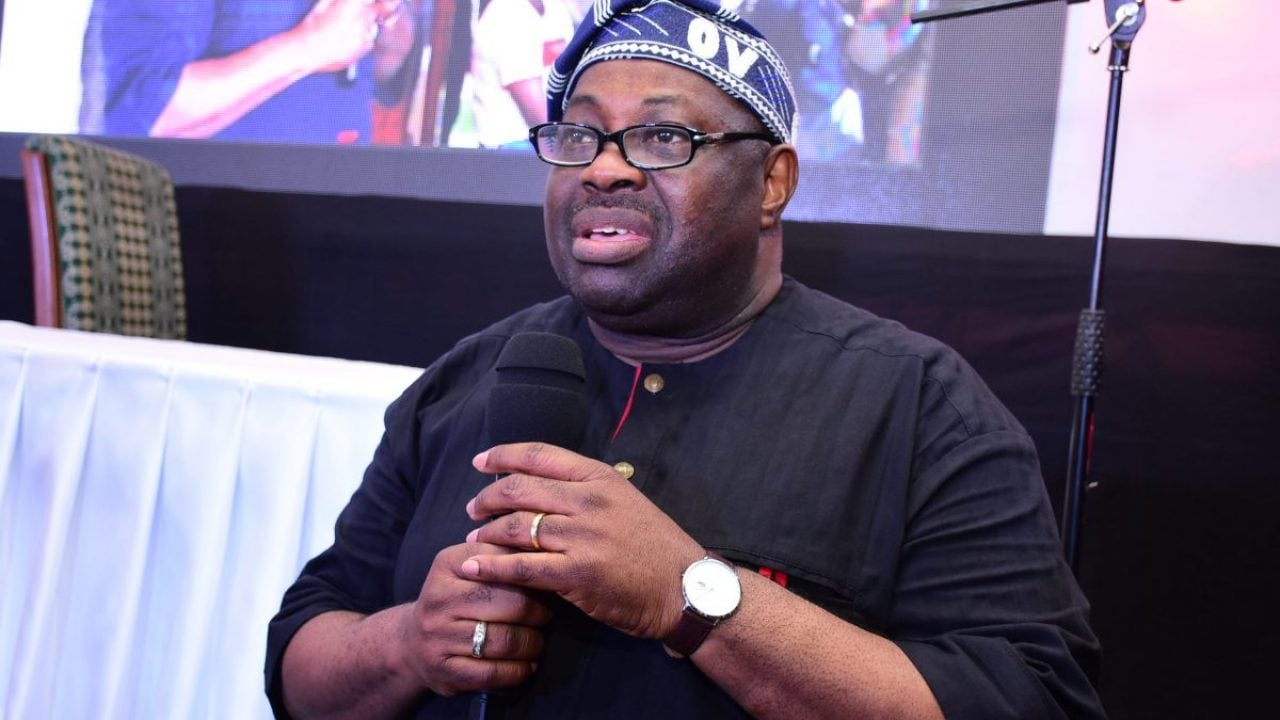
Media entrepreneur and former presidential aspirant, Dele Momodu, has said that Nigeria’s opposition parties are not prepared to challenge President Bola Ahmed Tinubu in the 2027 presidential election. Momodu made the remark in a statement shared on his verified X handle on Tuesday, where he expressed concern over what he described as a lack of unity and strategy among key opposition figures.
Momodu, who is a chieftain of the African Democratic Congress (ADC) and publisher of Ovation magazine, questioned how any opposition candidate expects to defeat President Tinubu when they have not come together to agree on a collective plan. According to him, contesting for the presidency requires seriousness, structure, and unity — qualities he believes the opposition has yet to demonstrate.
In his statement, Momodu criticised opposition aspirants for acting individually rather than as a coordinated force. He argued that without a shared strategy, their chances against a sitting president with strong political networks remain slim.
He wrote: “I often wonder how some opposition Presidential aspirants can think of knocking out President Bola Ahmed Tinubu in 2027 when they have not even come together to agree on a common strategy. Let me highlight that contesting for the highest office in any country is no child’s place.”
Momodu stressed that the presidency is not won by popularity alone, but through planning, coalition-building, and well-organized campaigns — all areas where he believes the opposition is currently weak.
Momodu singled out former Vice President Atiku Abubakar as the only opposition leader who appears prepared for the 2027 race. Atiku, who contested against Tinubu in 2023 under the Peoples Democratic Party (PDP), has been active in political discussions and consultations since the last election.
According to Momodu, Atiku remains the only figure with the political structure, experience, and commitment needed to mount a serious challenge.
“The only opposition leader who seems to understand what it takes to be competitive is Alhaji Atiku Abubakar,” he stated.
Momodu’s comment adds to ongoing debates about whether the opposition should rally around a single candidate to improve its chances in 2027. Several politicians across different parties have already shown interest in running, but no clear coalition has been formed.
Since the 2023 election, Nigeria’s opposition parties — including the PDP, Labour Party, and ADC — have struggled to form a united front. The PDP is still dealing with the internal divisions that affected its performance, including disagreements involving the G-5 governors. The Labour Party, which surged in popularity during the last election due to the “Obidient” movement, has also faced internal disputes and leadership battles.
Tinubu, who took office in May 2023, has spent much of his first term implementing economic reforms and restructuring key sectors. Although his policies have drawn mixed reactions — especially due to rising inflation and hardship — analysts say incumbency advantage and party control across many states could give him a strong position going into the next election.
Momodu’s statement reflects growing concerns among political observers who believe that without a united front, the opposition stands little chance. Several commentators have argued that Nigeria’s political system, which favours strong party structures and alliances, makes it difficult for fragmented opposition groups to succeed.
In recent months, there have been suggestions that the Labour Party, PDP, NNPP, and other smaller parties should consider forming a merger or at least a broad coalition. However, so far, there has been no clear movement toward such a partnership. Some aspirants appear more focused on building individual campaigns than negotiating alliances.
Momodu’s insistence on unity highlights the broader political challenge facing the opposition at a time when Nigerians are increasingly calling for effective alternatives and stronger accountability.
Atiku, who has contested the presidency six times, has remained vocal on national issues since his loss in 2023. He has criticised government policies and spoken frequently on security, governance, and economic reforms. His supporters argue that his experience, national network, and familiarity with electoral strategy give him an advantage over other opposition hopefuls.