
President Bola Ahmed Tinubu has announced that Nigeria is preparing to begin the manufacturing of aircraft components as part of a major effort to position the country as the leading aviation hub for West and Central Africa. He made the announcement on Tuesday at the opening of the maiden Nigeria International Airshow, held in Abuja. The President was represented by the Secretary to the Government of the Federation (SGF), George Akume.
Tinubu said the plan is one of several steps the Federal Government is taking to strengthen the aviation sector, expand investment, and raise Nigeria’s profile in global aviation. He noted that the airshow itself was a “historic event” that places Nigeria among countries that host world-class aviation exhibitions such as Farnborough in the United Kingdom, Paris in France, and Dubai in the United Arab Emirates.
President Tinubu said Nigeria’s aviation industry is growing steadily and could generate $2.56 billion in revenue by 2029. He explained that passenger traffic has been rising each year. In 2023, airports across the country recorded 15.89 million passengers, a number expected to reach 25.7 million within the next five years.
The President noted that the aviation sector is not only expanding but also gaining more respect globally. He said Nigeria has made major improvements in safety, regulation, and compliance with international standards. This includes progress under the Cape Town Convention, which deals with the rights of aircraft owners and financiers. Nigeria’s compliance score has risen from 49.5 per cent to 75.5 per cent, making it the highest-rated country in Africa.
Tinubu said this progress has increased investor confidence and allowed Nigerian airlines to access lower-cost aircraft financing.
The President highlighted several ongoing infrastructure projects across the aviation sector. He said the government is currently carrying out a ₦712 billion refurbishment of the Murtala Muhammed Airport in Lagos, which is the busiest airport in Nigeria and one of the busiest in Africa.
He added that improvements are also being made at six major airports around the country, as well as several runways. According to him, modern airports and well-maintained runways are essential if Nigeria wants to attract more international airlines and establish itself as the central aviation hub in the region.
In recent years, Nigeria has struggled with ageing airport terminals, long delays, poor maintenance, and safety concerns raised by international inspectors. Tinubu said his administration is determined to change this narrative by heavily investing in aviation infrastructure for long-term safety and efficiency.
In one of the most significant announcements of the event, President Tinubu revealed that Nigeria has signed agreements with Boeing—one of the world’s largest aircraft manufacturers—and Cranfield University in the United Kingdom, a leading institution for aerospace research and engineering.
The agreements will support the establishment of advanced Maintenance, Repair and Overhaul (MRO) facilities in Nigeria. These facilities will allow airlines to service and repair their aircraft locally instead of flying to Europe, the Middle East, or other African countries.
Tinubu said Nigeria currently loses around $200 million every year because airlines must travel abroad for aircraft maintenance. With the new MRO facilities, this money will remain in the country and create jobs for aviation engineers and technicians.
He added that airlines such as Aero Contractors and XEJet are already leading efforts to develop new maintenance hubs in Lagos and Abuja.
The President also pointed to recent improvements in Nigeria’s international air travel connections. He mentioned the successful resumption of Air Peace’s Lagos–London flights, which have given Nigerian travellers a locally owned option on one of the busiest routes in the world.
He said Nigeria has signed new Bilateral Air Services Agreements (BASAs) with several countries to expand international flight operations. Tinubu also announced that Emirates Airline and Uganda Airlines are set to return to the Nigerian market after earlier suspensions.
With these developments, aviation now contributes 2.5 per cent to Nigeria’s Gross Domestic Product (GDP).
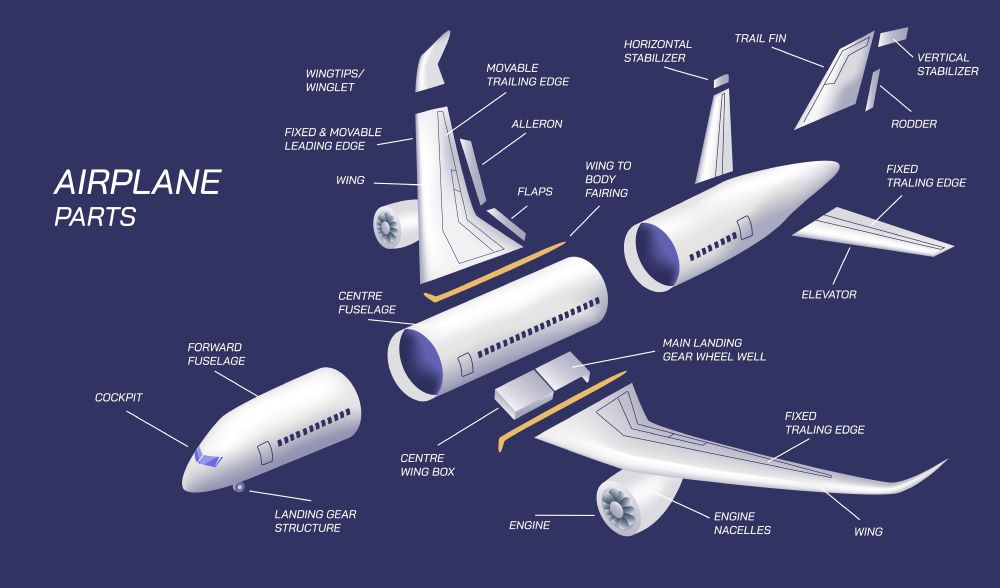
One of the most ambitious goals announced by the President is the plan to start manufacturing aircraft components in Nigeria. He said the government is working with private investors, international partners, and local aviation companies to begin producing certain parts used in aircraft.
Tinubu said this initiative is part of a broader plan to build a “sustainable aviation ecosystem” that creates jobs, supports innovation, and strengthens the national economy. If successful, Nigeria would become one of the few African countries involved in aircraft part manufacturing, joining nations like South Africa, Morocco, and Ethiopia.
In his remarks, the Minister of Aviation and Aerospace Development, Festus Keyamo, said the Nigeria International Airshow is a “historic” event that signals the country’s determination to take its place among global aviation leaders.
He acknowledged that the event, being the first of its kind, might not be perfect, but described it as an important first step. “We are taking baby steps, but we take them with courage, conviction, and clarity of purpose,” he said.
Keyamo expressed confidence that in time, the Nigeria International Airshow will stand “shoulder to shoulder with Paris, Dubai, Farnborough, and Singapore,” which host some of the most prestigious aviation exhibitions in the world.
The minister also outlined several achievements of the aviation sector in the past year. These include:
Improvements in aviation safety and security
Modernisation of airport terminals
Stronger aircraft leasing and financing systems
Ongoing digitalisation of Nigerian airspace
Upgraded surveillance and navigation systems
Expanded training for aviation professionals
Keyamo also reaffirmed that the government will continue to promote private-sector participation through concessions and public-private partnerships (PPP) in cargo terminals, aviation city projects and maintenance facilities.