
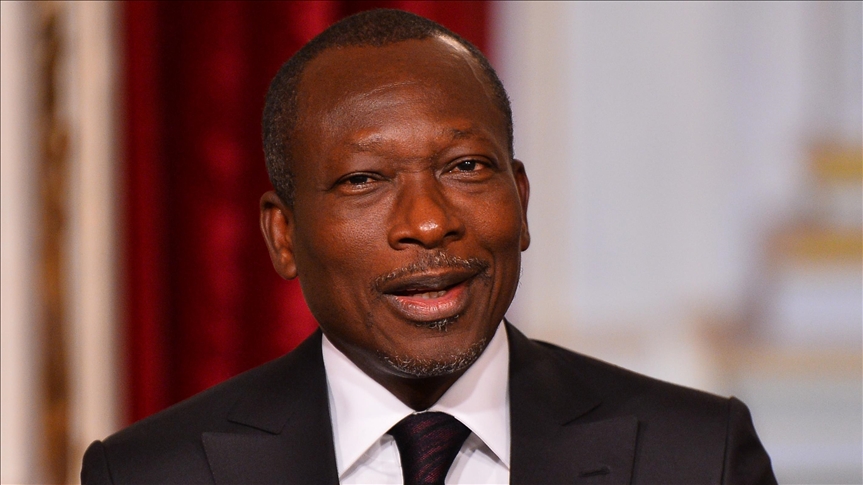
Benin’s President, Patrice Talon, has assured citizens that the situation in the country is “completely under control” after government forces foiled an attempted military coup on Sunday. Speaking in a national broadcast on Benin TV, the president called for calm and urged people to continue their normal activities.
The attempted coup, led by a small group of soldiers calling themselves the Military Committee for Refoundation (CMR), created shock within the usually stable West African nation. Benin, known in recent years for political tension but not for military takeovers, briefly joined the growing list of countries in the region threatened by military uprisings.
The drama began early Sunday when a group of soldiers appeared on state television to announce that they had removed President Talon from office. They claimed that the CMR had met and agreed that Talon was no longer president.
However, loyalist soldiers responded immediately. Security and military sources later confirmed that around a dozen soldiers were arrested, including those who appeared on television.
The situation escalated further when neighbouring Nigeria intervened with air support to help loyalist forces suppress the uprising. Other countries within the region also deployed troops in support of Benin’s government. The rapid regional response showed the growing concern across West Africa about the rise in coups and the need to protect democratic governments.
By the afternoon, calm had returned to Cotonou and other major cities. In his address, Talon reassured the public that the threat had been neutralised.
“I would like to assure you that the situation is completely under control and therefore invite you to calmly go about your activities starting this very evening,” he said during the national broadcast.
Benin’s attempted coup is the latest in a troubling pattern across West Africa. In recent years, several countries in the region have experienced successful military takeovers. Niger, Burkina Faso, Mali, Guinea, and most recently, Guinea-Bissau, have all seen their democratically elected governments removed by soldiers.
These coups have created political instability, weakened regional cooperation, and raised fears about the future of democracy in West Africa. The Economic Community of West African States (ECOWAS) has struggled to manage the crisis, especially after some military governments refused to follow timelines for returning to democratic rule.
Benin, although facing its own internal tensions, has largely remained outside this wave of coups. Talon’s government has been credited with strengthening the economy and improving infrastructure. However, critics have accused his administration of limiting political freedom and weakening opposition groups. This political climate may have helped create an opening for the attempted coup, even though it ultimately failed.
President Talon, a former businessman, has been in office since 2016. His administration is known for economic reforms and major public projects, which have contributed to steady economic growth. Under his leadership, Benin has attracted foreign investment, improved its port operations, and expanded infrastructure.
However, despite these achievements, Talon’s time in office has also been marked by political disputes. Opposition figures have complained about arrests, restrictions, and changes to election laws, which they say have made it harder for political rivals to compete. Talon has denied these claims, insisting that his reforms are aimed at strengthening governance and fighting corruption.
The president is expected to hand over power in April next year, after completing 10 years in office. Analysts note that the country is entering a sensitive period as political groups prepare for a transition. Some believe the timing of the attempted coup may be connected to these political changes.
Benin has also been facing rising insecurity in its northern region, near the borders with Burkina Faso and Niger. Armed groups linked to extremist movements in the Sahel have carried out attacks in recent years, raising fears that instability from the north could spread further south.
The government has increased military presence in the affected areas, but insecurity remains a major challenge. This pressure has added to the country’s political tensions, creating an environment where coup attempts, although unlikely, are not entirely surprising.
The quick intervention by Nigeria and other neighbouring countries is significant. In recent years, ECOWAS members have struggled to present a united front as coups spread across the region. Some military leaders in the Sahel have turned away from traditional partners like France and ECOWAS, choosing instead to form new alliances.
By supporting Benin within hours, Nigeria and other regional governments sent a strong message that they remain committed to defending democratic rule. It also shows that West African leaders are increasingly concerned about the possibility of more coups spreading southward from the Sahel.
Nigeria’s involvement is especially important because of its influence in the region and its long border with Benin. A successful coup in Benin could have destabilised Nigeria’s western flank and threatened cross-border economic activities.
In his address, Talon thanked friendly nations for their support and reassured Beninese citizens that peace had been restored. He urged the public not to panic or spread misinformation.
While speaking calmly and confidently, he made it clear that the government was in full control of the situation. He emphasised that citizens should return to their daily routines without fear.
For now, Benin appears to have avoided joining the list of West African countries under military rule. But the attempted coup has exposed deeper concerns about political tensions, regional instability, and the need for stronger security structures.