
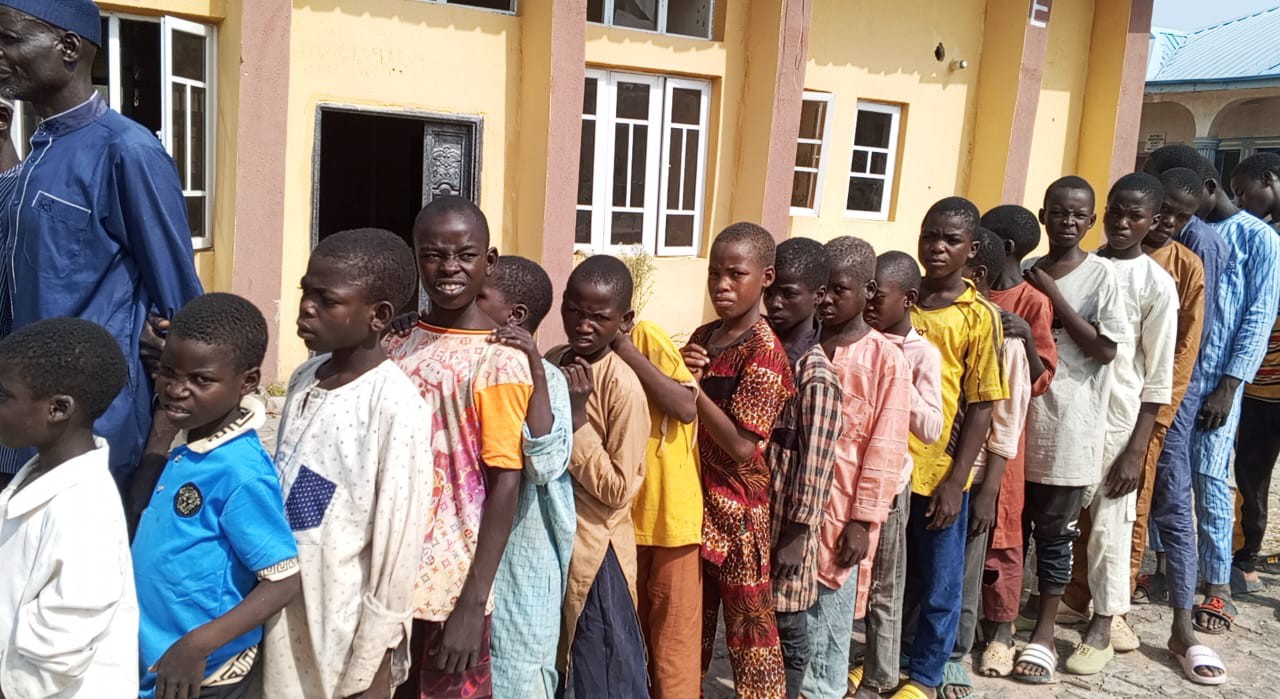
Security operatives in Kogi State have rescued 21 underage children, aged between 6 and 17, from what authorities believe was a covert attempt to recruit them for banditry training. The operation took place in Yagba East Local Government Area, and several suspects linked to the trafficking movement have been arrested.
The rescue was announced on Tuesday in a statement by the Kogi State Commissioner for Information and Communications, Kingsley Femi Fanwo. According to him, the swift intervention of security agencies prevented a potentially dangerous security threat from developing within the state.
Fanwo said the intercepted truck was carrying the children under suspicious circumstances, with accompanying adults unable to provide any lawful explanation for the movement. Some of the suspects claimed they were transporting the children to set up an informal “Islamic school” in Yagba East, but investigators said the explanations were not convincing.
The statement explained that the rescue operation was carried out at about 3:00 p.m. on December 5, 2025. Officers of the National Security and Civil Defence Corps (NSCDC) in the Yagba Area Command, acting on reliable intelligence from community hunters, intercepted the truck as it entered the area.
The cooperation between security agencies and local vigilante groups was credited as a major factor behind the successful interception. “Eagle-eyed security operatives” and “credible intelligence” were the phrases used by the government to describe the effectiveness of the collaboration.
Initial investigations revealed that the children were moved from different states in northern Nigeria. Authorities say they were transported in conditions that raised immediate red flags, and the adults accompanying them showed signs of evasion when questioned.
Security operatives intensified surveillance following the interception, which led to further arrests. Items found on some of the suspects also raised serious security concerns, although the state government did not detail the nature of these items.
Fanwo’s statement confirmed that the 21 children have been transferred to the NSCDC State Command Office in Lokoja for proper profiling. This includes efforts to determine their identities, where they came from, and how they were recruited.
The profiling will also help establish whether they were kidnapped, deceived, coerced, or voluntarily moved by adults who may have misled them or their families. The Kogi State Government said tracing the root of the trafficking network is important to prevent future cases.
Governor Ahmed Usman Ododo directed the Ministry of Women Affairs and Social Development to take full custody of the children. The Ministry will provide psychosocial support, medical checks, and shelter as investigations continue.
According to the statement, “His Excellency has directed that the wellbeing of the rescued children be fully guaranteed and that they receive the necessary psychosocial support.” The government also assured their families—once identified—that the children will be safely returned to their home states after verification and documentation.
The Kogi State Government stated that all individuals found to be involved in the trafficking operation will face prosecution under Kogi’s Child Trafficking and Child Rights Protection Laws. The Commissioner noted that the state has an “uncompromising stance” against child exploitation and criminal infiltration.
Kogi State, under Governor Ododo, has repeatedly emphasized the importance of security and the protection of minors. In recent years, Nigeria has witnessed increased concerns over child recruitment by armed groups, including bandits and insurgents. Some groups target rural communities where children are more vulnerable to manipulation, kidnapping, or trafficking.
The rescue operation aligns with national security concerns over the recruitment of young children for violent activities. Intelligence reports across Nigeria have previously shown that some criminal groups use minors for surveillance, carrying weapons, or participating in attacks. These trends have increased the pressure on state governments to strengthen early-warning systems and community policing.
The incident in Kogi reflects broader challenges across Nigeria, where insecurity has taken different forms including banditry, kidnapping, terrorism, and trafficking. Child trafficking has become a major concern, especially in rural and border communities where gaps in enforcement make young people easy targets.
Kogi State, located at a strategic intersection between the North and South, has faced security threats in the last decade due to its geography. The state shares boundaries with multiple others and is crossed by major transport routes, making it vulnerable to movements of criminal elements.
Under both past and current administrations, the state has partnered with local hunters, vigilante groups, and federal security agencies to intercept illegal activities. The state government says this case demonstrates the effectiveness of community policing and intelligence gathering.
Fanwo’s statement stressed that child trafficking and any form of exploitation will not be tolerated. He said Governor Ododo expects security agencies to remain vigilant and continue working with communities to expose suspicious movement.
“The administration of Governor Ododo will continue to work closely with security agencies and local communities to safeguard every part of the state,” the Commissioner said.
He added that the events of December 5 show why residents must remain alert and report unusual activities immediately.
The statement concluded with a reassurance that the rescued children will be returned to their families once investigations are complete. Their home states will be notified formally, and all further inquiries will be handled jointly between Kogi authorities and officials from the respective states.
As authorities continue investigations, the Kogi State Government says it remains committed to protecting young people from exploitation, recruitment by criminal groups and all forms of abuse.