
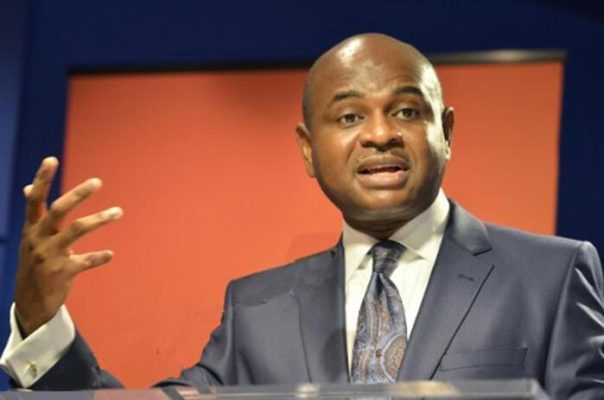
Former Deputy Governor of the Central Bank of Nigeria (CBN), Professor Kingsley Moghalu, has described former President Olusegun Obasanjo as arguably Africa’s greatest living statesman. Moghalu made the statement in a post on X, where he reflected on Obasanjo’s leadership style, political influence, and long-standing involvement in African affairs.
According to the economist and former presidential candidate, Obasanjo remains one of the most outspoken and influential figures on the continent. He noted that the former president has never been afraid to voice his opinions on global, continental, or national issues, and continues to contribute to discussions on peace, governance, and development across Africa.
Moghalu’s remarks come at a time when Obasanjo’s role in regional politics continues to attract attention, especially as West Africa navigates political instability, military takeovers, and strained regional cooperation. His comments also highlight Obasanjo’s continued relevance in public discourse nearly two decades after he left office as Nigeria’s president.
Moghalu stated that Obasanjo has “no regrets” about the decisions he made during his years in office. Obasanjo, who ruled Nigeria first as a military leader from 1976 to 1979 and later as a democratically elected president between 1999 and 2007, has often faced criticism for his governance style. Yet Moghalu said the former leader remains confident in the choices he took to stabilize the country after years of military dictatorship.
During Obasanjo’s civilian presidency, Nigeria secured debt relief from the Paris Club, implemented banking sector reforms, privatized several public institutions, and recorded some of its most significant economic growth since the return to democracy. His administration also established anti-corruption institutions such as the Economic and Financial Crimes Commission (EFCC) and the Independent Corrupt Practices Commission (ICPC). These actions have contributed to the perception of Obasanjo as one of Nigeria’s most impactful leaders.
Though his administration also faced criticism over political tensions, third-term allegations, and human rights concerns, Obasanjo has maintained that he acted in the country’s best interest. Moghalu’s comments suggest that the former president sees his legacy as a mixture of tough decisions and long-term national reforms.
In his post, Moghalu shared Obasanjo’s reflection on one area where he believes he could have acted more decisively: the establishment of a common currency for the Economic Community of West African States (ECOWAS). The currency, known as the “Eco,” has been under discussion for decades, with hopes that it would boost trade, ease travel, and strengthen economic ties among member states.
Obasanjo, who was involved in early discussions about the regional currency, reportedly said he wished he had pushed harder for its creation. Moghalu explained that the former president’s regret is particularly strong now because ECOWAS, according to him, is “in tatters.”
Recent years have seen sharp divisions within the regional bloc, especially with political instability in Mali, Niger, and Burkina Faso, and their eventual withdrawal from ECOWAS. These tensions have greatly affected regional cooperation, including economic integration plans such as the Eco.
Moghalu noted that one major challenge that slowed the implementation of the common currency was the difficulty in meeting the required convergence criteria. These criteria include maintaining single-digit inflation, keeping fiscal deficits below 4 percent, limiting central bank deficit financing, and ensuring foreign reserves can cover at least three months’ worth of imports. Many member states struggled to meet these benchmarks, delaying progress.
Even after leaving office, Obasanjo has played major roles in peace negotiations and regional diplomacy. He has served as a mediator in political disputes across Africa, including in Ethiopia, the Democratic Republic of Congo, Liberia, and South Sudan. His influence has made him one of the most recognized voices on African governance.
Domestically, Obasanjo continues to comment on Nigeria’s political and economic direction. His opinions often spark debate, and he remains one of the few former leaders whose statements attract both national and international attention.
Moghalu’s praise highlights the broad respect Obasanjo continues to enjoy across the continent, despite disagreements that Nigerians may have about his time in office. His role as a former head of state, international mediator, and African elder statesman has positioned him as one of the continent’s most enduring political figures.
Kingsley Moghalu’s opinion carries weight because of his own background in governance, economics, and international affairs. As a former deputy governor of the CBN, he played a key role in Nigeria’s financial reforms. He also served at the United Nations and has been active in national politics, contesting for president in 2019 and 2023.
His praise for Obasanjo adds to ongoing conversations about leadership in Africa, especially during a period marked by coups, democratic setbacks, and economic challenges in West Africa. By describing Obasanjo as Africa’s “preeminent statesman alive,” Moghalu appears to highlight the need for experienced voices and strong leadership in the region.
While Moghalu’s comments paint Obasanjo in a positive light, debates about his legacy continue among Nigerians. Some praise his economic and democratic reforms, while others criticize his political decisions. However, even his critics often acknowledge his influence in African politics.