
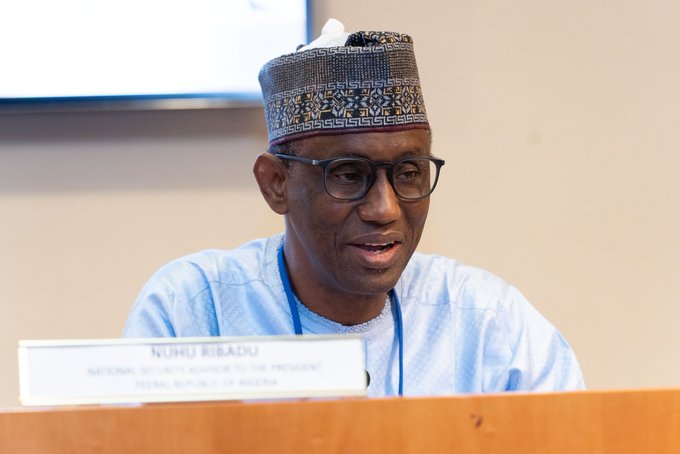
President Bola Tinubu has ordered the National Security Adviser (NSA), Nuhu Ribadu, to begin the immediate training, arming, and deployment of additional forest guards across the country. The directive is part of new measures aimed at tackling Nigeria’s worsening security situation, especially the growing cases of kidnapping, banditry, and terror attacks in many states.
The instruction was announced on Wednesday in a statement released by Sunday Dare, the Special Adviser to the President on Media and Public Communications. According to the presidency, Tinubu said Nigeria must strengthen every part of its security architecture to protect citizens and restore confidence in the government’s ability to keep the country safe.
President Tinubu, while speaking on the challenges facing the nation, said the rise in violent crime required urgent and decisive action. He noted that kidnappers, bandits, and terrorist groups have become more daring, attacking communities, highways, schools, and farmlands.
“We face challenges here and there of kidnapping and terrorism. We need all the forces we can utilize,” the President said. “We need to protect our people.”
The forest guards, who traditionally operate within Nigeria’s forests and border areas, are expected to play a key role in identifying criminal hideouts, monitoring movement within forests, and assisting security agencies with intelligence. For years, bandit groups have used forests across the North-West, North-Central, and parts of the South-West as bases for kidnapping and attacks.
Tinubu’s decision to strengthen the forest guard system appears to be a response to the need for more specialised, community-based security units that understand the terrain better than regular forces.
Forest guards are not new in Nigeria. They were originally established to protect wildlife reserves and forest areas, but over the years, the spread of criminal groups into forests has forced the government to consider turning them into a more security-focused force.
By arming and training forest guards, the government hopes to gather better intelligence, disrupt criminal operations, and support the military and police in responding faster to threats.
Nigeria continues to battle serious security problems that affect nearly every region. In the North-West, bandits frequently attack villages and abduct schoolchildren. In the North-East, remnants of Boko Haram and ISWAP still carry out attacks. The North-Central faces deadly clashes between farmers and herders, while kidnapping-for-ransom has spread to the South-West and South-South.
Daily incidents of highway kidnappings, home invasions and attacks on rural communities have left many Nigerians worried about their safety. Several recent cases, including mass abductions in Kaduna and Ekiti, have led to renewed calls for stronger action from the federal government.
Tinubu’s directive to the NSA is seen as one of several steps aimed at restoring public confidence. The move also signals a more decentralised approach to security, where local and specialised units are empowered to support national forces.
While the government works to strengthen internal security, it is also dealing with rising instability in neighbouring countries. On Tuesday, the Senate began considering President Tinubu’s request seeking approval to deploy Nigerian troops to the Republic of Benin.
The request was read during plenary by Senate President Godswill Akpabio. According to the President’s letter, Benin Republic formally asked for Nigeria’s help after an attempted military coup in the country over the weekend.
Tinubu explained that the troop deployment would be part of a Peace Mission designed to support Benin’s democratic institutions and prevent a complete breakdown of order. He said the decision followed due consultations with the National Defence Council, in line with Section 5(4) of the 1999 Constitution.
The Senate has referred the request to the “Committee of the Whole” for immediate deliberation. Lawmakers are expected to debate the legality, timing, and implications of sending Nigerian troops abroad at a time when the country itself is facing severe security challenges.
West Africa has experienced several military coups in recent years, with countries like Mali, Burkina Faso, Guinea and Niger falling under military rule. These developments have raised concerns among regional leaders, who fear that instability could spread further and threaten democratic governance in neighbouring states.
Nigeria, as the region’s largest democracy and a key member of ECOWAS, has often taken the lead in supporting peaceful transitions and discouraging unconstitutional changes in government. Tinubu, who is the current Chairman of ECOWAS Authority of Heads of State, has repeatedly warned that coups threaten the stability of the entire region.
The situation in Benin Republic has therefore attracted immediate attention, as the country shares long borders and close economic links with Nigeria. A successful coup there could create security problems for Nigeria’s South-West states and disrupt trade and movement across the border.
The President’s request to deploy troops has sparked discussions among Nigerians about whether the country can afford to send soldiers abroad while still dealing with serious insecurity at home. Some lawmakers are expected to raise these concerns when the Senate begins debate on the matter.
Others may argue that maintaining stability in neighbouring countries is also in Nigeria’s interest, as conflicts across borders often spill over and worsen internal insecurity. For example, past crises in Libya, Mali, and Niger have contributed to increased proliferation of arms and movement of armed groups around the region.
President Tinubu has faced growing pressure to produce visible results in the fight against insecurity. Many Nigerians feel the situation has not improved significantly despite changes in service chiefs, new policies, and increased interventions.
By strengthening forest guard operations and responding to regional threats, the government hopes to create a stronger and more coordinated security system. However, citizens and lawmakers will be watching closely to see how quickly these new measures translate into real improvements on the ground.

