
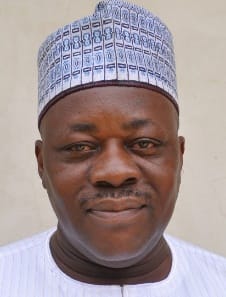
A Senior Fellow at the Centre for Democracy and Development (CDD), Prof. Jibrin Ibrahim, has criticized President Bola Ahmed Tinubu over the growing insecurity in the country, saying the current administration is performing worse than that of former President Goodluck Jonathan.
Prof. Ibrahim made the remarks on Friday while speaking on Prime Time, a current affairs programme on Arise Television. He compared the handling of insecurity under different administrations and expressed concern that Nigeria’s security situation has continued to deteriorate despite repeated promises by successive governments.
According to him, President Tinubu, who strongly criticised former President Jonathan over the abduction of schoolchildren in 2014, is now facing a worse security situation under his own watch.
“Tinubu criticized Jonathan for school abductions and has found himself at the helm of affairs and performing worse than Jonathan did,” Ibrahim said.
Nigeria has faced serious security challenges for more than a decade. The Boko Haram insurgency in the North-East began around 2009 and led to thousands of deaths and the displacement of millions of people. Over time, other forms of insecurity emerged, including banditry, kidnapping for ransom, armed robbery and violent attacks on highways and rural communities.
One of the most painful moments in Nigeria’s security history was the abduction of over 270 schoolgirls from Chibok, Borno State, in April 2014, during Jonathan’s administration. The incident attracted global attention and led to widespread criticism of the government’s handling of security.
Since then, similar attacks have continued in different parts of the country, including mass kidnappings of students in the North-West and killings by armed groups across several states.
Prof. Ibrahim said many Nigerians had high hopes that insecurity would reduce when former President Muhammadu Buhari took office in 2015. Buhari, a retired Army General, had promised to defeat insurgents and restore peace to troubled areas.
“When Buhari came, many of us felt the tide would turn. This is a tough Army General. He will deal with them,” Ibrahim said.
However, he argued that Buhari’s administration failed to meet those expectations, as insecurity spread to more regions during his eight years in office.
“He proved totally incapable of doing that,” Ibrahim added.
According to him, the situation has not improved under President Tinubu, who took office in May 2023. Instead, he said Nigerians are experiencing another difficult period marked by rising violence and fear.
Prof. Ibrahim described the past year as extremely difficult for Nigerians, noting that insecurity has combined with economic hardship to worsen the living conditions of many citizens.
“I think it’s been a very difficult year for Nigerians,” he said. “But the fact of the matter is that many of the preceding years have been equally difficult.”
He explained that what makes the current period stand out is what he described as the clear failure of the Nigerian state to carry out its constitutional responsibility of providing security and welfare for citizens.
Nigeria’s constitution places the security and welfare of the people as the primary purpose of government. However, Ibrahim argued that this duty has not been effectively fulfilled for many years.
The CDD fellow expressed deep concern over the increasing number of armed civilians across the country. He said the continued spread of illegal weapons and the ease with which criminals operate show a lack of serious effort by the state.
“Since 2009, how do we explain the fact that each year, insecurity continues to grow?” he asked. “The number of civilians with arms, using these arms against communities, road users, and even the military and police themselves, clearly indicates a sustained lack of effort.”
He warned that when people who are not legally allowed to carry weapons are able to obtain and use them without consequences, insecurity will only continue to grow.
“Once you have people who have no rights to arms, procuring arms and then finding out they could use those arms with impunity, that problem is bound to increase,” he said.
Prof. Ibrahim noted that Nigerians have experienced several moments of hope over the years, believing that each new government would finally turn the tide against insecurity. Unfortunately, he said those hopes have often been dashed.
“We have had many moments of hope that the tide will turn,” he said. “When Buhari came, many of us felt the tide would turn. He did nothing of that.”
According to him, the failure of successive governments has led to growing frustration and loss of trust among citizens.
President Tinubu came into office promising to address Nigeria’s security challenges through reforms, improved intelligence gathering and better coordination among security agencies. His administration has also increased defence spending and appointed new security chiefs.
However, critics argue that attacks by bandits, kidnappers and other armed groups continue in many parts of the country, raising questions about the effectiveness of these measures.
In recent months, reports of killings, abductions and attacks on villages and highways have continued to make headlines, especially in the North-Central, North-West and parts of the South-East.
Prof. Ibrahim concluded by saying Nigeria is yet to see a government with the political will, determination and capacity to deal with insecurity in a meaningful way.
“It’s a very sad tale,” he said. “The narrative is extremely disturbing, and the problem we all face as Nigerians is that we are yet to see a government that has both the will, the determination and the know-how to attack this problem of rising insecurity.”
He stressed that without a clear and firm commitment from the government, insecurity will continue to threaten lives, livelihoods and national stability.