
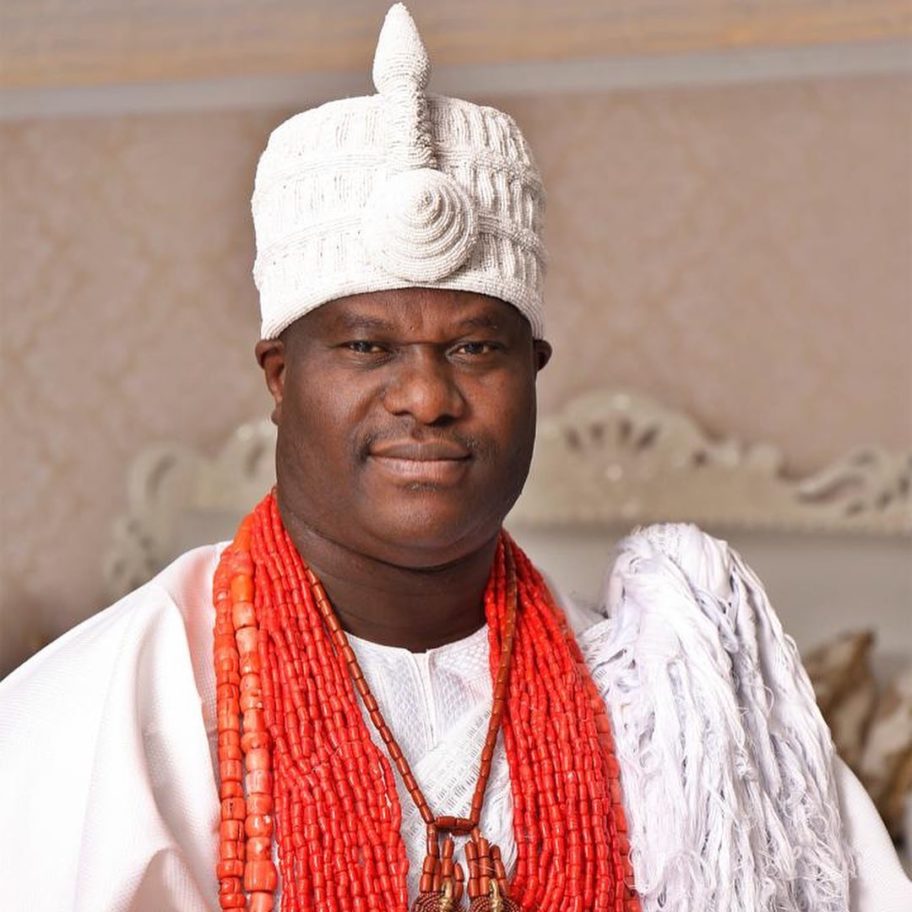
Africa’s richest man and President of Dangote Group, Aliko Dangote, has revealed that the construction of his multi-billion-dollar refinery in Lagos would not have been possible without the intervention of the Ooni of Ife, Oba Adeyeye Ogunwusi.
Dangote made the disclosure in a video that surfaced online on Friday, where he explained how traditional and community challenges almost stopped the project at its early stage. According to him, the presence of several shrines on the land allocated for the refinery made it difficult for workers to begin construction.
The refinery is located in Ibeju-Lekki, Lagos State, within the Dangote Industries Free Zone. It is the world’s largest single-train refinery, with a production capacity of 650,000 barrels of crude oil per day. The project is seen as a major step towards reducing Nigeria’s dependence on imported fuel.
Dangote said that when his company took possession of the land for the refinery, workers discovered that there were more than 19 traditional shrines scattered across the site. He explained that the shrines were considered sacred by the host communities, and workers were afraid to touch them due to spiritual concerns.
“I must recognise and thank the Ooni of Ife for enabling the building of our factory,” Dangote said. “What happened was that when we got there, there were over 19 shrines at the site. Nobody was able to go near there to do anything.”
According to him, construction activities could not move forward because both workers and contractors were worried about possible spiritual consequences. The situation caused delays and increased tension around the project, despite the large investment already committed.
Dangote added that efforts to resolve the issue through normal channels were not successful, as the shrines had deep cultural and spiritual significance to the local people.
The business mogul said the situation changed when the Ooni of Ife personally intervened. According to Dangote, the respected traditional ruler visited the site and ordered that all the shrines be removed.
“But Ooni went there, stood there and said, ‘remove all of them. Let the gods come and talk to me,’” Dangote recalled.
He praised the courage and authority of the Ooni, saying that his action cleared the way for construction to begin fully. Dangote said the traditional ruler’s decision helped to calm fears and showed strong leadership.
“Your Royal Majesty, I want to thank you from the bottom of my heart because without that singular act of yours, I don’t think we would have been able to build the refinery,” he said.
The Ooni of Ife, Oba Adeyeye Ogunwusi, is one of Nigeria’s most influential traditional rulers and is widely respected across the South-West and beyond. His role in mediating cultural and community issues has earned him recognition in several national matters.
Dangote also spoke about the challenges surrounding land acquisition for the refinery. He had earlier disclosed that he paid about $100 million to the Lagos State Government for the large expanse of land used for the project.
However, despite the official allocation, community-related issues such as the presence of shrines and concerns from local residents delayed construction. These challenges are common with large infrastructure projects in Nigeria, where cultural, spiritual, and land ownership issues often arise.
The Dangote Refinery is a major industrial project not only for Nigeria but for Africa as a whole. With a capacity of 650,000 barrels per day, it is expected to meet Nigeria’s fuel needs and also export refined products to other countries.
The refinery includes facilities for producing petrol, diesel, aviation fuel, and other petroleum products. It also has a petrochemical complex and a fertilizer plant, making it one of the most ambitious industrial projects in the world.
Operations at the refinery began in 2024 after several years of construction. The project faced multiple delays due to funding, logistics, and regulatory issues, but it is now seen as a key part of Nigeria’s economic future.
The refinery is expected to reduce Nigeria’s long-standing dependence on imported fuel. For decades, Africa’s largest oil producer has relied on foreign refineries due to the poor state of its local refineries.
By refining crude oil locally, the Dangote Refinery is expected to save the country billions of dollars in foreign exchange, stabilise fuel supply, and reduce pressure on the naira.
The project is also expected to create thousands of direct and indirect jobs, both during construction and full operation. Many Nigerians see it as a sign of what private investment can achieve when supported by the right policies and leadership.
Dangote’s comments have once again highlighted the role of traditional institutions in Nigeria’s development. While modern governance structures exist, traditional rulers still play an important role in resolving local issues, promoting peace, and supporting development projects.
Ooni’s intervention shows how traditional authority can complement government efforts, especially in matters involving culture and community acceptance.
As Nigeria continues to push for industrial growth and infrastructure development, experts believe stronger collaboration between investors, governments, and traditional institutions will be necessary.
The story behind the Dangote Refinery shows that development in Nigeria often goes beyond money and technology. It also involves understanding culture, respecting traditions, and finding leaders who can bridge the gap between the old and the new.