
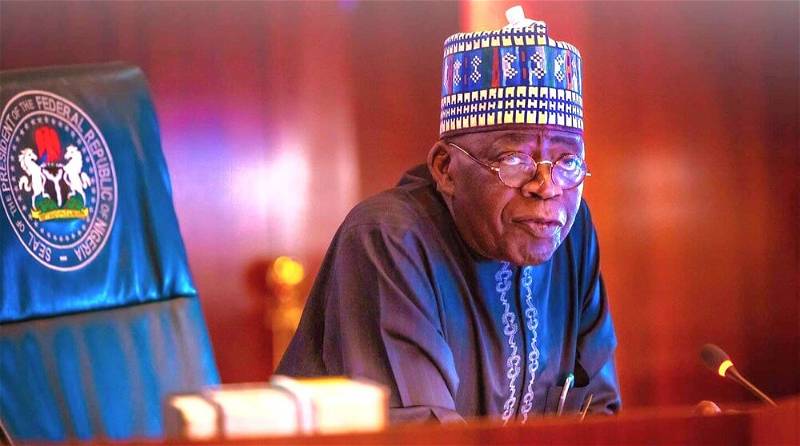
President Bola Tinubu on Friday evening held private meetings with the governors of Benue, Kaduna, and Cross River states at the Presidential Villa in Abuja, as the Federal Government continues to address increasing security and governance challenges across the country.
The closed-door meetings, which took place at the President’s first-floor office, saw the governors arriving separately before engaging in discussions with the President. Sources familiar with the meetings confirmed that the discussions centered on security issues and other pressing governance concerns affecting the three states.
Governors Hyacinth Alia of Benue State, Uba Sani of Kaduna State, and Bassey Otu of Cross River State reportedly participated in the engagements. After the meetings, the governors exchanged brief pleasantries with journalists but did not provide details on the discussions before leaving the State House parking area for their official vehicles.
Although the Presidency did not release an official statement regarding the meetings, informed sources said the agenda likely included communal unrest, banditry, and the rising economic pressures confronting the states. Security concerns have been escalating in various parts of the country, with incidents of kidnapping, cattle rustling, and violent clashes between communities becoming more frequent in states such as Benue and Kaduna.
Benue State, located in the North-Central region, has long been affected by clashes between farmers and herders, resulting in the loss of lives, destruction of property, and displacement of thousands. Kaduna State has also faced a similar challenge, with banditry, kidnapping for ransom, and attacks on communities making it one of the states most affected by insecurity in the North-West region.
Cross River State, in the South-South region, has largely been peaceful compared to the northern states but is not entirely free from economic pressures and localized communal tensions. The inclusion of Cross River in the meetings reflects the Federal Government’s broader approach to governance, which seeks to consider both security and developmental challenges across different geopolitical zones.
Aside from security issues, economic pressures were reportedly part of the discussions. Many states are struggling with rising inflation, unemployment, and the increasing cost of living, which often exacerbate social tensions. Governors have been calling on the Federal Government for support in tackling these issues, especially in regions where insecurity limits economic activity and disrupts daily life.
President Tinubu has, since assuming office, held several meetings with governors, security chiefs, and stakeholders to address national security challenges. Analysts note that Nigeria’s complex security landscape, which includes insurgency in the Northeast, banditry in the Northwest, and communal clashes in the Middle Belt, requires constant dialogue between federal and state authorities.
While the outcome of Friday’s meetings remains undisclosed, sources indicate that recommendations from the governors are expected to feed into broader policy measures by the Federal Government. These may include the deployment of additional security forces, community policing initiatives, and programs to alleviate economic pressures that often contribute to unrest.
Nigerians have increasingly called for tangible results in the fight against insecurity. In recent months, reports of kidnappings, violent clashes, and armed attacks have drawn national attention, prompting civil society groups, labour unions, and the media to demand decisive government action.
As security and economic challenges persist, the Federal Government’s engagement with state leaders is likely to continue. The inclusion of governors from different regions highlights the administration’s recognition that insecurity is not confined to one part of the country and that collaborative strategies are necessary.
The meetings also signal an attempt to foster coordination between the federal and state levels, which analysts say is critical for the success of any security strategy. With growing public concern over safety and governance, citizens will be watching closely for the results of these discussions.
While the details of the discussions are yet to be made public, the meetings highlight the urgency with which the Federal Government is treating the country’s security and governance challenges.