
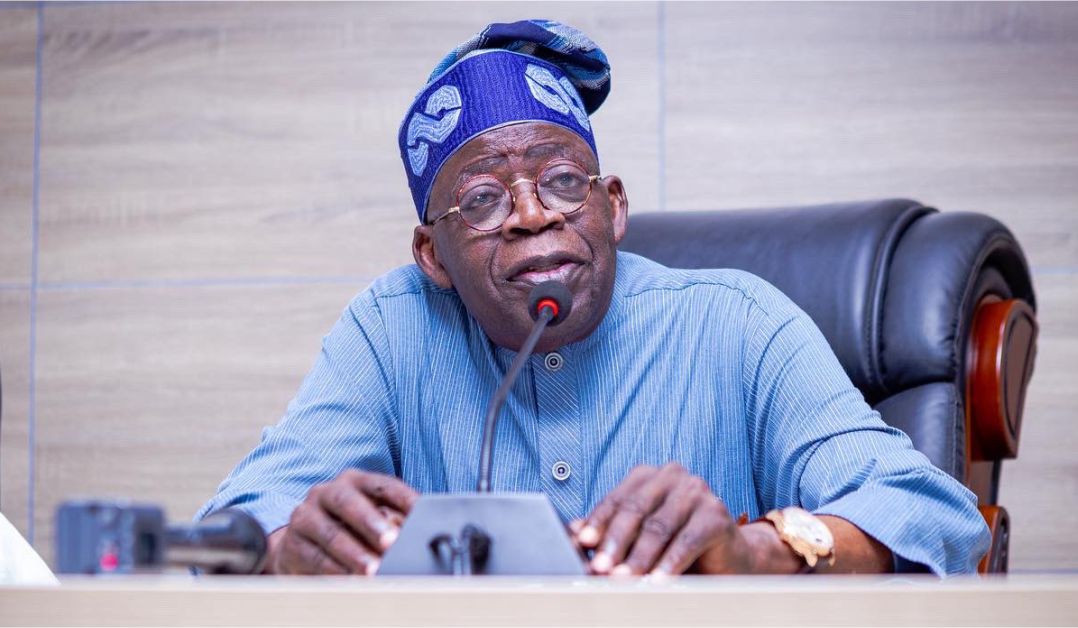
President Bola Tinubu has called on leaders of West Africa to remain united and work together to resist coups and other threats to democracy across the region. He warned that the region is facing serious dangers that can only be handled through cooperation, dialogue and shared action.
Tinubu made the call on Sunday at the 68th Ordinary Session of the Economic Community of West African States (ECOWAS) Heads of State and Government, held at the State House in Abuja. The President was represented at the meeting by Vice President Kashim Shettima.
In his opening address, Tinubu referred to recent events that have shaken the region, including an attempted coup in the Republic of Benin and renewed political tension in Guinea-Bissau. He said these developments show the need for ECOWAS countries to close ranks and protect democracy.
“The external threats confronting West Africa today demand nothing less than a united front,” Tinubu said. He listed terrorism, violent extremism, unconstitutional changes of government, organised crime, arms trafficking, cyber insecurity, climate shocks, food insecurity and irregular migration as major challenges facing the region.
According to the Nigerian leader, West Africa faces its greatest danger when it is divided from within. “West Africa is most vulnerable, not when challenged from outside, but when weakened from within,” he warned.
Tinubu described ECOWAS as more than just a regional organisation. He said the countries of West Africa are bound together by history, culture and shared struggles.
“We do not share geography by accident. We share it by design, by history and by the enduring logic of kinship,” he said. “West Africa is not a random gathering of borders. It is a family bound by memory, culture, struggle and aspiration.”
The President stressed that Nigeria believes persuasion and unity, not force, should guide ECOWAS in handling its current challenges. While condemning coups and unconstitutional actions, he said dialogue and mutual respect must remain key tools in resolving regional problems.
Reflecting on recent tensions among member states, Tinubu said internal disagreements have weakened the bloc in recent years. “We have allowed our differences to shake the foundations of our union,” he noted.
He added that ECOWAS can only succeed when all member states respect justice, fairness and the rule of law within their own countries. “A community is only as strong as the trust its members have in one another,” Tinubu said.
Linking the recent coup attempt in Benin and the situation in Guinea-Bissau to wider regional problems, Tinubu called for a common position on security, governance and economic issues. He said no country can achieve lasting peace and stability on its own.
“No single member state, regardless of size, can achieve enduring stability in isolation,” he said. “We must sit at the same table, speak with one voice and act together.”
The ECOWAS meeting comes after five difficult years for the region. Since 2020, West Africa has witnessed a series of military takeovers, including two coups in Mali, two in Burkina Faso and one in Niger. These events weakened democratic institutions and created tension within ECOWAS.
In early 2024, the military governments of Niger, Mali and Burkina Faso announced their withdrawal from ECOWAS, further dividing the regional bloc and raising concerns about its future.
The latest security concerns include an attempted coup in Benin on December 7, 2025, and renewed instability in Guinea-Bissau, which former Nigerian President Goodluck Jonathan described as a “ceremonial coup.”
Following the attempted coup in Benin, President Tinubu approved the deployment of Nigerian fighter jets and troops to support the Beninese government. The move was taken at the request of Benin’s authorities to help restore calm and protect the constitutional order.
On December 9, the Nigerian Senate approved Tinubu’s request to send troops to Benin. Benin’s foreign ministry later confirmed that about 200 West African soldiers, mainly from Nigeria and Côte d’Ivoire, were deployed to support the country’s security forces.
The ECOWAS Chair and President of Sierra Leone, Julius Maada Bio, praised the quick response of member states to the Benin crisis. He strongly condemned coups and warned that instability in one country poses a threat to the entire region.
“The attempted coup in Benin and the instability in Guinea-Bissau remind us that democracy requires constant vigilance,” Bio said. He commended Nigeria for taking the lead in mobilising troops and air support to defend democratic rule in Benin.
Bio said ECOWAS would not compromise on democratic governance and pledged continued support for the people of Benin and Guinea-Bissau.
He described the meeting as a turning point for the 50-year-old regional body as it confronts terrorism, violent extremism and organised crime spreading across borders. “Security is not only a military duty; it is a human necessity,” he said.
The Sierra Leonean leader also outlined plans to strengthen regional security cooperation, including steps to fully activate the ECOWAS Standby Force for counter-terrorism operations. He said ministers of finance and defence are working on a sustainable funding plan to raise a 1,650-person counter-terrorism brigade by the end of 2026.
Beyond security, Bio called for stronger economic integration to rebuild public trust in democracy. He spoke about harmonising trade rules, strengthening the ECOWAS single market in line with the African Continental Free Trade Area (AfCFTA), and reviving the plan for a single regional currency.
He said progress has been made towards achieving a common currency by 2027, describing it as a tool that could boost trade and competitiveness across West Africa.
Bio also announced a major decision to reduce the cost of air travel within the region. From January 1, 2026, ECOWAS member states will remove air transport taxes and cut passenger and security charges by 25 per cent to make travel easier and cheaper for citizens.
Meanwhile, the President of the ECOWAS Commission, Dr Omar Touray, praised the bloc’s use of both moral and military strength to stop the attempted coup in Benin. He acknowledged the role played by leaders of Nigeria, Sierra Leone, Ghana and Côte d’Ivoire in coordinating the response.
Touray said ECOWAS leaders would take important decisions beyond routine matters as the bloc adapts to global changes and security challenges affecting its Vision 2050 development goals.
He also announced the launch of the ECOWAS Business Council to boost private-sector involvement in regional integration. Nigerian industrialist Aliko Dangote has accepted to serve as the council’s first chairman.
According to Touray, the council will help mobilise regional investment and promote economic growth, with plans for a West African investment summit in the near future.