
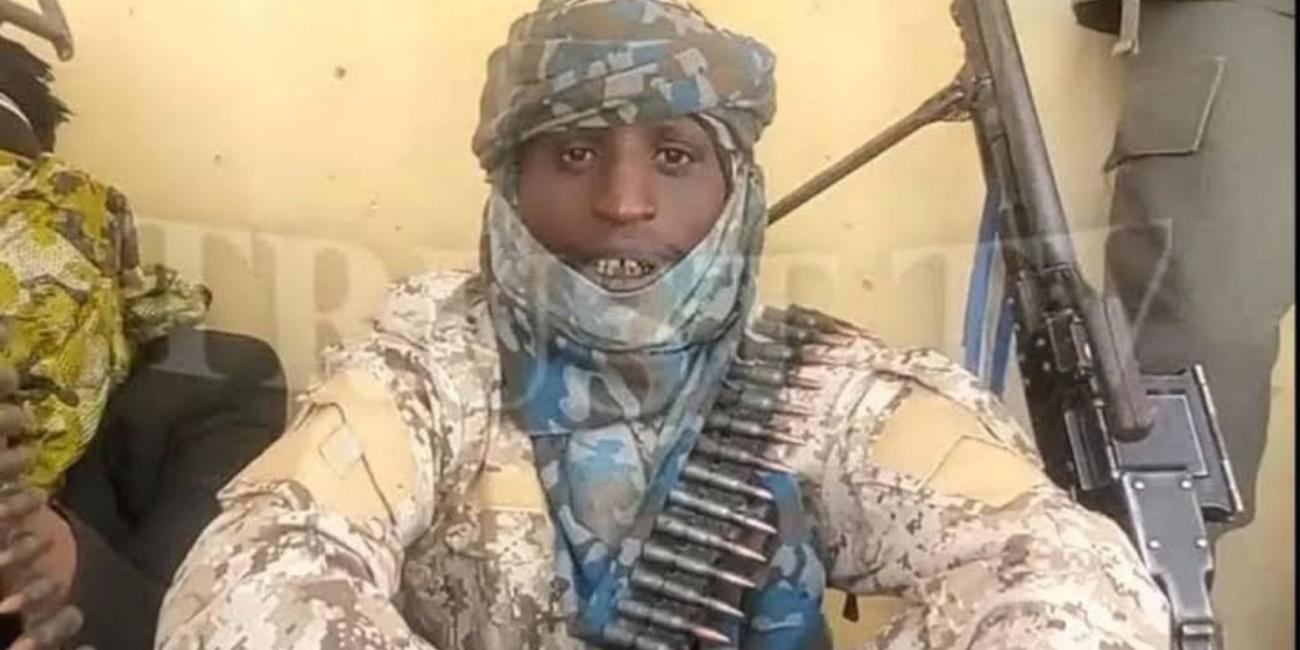
Notorious bandit leader Bello Turji has confirmed that he held peace talks with officials of the Zamfara State government during the administration of former governor Bello Matawalle, who now serves as Minister of State for Defence. However, Turji denied claims that he received ₦30 million as part of the peace process.
Turji made the statement in an audio message that has been widely circulated on social media. In the message, he rejected allegations made by Musa Kamara, a former peace mediator appointed by the Zamfara State government, who claimed that Turji was paid ₦30 million during negotiations with the government.
Describing the claim as false, Turji insisted that he had never received such an amount of money in his life. Speaking in Hausa, he swore by God that the allegation was untrue and said the peace talks were not for personal gain.
“By Allah, since I was born, I have never possessed even five million naira,” Turji said. “What I am doing is not for personal benefit. We were never given that ₦30 million you are talking about.”
According to him, the meeting with government officials was part of a wider peace initiative aimed at reducing violence in Zamfara State and neighboring areas. He claimed that he did not personally benefit financially from the process and accused Kamara of lying and betraying the trust that existed during the negotiations.
“We agreed on peace when the Zamfara State government appointed you,” Turji said, addressing Kamara in the message. “But what you are saying now is full of lies. I did not even receive three million naira.”
The audio message has reopened public debate about the controversial peace deals pursued by the Zamfara State government during Matawalle’s tenure as governor. At the time, the state was battling widespread bandit attacks, including killings, kidnappings, and cattle rustling that had displaced thousands of residents.
In an attempt to end the violence, the Matawalle administration adopted a dialogue and reconciliation approach, which involved negotiating with armed groups and bandit leaders. The policy was aimed at persuading them to lay down their arms in exchange for peace and rehabilitation. While the government said the initiative led to temporary calm in some areas, critics argued that it empowered criminals and failed to deliver lasting peace.
Turji’s comments have also brought renewed attention to the role of mediators who acted as middlemen between the government and armed groups. Musa Kamara, one of such mediators, had earlier alleged that large sums of money were paid to Turji during the peace talks, a claim now strongly denied by the bandit leader.
Beyond denying the payment, Turji used the audio message to make wider accusations against former political leaders in Zamfara and Sokoto states. He alleged that past governors and influential figures were responsible for fueling violence in the region by arming groups and supporting vigilantes that targeted Fulani communities.
“We say openly that former governors of Zamfara and Sokoto, alongside Ahmed Sani Yerima, are responsible for the calamities that befell these states,” Turji claimed. He called for their arrest and investigation, accusing them of creating the conditions that led to ongoing insecurity.
Ahmed Sani Yerima is a former governor of Zamfara State and a former senator. Turji did not provide evidence to support his claims, and the individuals mentioned have not publicly responded to the allegations.
In his message, Turji sought to distance himself from politics, insisting that neither he nor his group was working for any political interest. He said his actions were not sponsored by politicians and claimed that his group was acting independently.
“We are not politicians, and we are not tools of politicians,” he said. “There is no human being backing us.”
Despite his claims, Bello Turji has been linked by security agencies to several deadly attacks across Zamfara and other North-West states. His group has been accused of mass killings, kidnappings for ransom, and large-scale displacement of communities. Thousands of residents have fled their homes due to repeated attacks attributed to armed groups operating in the region.
Turji did not address specific incidents or attacks linked to his group in the audio message. Instead, he framed his statement as a personal defence, saying he was speaking “before Allah alone” and responding to what he described as false accusations against him.
The North-West region of Nigeria, including Zamfara, Katsina, Sokoto, and parts of Kaduna and Niger states, has faced years of insecurity linked to banditry. What started as local disputes over land, cattle rustling, and farming rights has grown into organised criminal activity involving heavily armed groups.
In response, the Federal Government has launched several military operations in the region, while state governments have tried different approaches, including negotiations, amnesty offers, and community policing. However, insecurity remains a major challenge, with frequent reports of attacks and abductions.
The Nigerian military has previously declared Bello Turji wanted over terror-related activities. He is regarded by security agencies as one of the most dangerous armed group leaders in the North-West. Despite repeated operations, he has remained at large, raising questions about the effectiveness of security efforts.
Turji’s confirmation of talks with government officials has once again sparked debate about the role of negotiation in tackling insecurity. While some believe dialogue can help end violence, others argue that it sends the wrong message and allows criminals to escape justice.
As of the time of filing this report, neither Musa Kamara nor officials of the Zamfara State government have issued fresh statements responding to Turji’s audio message. The Federal Government has also not commented on the renewed allegations.
For many residents of Zamfara and surrounding states, the focus remains on ending the violence and restoring peace. They continue to call on the government to strengthen security, ensure accountability, and protect communities that have suffered for years from bandit attacks.
The latest comments by Bello Turji highlight the complex nature of Nigeria’s security crisis and the difficult choices facing authorities as they seek lasting solutions to the problem.