
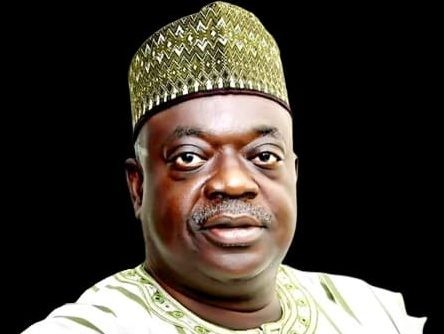
Former Governor of Niger State and Chairman of the former Governors’ Forum on the platform of the Peoples Democratic Party (PDP), Babangida Aliyu, has warned that Nigeria is gradually drifting toward a one-party system under the ruling All Progressives Congress (APC).
Aliyu raised the alarm while speaking on behalf of the forum at an interactive meeting with the PDP National Working Committee (NWC) and the former Ministers’ Forum. The meeting was held as part of ongoing efforts by the opposition party to rebuild and reposition itself after recent electoral setbacks and internal crises.
According to Aliyu, recent political developments in the country show that democratic space is shrinking and opposition voices are being weakened. He said the steady movement of opposition politicians to the ruling party, combined with what he described as pressure from state institutions, poses a serious danger to Nigeria’s democracy.
“Nigeria is systematically and dangerously sliding into a one-party state,” Aliyu said. “We observe with alarm the aggressive maneuvers by the ruling APC to obliterate the opposition.”
He accused the APC of deliberately targeting opposition figures through what he called induced defections and intimidation. According to him, these actions are not only aimed at weakening the PDP but also at silencing alternative voices in the political system.
“The relentless poaching of opposition figures and the weaponization of state institutions to intimidate dissenting voices are clear indicators that Nigeria is moving in a dangerous direction,” he said.
Aliyu warned that the situation goes beyond party politics and affects every Nigerian. He said democracy can only thrive when there is a strong and functional opposition to check the excesses of those in power.
“This is not just a threat to the Peoples Democratic Party,” he said. “It is a direct assault on the hard-won democratic freedoms of every Nigerian citizen.”
Nigeria returned to democratic rule in 1999 after years of military government. Since then, the country has operated a multi-party system, with power changing hands peacefully at the federal level in 2015 when the APC defeated the PDP.
However, in recent years, concerns have grown among political observers and civil society groups over the increasing dominance of the ruling party. Several governors, lawmakers, and other top politicians have defected from opposition parties to the APC, often citing internal crises or the need to align with the federal government.
Critics argue that these defections weaken democratic competition and reduce accountability. Supporters of the APC, on the other hand, say politicians are free to associate with any party of their choice.
Aliyu said regardless of the reasons given, the growing imbalance in the political system should worry all Nigerians. He stressed that a vibrant opposition is essential for good governance and national development.
During the meeting, Aliyu also congratulated the newly elected PDP National Working Committee and pledged the full support of former governors to the party’s new leadership.
He expressed confidence in the ability of the PDP National Chairman, Kabiru Tanimu Turaki (SAN), to lead the party through its current challenges and prepare it for future elections.
“The PDP is not dead; it is evolving,” Aliyu said. “Under the stewardship of Tanimu Turaki, the NWC is effectively repositioning the party.”
He praised Turaki’s leadership style, saying it has brought renewed purpose, discipline, and reconciliation within the party. According to him, these qualities are important if the PDP is to regain the trust of Nigerians and present itself as a credible alternative to the ruling party.
In his response, PDP National Chairman Kabiru Tanimu Turaki called on party leaders and members to remain united and focused. He said the PDP’s years in power remain the standard for governance in Nigeria.
Turaki described the period between 1999 and 2015, when the PDP governed Nigeria, as a “golden era” in the country’s history. He argued that many of the economic and social challenges facing Nigerians today show the difference between effective leadership and empty promises.
“We are at a critical point in our nation’s history where the difference between competence and propaganda has become clear to the common man,” Turaki said.
He said Nigerians have not forgotten the PDP’s 16 years in government, which he said were marked by economic growth, institutional development, and national unity.
“Nigerians cannot forget the PDP’s 16 glorious years,” he said. “These were years when Nigeria became the largest economy in Africa, when our foreign debt was cleared, and when the middle class was thriving, not disappearing.”
To support his claims, Turaki listed key achievements recorded under PDP-led governments. These include the liberalisation of the telecommunications sector, which led to the widespread use of mobile phones across the country.
He also mentioned the consolidation of the banking sector, which strengthened Nigerian banks and improved confidence in the financial system. According to him, the settlement of Nigeria’s Paris Club debt reduced the country’s financial burden and improved its global standing.
Turaki further pointed to the creation of anti-corruption agencies such as the Economic and Financial Crimes Commission (EFCC) and the Independent Corrupt Practices and Other Related Offences Commission (ICPC). He said these institutions were established to fight corruption within the framework of the rule of law.
Also speaking at the meeting was former Governor of Kano State and former Minister of Education, Ibrahim Shekarau. He represented the former Ministers’ Forum and used the occasion to encourage the new NWC leadership.
Shekarau said the efforts of the current NWC in stabilising and rebuilding the party have exceeded expectations, despite the difficulties facing the opposition.
“Don’t relent; you have done more than expected,” Shekarau said.
He said the forum fully supports the new leadership and believes the PDP is on the path to recovery under Turaki’s guidance.
The meeting highlights the PDP’s attempt to regroup and strengthen its internal structures ahead of future elections. As Nigeria continues to face economic hardship, insecurity, and social challenges, opposition leaders say there is a growing need for alternative ideas and strong political competition.