
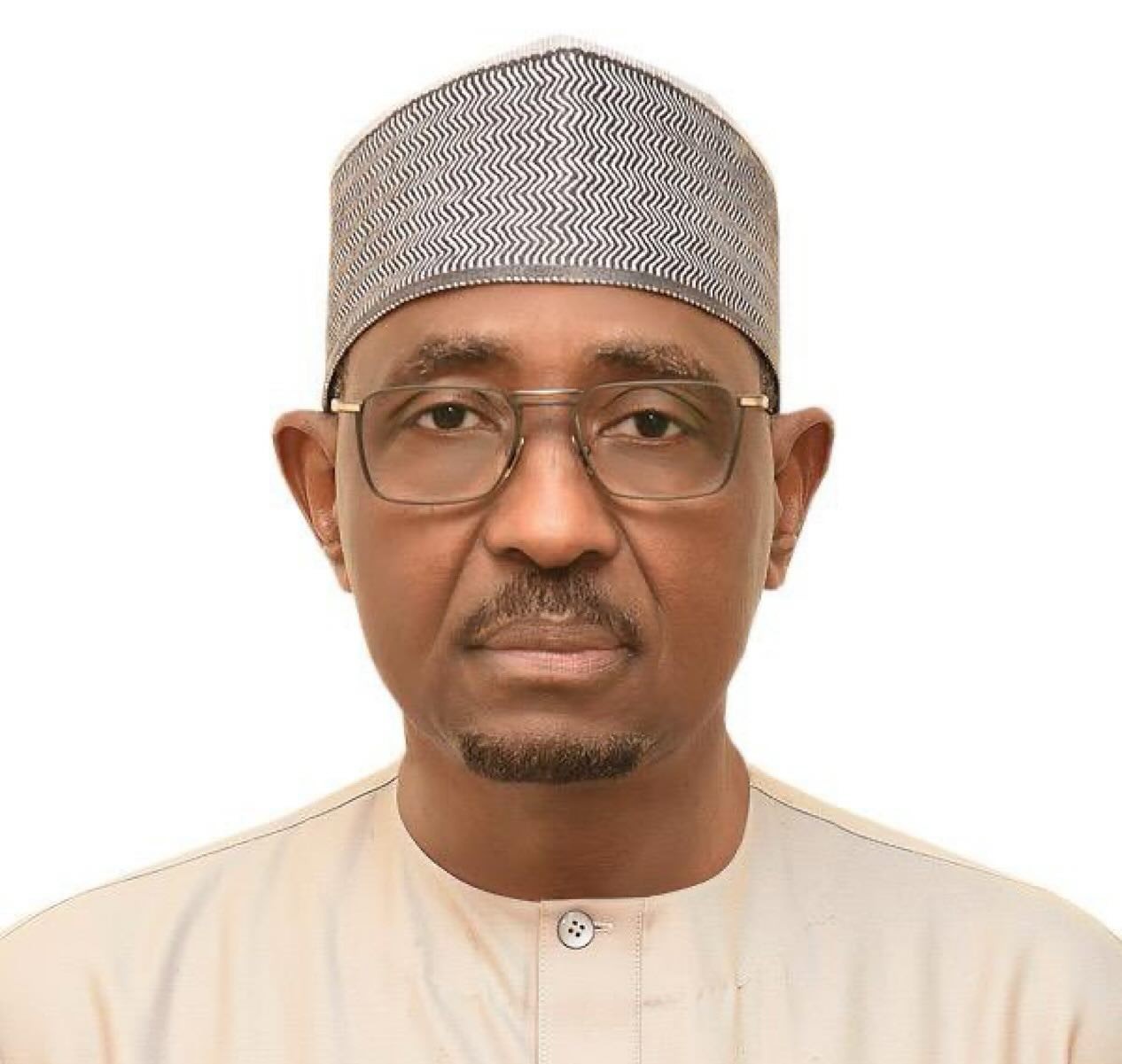
The Chief Executive Officer of the Nigerian Midstream and Downstream Petroleum Regulatory Authority (NMDPRA), Farouk Ahmed, has denied issuing a statement that was widely circulated as his response to serious allegations made against him by Africa’s richest man, Aliko Dangote.
In a disclaimer, Mr Ahmed said the statement being shared in his name did not come from him. He said although he is aware of the allegations and the public attention they have attracted, he has decided not to engage in public arguments.
Mr Ahmed described the claims against him and his family as “wild and spurious” but said he welcomed the decision by Mr Dangote to take the matter to a formal investigative body. According to him, this will allow the issues to be examined properly and give him the opportunity to clear his name.
“My attention has been drawn to a purported response I was said to have made on the recent allegations against my person. I hereby state categorically that the so-called statement did not emanate from me,” he said.
“While I am aware of the wild and spurious allegations made against me and my family and the frenzy it has generated, as a regulator of a sensitive industry, I have opted not to engage in public brickbat.
“Thankfully, the person behind the allegations has taken it to a formal investigative institution. I believe that would provide an opportunity to dispassionately distill the issues and to clear my name,” Mr Ahmed added.
The disagreement between Mr Dangote and the NMDPRA leadership comes at a critical time for Nigeria’s oil and gas sector. Nigeria is Africa’s largest crude oil producer, but for decades it has depended heavily on imported petrol, diesel, and aviation fuel because its state-owned refineries have not worked at full capacity.
To address this long-standing problem, Dangote Industries Limited built the $20 billion Dangote Petroleum Refinery in Lagos. With a capacity of 650,000 barrels per day, the refinery is expected to meet most of Nigeria’s fuel needs and reduce the country’s dependence on imports.
The NMDPRA, where Mr Ahmed is the chief executive, is the government agency responsible for regulating the midstream and downstream petroleum sector. Its duties include issuing licences for fuel importation, overseeing storage and distribution, and ensuring fair competition and safety standards.
Tension has grown between local refiners and fuel importers over the continued issuance of import licences, even as domestic refining capacity increases. This tension forms the wider context of the current allegations.
On Sunday, Mr Dangote accused Mr Ahmed of economic sabotage, claiming his actions were hurting local refining efforts in Nigeria. Speaking at a press conference at the Dangote Petroleum Refinery, he alleged that the NMDPRA leadership was working with foreign traders and fuel importers to frustrate domestic refiners.
According to Mr Dangote, the continued approval of import licences for petroleum products discourages local production and keeps Nigeria dependent on imports. He argued that this practice undermines investments like the Dangote Refinery, which was built to support Nigeria’s energy security.
Mr Dangote also made personal allegations against Mr Ahmed, claiming that the regulator was living far beyond his lawful income. He said four of Mr Ahmed’s children attend secondary schools in Switzerland, with school fees and living costs running into millions of dollars.
He argued that such spending raises questions about conflict of interest and the integrity of regulatory oversight in the downstream petroleum sector.
On Monday, Mr Dangote expanded his claims, accusing Mr Ahmed of corruption and misuse of public funds. He gave detailed estimates of how much he said Mr Ahmed spent on his children’s education abroad.
According to Mr Dangote, Mr Ahmed spent about $5 million over six years on secondary school education and upkeep for his children in Switzerland. He also alleged that an additional $2 million was spent on university education, including $210,000 for a Harvard MBA programme in 2025 for one of Mr Ahmed’s children, Faisal Farouk.
Mr Dangote said these figures could not be explained by Mr Ahmed’s known income as a public officer. He claimed the situation pointed to serious financial misconduct.
On Tuesday, the dispute took a more formal turn when Mr Dangote submitted a petition to the Independent Corrupt Practices and Other Related Offences Commission (ICPC). The petition was sent through his lawyer, Ogwu Onoja, a Senior Advocate of Nigeria (SAN).
The petition, addressed to the ICPC Chairman, Musa Aliyu, called for Mr Ahmed’s arrest, investigation, and prosecution. It accused the NMDPRA chief of living above his means and spending more than $7 million on the education of his four children in Switzerland without proof of lawful income.
The document reportedly included the names of the children, the schools they attended, and specific amounts allegedly paid, which Mr Dangote said could be verified by investigators.
Mr Dangote also accused Mr Ahmed of using his office to embezzle public funds. These claims have triggered protests and statements from some civil society groups calling for transparency and accountability in the oil and gas sector.
In his petition, Mr Dangote cited Section 19 of the ICPC Act, which gives the commission power to investigate and prosecute corrupt practices. He noted that a conviction under the law could lead to a jail term of up to five years without the option of a fine.
He urged the ICPC to act quickly and said he was ready to provide documents and other evidence to support his allegations.
Mr Ahmed’s disclaimer makes it clear that he does not intend to fight the matter in the media. By distancing himself from the circulating statement, he has chosen to allow the ICPC and other relevant institutions to handle the issue.
Many Nigerians are watching closely to see how the anti-graft agency will handle the petition, given the high-profile nature of the individuals involved. Analysts also note that the outcome could shape the future relationship between regulators and private investors in the energy sector.
For now, the NMDPRA boss maintains his innocence, while Mr Dangote insists that the allegations are backed by evidence. As investigations begin, the focus will likely shift from public accusations to formal findings by the ICPC, which is expected to determine whether the claims have merit or not.