
President Bola Ahmed Tinubu has appointed new leaders for two of Nigeria’s most important petroleum regulatory agencies following the resignation of their chief executives amid corruption allegations and growing public attention.

The affected agencies are the Nigerian Midstream and Downstream Petroleum Regulatory Authority (NMDPRA) and the Nigerian Upstream Petroleum Regulatory Commission (NUPRC). These bodies regulate critical parts of Nigeria’s oil and gas industry, which remains the backbone of the country’s economy.
According to a statement issued on Wednesday by the Presidency, the Chief Executive Officer of the NMDPRA, Farouk Ahmed, and the Chief Executive Officer of the NUPRC, Gbenga Komolafe, have stepped down from their positions.
Farouk Ahmed’s exit follows allegations of corruption made against him by billionaire businessman Aliko Dangote, President of Dangote Group and owner of the Dangote Petroleum Refinery, the largest refinery in Africa.
Presidential spokesman, Bayo Onanuga, confirmed that President Tinubu has moved quickly to fill the leadership vacuum by nominating new chief executives for both agencies. The President has formally written to the Senate, requesting expedited confirmation of the nominees.
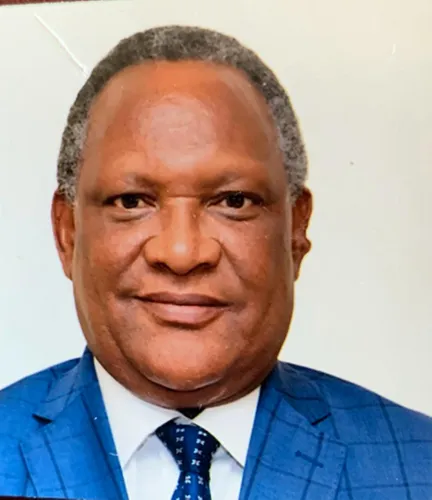
According to the statement, Oritsemeyiwa Amanorisewo Eyesan has been nominated as the new Chief Executive Officer of the Nigerian Upstream Petroleum Regulatory Commission (NUPRC), while Engineer Saidu Mohammed has been nominated as the new Chief Executive Officer of the Nigerian Midstream and Downstream Petroleum Regulatory Authority (NMDPRA).
“The request for expedited confirmation follows the resignations of Engineer Farouk Ahmed and Gbenga Komolafe, who were appointed in 2021 under former President Muhammadu Buhari to lead the agencies established by the Petroleum Industry Act,” Onanuga said.
He added that both nominees have strong backgrounds in the oil and gas industry and are expected to bring stability and professionalism to the sector.
The leadership change at the NMDPRA comes amid serious allegations made by Aliko Dangote against Farouk Ahmed. Dangote accused the regulatory authority of actions that allegedly hindered the operations of his refinery and raised questions about transparency in the downstream sector.
Dangote’s refinery, located in Lekki, Lagos, is a key project in Nigeria’s plan to end fuel importation and reduce pressure on foreign exchange. As a result, any dispute involving the refinery and government regulators has drawn strong public and industry attention.
While details of the allegations are yet to be fully disclosed, the Presidency’s swift response suggests an effort to protect the integrity of the regulatory system and calm concerns among investors and the general public.
The resignation of Gbenga Komolafe from the NUPRC, although not linked to public allegations, came at the same time, signaling a wider reset in leadership across the petroleum regulatory space.
The NMDPRA and NUPRC were created by the Petroleum Industry Act (PIA), which was signed into law in 2021. The Act was designed to reform Nigeria’s oil and gas industry, improve transparency, and attract new investment.
The NUPRC regulates upstream activities such as oil exploration, production, and licensing. It plays a major role in determining how much oil Nigeria produces and how oil companies comply with regulations.
The NMDPRA, on the other hand, oversees the midstream and downstream sectors. This includes refining, fuel importation, storage, transportation, and distribution. Decisions by the NMDPRA directly affect fuel supply and prices across the country.
Because of their roles, leadership changes in these agencies are seen as critical to the stability of the oil and gas sector.
Oritsemeyiwa Amanorisewo Eyesan, nominated as CEO of the NUPRC, is an experienced oil and gas professional. She is a graduate of Economics from the University of Benin and spent nearly 33 years working at the Nigerian National Petroleum Corporation (NNPC) and its subsidiaries.
She retired as Executive Vice President, Upstream, in 2024, where she oversaw Nigeria’s upstream oil and gas operations. Before that, she served as Group General Manager, Corporate Planning and Strategy, between 2019 and 2023.
Her long career at NNPC has given her deep knowledge of Nigeria’s oil production challenges, including declining output, oil theft, and investment gaps.
Engineer Saidu Mohammed, nominated to head the NMDPRA, was born in 1957 in Gombe State. He holds a Bachelor’s degree in Chemical Engineering from Ahmadu Bello University, Zaria, obtained in 1981.
He was recently appointed an independent non-executive director at Seplat Energy, one of Nigeria’s leading indigenous oil and gas companies.
Mr Mohammed has held several top positions in the sector, including Managing Director of the Kaduna Refining and Petrochemical Company and Managing Director of the Nigerian Gas Company. He has also chaired the boards of the West African Gas Pipeline Company, Nigeria LNG subsidiaries, and NNPC Retail.
He previously served as Group Executive Director and Chief Operating Officer of the Gas and Power Directorate at NNPC. In that role, he helped shape major gas policies, including the Gas Master Plan and Gas Network Code, and contributed to the development of the Petroleum Industry Act.
He also played key roles in major infrastructure projects such as the Escravos–Lagos Pipeline Expansion, the Ajaokuta–Kaduna–Kano (AKK) Gas Pipeline, and Nigeria LNG Train projects.
There are also high expectations around local refining, especially with the start of operations at the Dangote Refinery and other modular refineries across the country.
The Senate is expected to review the President’s request and confirm the nominees in the coming days. If approved, the new chief executives will take over immediately.
For many Nigerians, the leadership change is seen as a test of the government’s commitment to transparency and reform in the oil and gas sector.