
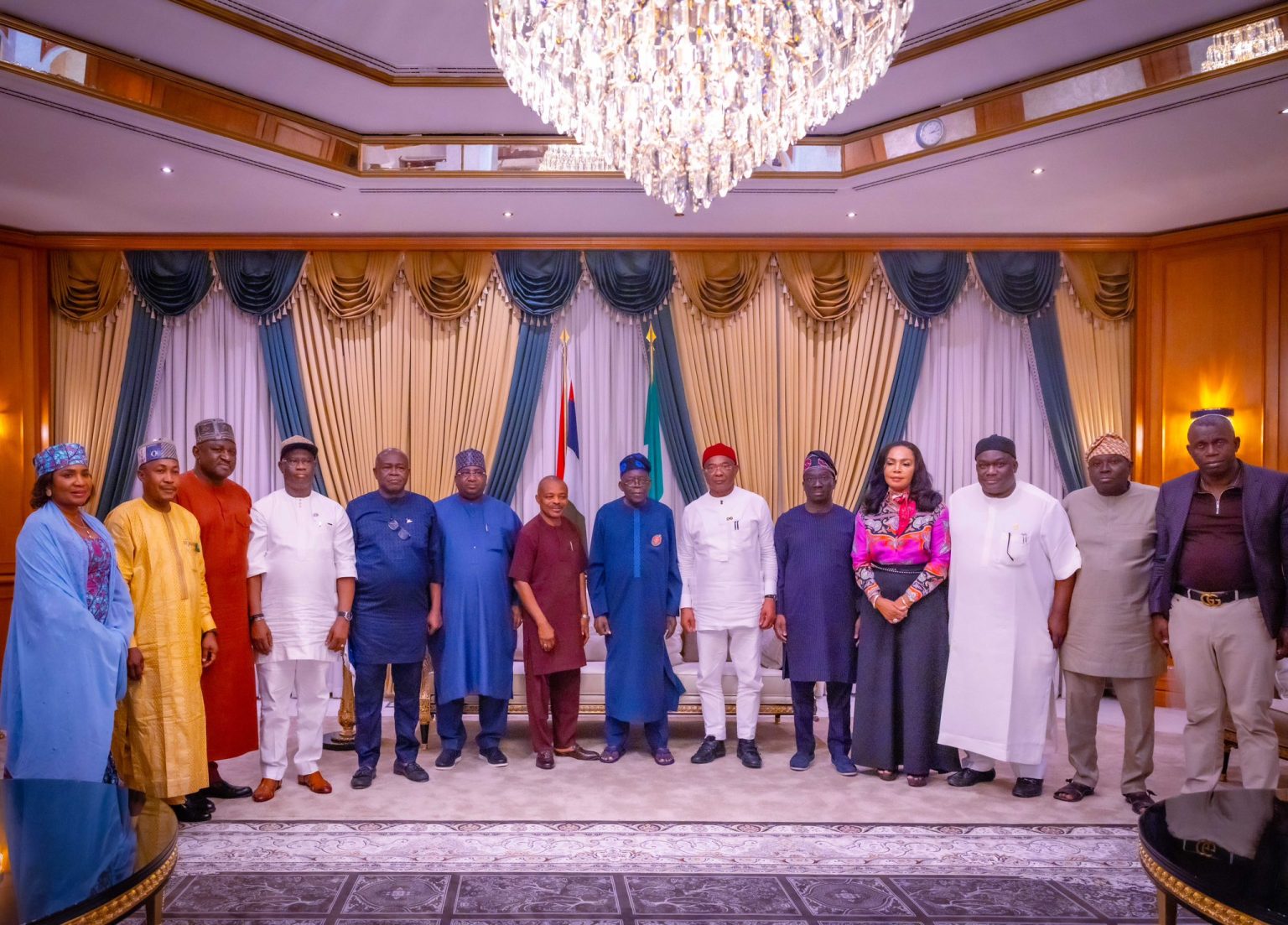
President Bola Tinubu on Tuesday night met with the leadership of the Nigeria Labour Congress (NLC) in a last-minute effort to stop a nationwide protest planned by organised labour.
The meeting, which took place at the State House in Abuja, came barely hours before the protest was scheduled to begin across the country. The NLC President, Joe Ajaero, led other labour leaders to the talks, which lasted late into the night.
The planned protest has raised concerns within government and among Nigerians, as it is expected to disrupt economic and social activities nationwide. Organised labour has been mobilising workers to protest the rising cost of living, economic hardship, and other unresolved issues affecting Nigerian workers.
After the meeting, Mr Ajaero did not clearly state whether the protest would still go ahead. When asked by journalists if labour would suspend the action, he said the decision would not be taken by him alone.
“If I’m insisting on proceeding, I’m not insisting. I will communicate to you,” Ajaero said. “It is not an organisation that one person rules.”
He explained that the NLC leadership would return to consult with its members and other labour bodies before reaching a final decision.
“We have to go back now. You have a meeting of labour and the governors’ forum. We’ll go back to the drawing board and digest all that Mr President said to us, and move forward from there,” he added.
Ajaero said a meeting of labour leaders would hold early on Wednesday, after which an official announcement would be made.
“By tomorrow, we will get the outcome,” he said.
The planned nationwide protest is part of growing discontent among workers and ordinary Nigerians over the state of the economy. Since the removal of fuel subsidy in 2023 and the floating of the naira, prices of food, transport, and basic goods have risen sharply.
Labour unions have repeatedly accused the federal government of failing to cushion the impact of these policies on workers and low-income earners. Although the government announced palliatives and wage adjustments, labour leaders say many of these measures have either not been fully implemented or are inadequate.
The NLC had earlier issued notices of protest, warning that Nigerians are facing severe hardship due to inflation, unemployment, and poor wages. The union said workers could no longer cope with the high cost of living.
President Tinubu’s meeting with labour leaders is seen as part of ongoing efforts to maintain dialogue and avoid industrial unrest. Since assuming office in May 2023, Tinubu has held several meetings with labour unions over fuel subsidy removal, minimum wage negotiations, and workers’ welfare.
Government officials have often argued that economic reforms, though painful, are necessary to stabilise the economy and attract investment. They say the reforms will yield positive results in the long term.
However, labour leaders have maintained that workers should not bear the full burden of these reforms, especially in a country where poverty levels remain high.
Apart from President Tinubu and NLC leaders, several top government officials were present at the meeting. These included the Chairman of the All Progressives Congress (APC) Governors’ Forum and Governor of Imo State, Hope Uzodimma.
Also in attendance were the Governor of Edo State, Monday Okpebholo; the Governor of Kebbi State, Nasir Idris; and the Minister of State for Labour and Employment, Nkeiruka Onyejeocha.
The presence of APC governors suggests that state governments are also concerned about the potential impact of the protest, especially on public services and security.
The mention of a meeting between labour and the governors’ forum indicates that discussions are ongoing beyond the presidency. State governments play a key role in implementing labour agreements, including wage payments and welfare packages.
In previous negotiations, labour unions have complained that even when agreements are reached at the federal level, some states fail to comply. This has been a major source of tension between organised labour and state governments.
Nigeria is currently facing high inflation, which has reduced the purchasing power of many households. According to official data, food prices have increased significantly, making it difficult for families to afford basic meals.
Transport costs have also risen due to higher fuel prices, affecting workers who commute daily. Many Nigerians say their salaries can no longer meet basic needs.
Labour unions argue that without urgent action, more Nigerians will fall into poverty. They have called for wage reviews, better social protection, and policies that support local production and job creation.
As of Tuesday night, the fate of the nationwide protest remained uncertain. The NLC leadership is expected to meet early on Wednesday to review the outcome of the talks with the President and decide on the next step.
The NLC is expected to make an announcement later in the day on whether the protest will proceed as planned, be suspended, or postponed.
Many Nigerians are watching closely, as the outcome will affect daily life, businesses, and public services across the country.
For now, President Tinubu’s late-night meeting with labour leaders signals the government’s desire to avoid confrontation and keep dialogue open. Whether this will be enough to address workers’ concerns and stop the protest will become clear in the coming hours.