
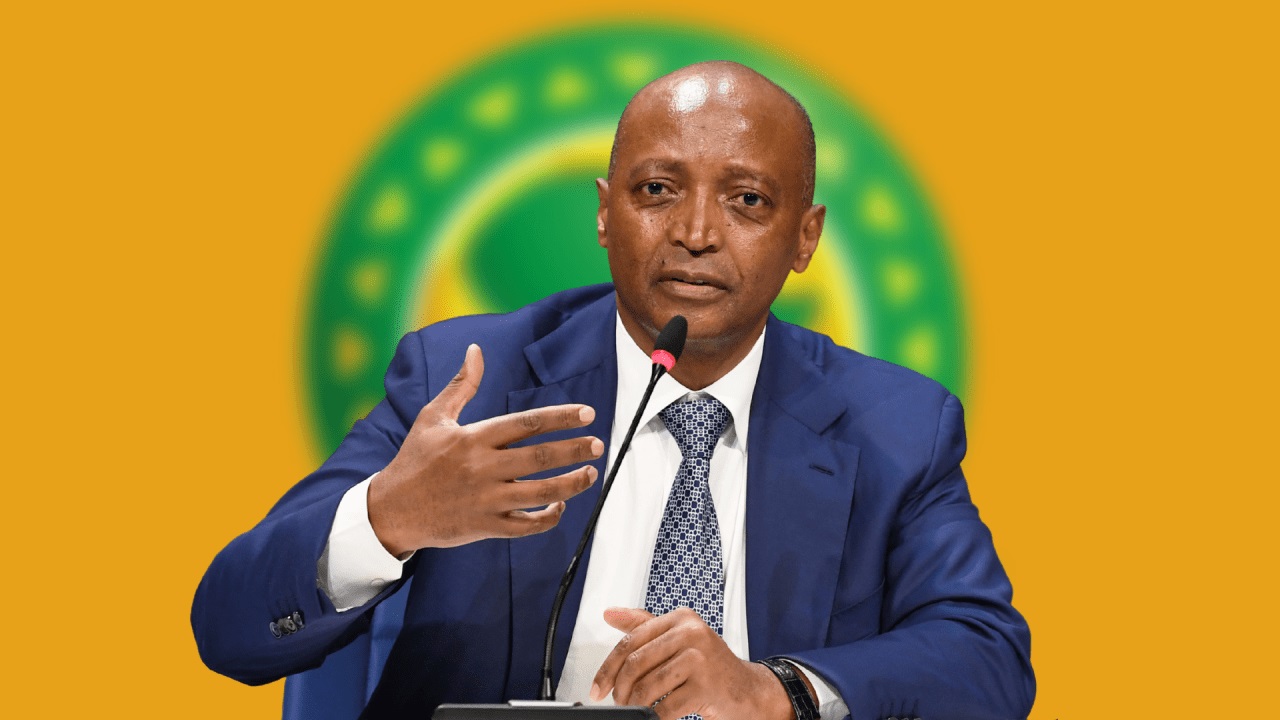
The Confederation of African Football (CAF) has announced a major change to the Africa Cup of Nations (AFCON), one of the continent’s biggest sporting events. From 2028, the tournament will be played every four years instead of every two years.
The announcement was made on Saturday by the President of CAF, Patrice Motsepe. The decision marks a historic shift in the organisation and scheduling of African football, ending a tradition that has been in place for several decades.
Since 1968, AFCON has been held every two years. Over the years, the competition has grown in size, popularity, and global attention. It has also produced many memorable moments and helped showcase African football talents to the world.
However, under the new plan, the tournament will move to a four-year cycle, similar to major international competitions such as the FIFA World Cup and the UEFA European Championship.
Motsepe explained that the change would take effect after the 2027 edition of the tournament. AFCON 2027 will be hosted by three East African countries—Kenya, Uganda, and Tanzania. After that, the next edition will hold in 2028, which will serve as a transition point before the four-year cycle fully begins.
“But after the 2027 edition in East Africa and the next one in 2028, it will switch to a four-year cycle,” Motsepe said.
He described the new plan as part of a wider effort to improve African football and make it more competitive on the global stage.
“We have the most exciting new structure for African football,” the CAF president said. “I do what is in the interests of Africa. The global calendar has to be significantly more synchronised and harmonised.”
The issue of football calendar clashes has been a long-standing concern for African players and clubs, especially those based in Europe. Because AFCON has often been played in January and February, many African players miss important club matches during the season.
European clubs have repeatedly raised concerns about releasing players for AFCON, while African players have sometimes faced pressure or lost playing time because of their national team duties.
By moving AFCON to a four-year cycle, CAF hopes to reduce these conflicts and make it easier to fit the tournament into the global football calendar.
Although there was once a break in the two-year pattern, this was not a permanent change. Between the 2012 and 2013 editions, AFCON was played just one year apart. This happened after CAF decided to move the tournament to odd-numbered years to avoid clashing with the FIFA World Cup.
Despite that adjustment, the tournament continued on a two-year basis until now.
It could also improve the quality of matches, as players may be fresher and clubs more willing to release them for national duty.
Supporters of the change also believe it could help host countries plan better, reduce financial pressure, and improve infrastructure development tied to the tournament.
However, the decision has also raised questions among fans and stakeholders. Some worry that playing AFCON less often could reduce excitement and limit opportunities for smaller nations to compete on the continental stage.
For many African countries, AFCON is more than just a football tournament. It is a major source of national pride and unity, often bringing together millions of fans across the continent and in the diaspora.
Nigeria, for example, has won the tournament three times and regularly uses AFCON as a platform to showcase its football strength. Many Nigerian fans see the competition as a key part of Africa’s football identity.
CAF has not yet released full details on how the qualification process or hosting schedule will change under the new system. These details are expected to be discussed further in the coming months with member associations.
Motsepe, who has been CAF president since 2021, has made reforms a central part of his leadership. His administration has focused on governance, finance, and improving the image of African football worldwide.
Under his leadership, CAF has also worked closely with FIFA to align African competitions with global standards and improve relationships with international partners.
The move to a four-year AFCON cycle appears to be part of this broader vision to modernise African football and ensure it competes favourably with other continents.
As African football continues to grow, the success of this new calendar will depend on proper planning, clear communication, and cooperation between CAF, national football associations, clubs, and players.
For now, fans will still look forward to the 2025 and 2027 editions of the tournament, while preparing for a new era of AFCON from 2028.