
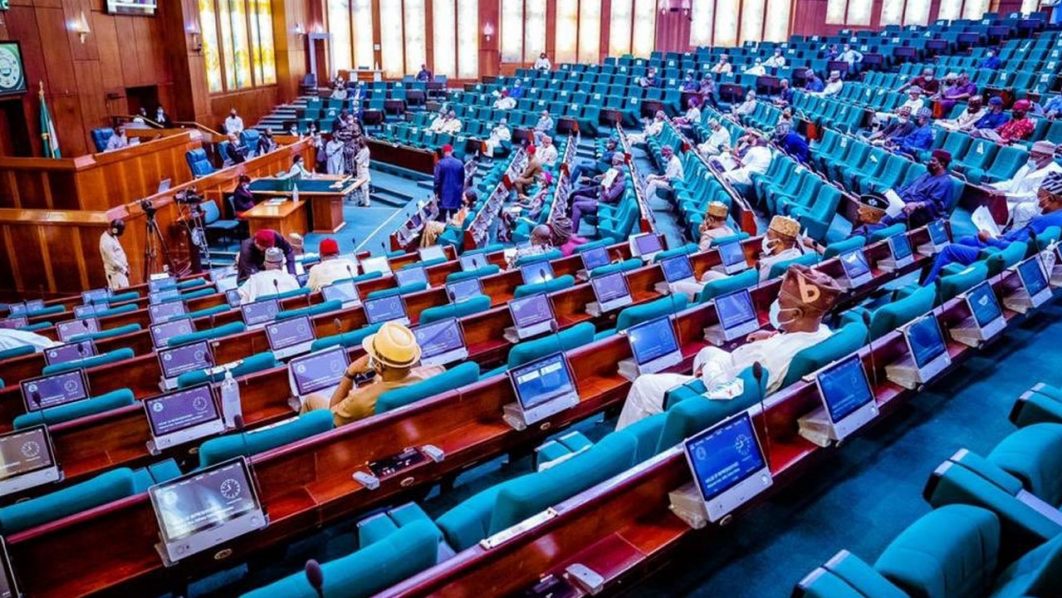
The House of Representatives yesterday passed the Electoral Act (Amendment) Bill, 2025, aimed at updating Nigeria’s electoral laws, but rejected a proposed clause that would have criminalised vote-buying during political party primaries.
The rejected provision, contained in Clause 89 (4) of the bill, proposed that any person who financially or materially induces a delegate to influence the outcome of party primaries, congresses, or conventions should face two years’ imprisonment without an option of fine.
Clause 89 (4) read: “A person that financially or materially induces a delegate for the purpose of influencing the outcome of the party primaries, congresses, and conventions commits an offence and is liable on conviction to imprisonment of two years without an option of fine.”
During the clause-by-clause consideration of the bill at the Committee of the Whole, presided over by Deputy Speaker Benjamin Kalu, lawmakers overwhelmingly voted against the provision, effectively removing criminal sanctions for inducement at party primaries from the amendment.
Chairman of the House Committee on Electoral Matters, Adebayo Balogun, explained that the House opted for targeted amendments rather than a wholesale repeal of the Electoral Act 2022. This approach was taken after several far-reaching proposals failed to secure broad legislative consensus.
Balogun said the Electoral Bill 2025 was initially introduced to repeal the 2022 Act and enact a new electoral law, in line with efforts to consolidate gains from recent elections and respond to emerging electoral challenges. However, some major proposals contained in the draft bill, including early voting, inmate voting, replacement of the Permanent Voters’ Card (PVC) with alternative accreditation mechanisms, and adjustments to electoral timelines, did not enjoy sufficient support at the committee stage.
“In legislative practice, a repeal of an existing law and enactment of a new law is appropriate where the proposed changes fundamentally transform the identity of the principal Act,” Balogun said.
He added that the House introduced additional amendments, underscoring what he described as robust debate and the importance attached to the bill by lawmakers.
Balogun highlighted that the amendments were designed to strengthen the existing electoral framework, address observed gaps, and improve implementation without undermining the stability of the current law. He assured Nigerians that the committee conducted its work transparently, engaging key stakeholders such as the Independent National Electoral Commission (INEC), security agencies, political parties, civil society organisations, professional bodies, and development partners.
“While some innovative proposals, including punitive measures for vote-buying at primaries, were not adopted, such ideas remain part of the national conversation and could be revisited as consensus evolves,” Balogun noted.
The House’s decision comes amid ongoing national debates about vote-buying, a practice widely criticised as undermining the democratic process. Analysts have noted that vote-buying at party primaries and general elections often encourages corruption and reduces the credibility of political institutions.
Nigeria’s political system has faced recurring challenges related to the conduct of elections, including vote-buying, voter intimidation, logistical failures, and security threats. The 2023 general elections highlighted both improvements and persistent weaknesses in the country’s electoral framework, prompting calls for reforms.
The Electoral Act, which was first enacted in 2022, sought to improve transparency, increase inclusiveness, and modernise election administration. The 2025 amendment bill builds on this foundation, aiming to respond to emerging trends and issues identified during recent elections.
Dr. Chika Okafor, a political analyst, said, “The House’s decision shows that lawmakers are aware of the dangers of vote-buying, but they also recognise the political complexities involved in introducing strict criminal sanctions. The conversation around electoral integrity is ongoing, and more targeted interventions may emerge in the future.”
The removal of criminal penalties for inducement at party primaries places the responsibility on political parties to enforce internal discipline and ensure transparent processes. Party primaries, which determine the candidates for national, state, and local elections, have often been criticised for irregularities, including financial inducements to delegates.
The passage of the Electoral Act (Amendment) Bill, 2025, marks a step forward in Nigeria’s ongoing efforts to modernise its electoral laws. While some proposals were not adopted, the House signalled its commitment to improving the electoral system through measured and sustainable changes.
Lawmakers highlighted that the bill is part of broader efforts to address gaps in the current electoral framework, strengthen institutional capacity, and enhance public confidence in the democratic process.
“As we move closer to the next general elections, these amendments are intended to provide clarity, consistency, and stability in the electoral process,” Balogun said.
INEC and other stakeholders are expected to continue engaging political parties, civil society organisations, and the public to address emerging electoral challenges and ensure that elections are conducted fairly, transparently, and in line with the law.