
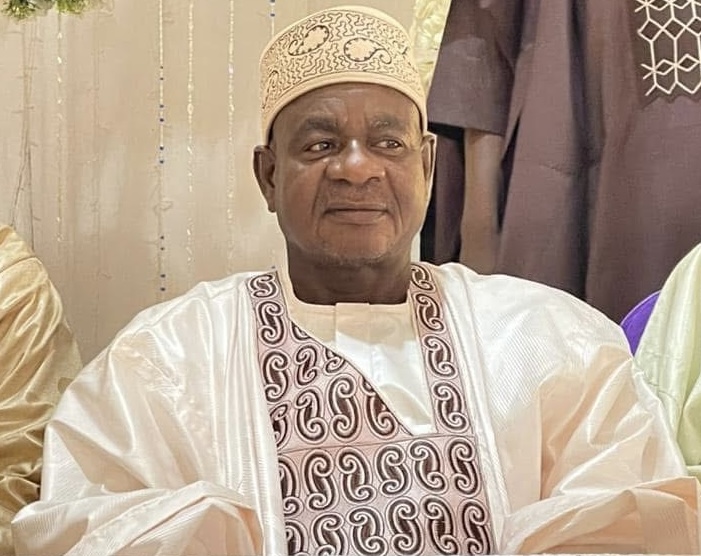
A former local government chairman in Kano State, Musa Illiyasu Kwankwaso, has thrown his weight behind President Bola Ahmed Tinubu’s directive ordering state governors to release local government funds directly to councils. He described the move as timely, lawful, and necessary to promote development at the grassroots and improve the lives of ordinary Nigerians.
Kwankwaso, who is currently the Director of Finance at the Hadejia Jama’are River Basin Development Authority, said the President’s decision to use an executive order to stop the diversion of local government funds showed genuine concern for the poor and for communities at the grassroots.
In a statement he personally signed on Monday in Kano, Kwankwaso said the directive would strengthen local governments and allow them to carry out their responsibilities effectively.
“I really cherished the position taken by President Tinubu as a statesman, because the President truly means well for the masses of this country,” he said.
President Tinubu recently directed that funds meant for local governments should be paid directly to the councils, rather than passing through state governments. The directive follows years of complaints that state governments often control, delay, or divert local government funds through the joint state-local government account system.
Under the current system, allocations from the Federation Account meant for local governments are first paid into a joint account managed by state governments. Many critics argue that this arrangement has weakened local councils and prevented them from carrying out basic development projects.
Kwankwaso said President Tinubu understands the challenges facing local governments and has taken the right step to address them.
“President Tinubu understands the problem of LGCs and the way to quickly solve it, which is indeed the local governments’ financial autonomy,” he said.
According to him, giving councils direct access to their funds would allow them to respond to the real needs of their communities, including healthcare, education, and security.
“If local governments are getting their money directly, they can execute projects at their levels which, in earnest, would empower their people. They can build hospitals, schools and even provide adequate security to their communities,” he added.
Local governments are the third tier of government in Nigeria and are closest to the people. They are responsible for basic services such as primary healthcare, primary education, rural roads, markets, and sanitation. However, many councils across the country have struggled to perform these duties due to lack of funds and control over their finances.
Kwankwaso, who served two terms as chairman of Madobi Local Government Area in Kano State under former Governor Ibrahim Shekarau, shared his personal experience to support his argument.
He recalled that about 20 years ago, Madobi Local Government received far less money than councils receive today, yet meaningful projects were executed.
“When I was chairman of Madobi some 20 years ago, I was getting only N30 million monthly and with that money I paid salaries with N9 million while I spent the balance on the execution of projects that are still standing at the council,” he said.
He expressed concern that despite receiving much larger allocations today, many local governments have little to show for it. According to him, Madobi Local Government now receives over N1 billion monthly, but development has not kept pace with the increase in funding.
“Today, Madobi is getting over N1 billion every month, yet there is little to show for it because the money is being controlled by the state government,” he said.
Kwankwaso argued that financial autonomy would reduce waste and improve accountability at the local level. He said when councils control their own funds, residents can more easily track how the money is spent and hold their leaders accountable.
He also stressed that local government financial autonomy is not just a policy decision by President Tinubu but a matter backed by law.
According to him, the Supreme Court has already ruled that local governments are entitled to direct access to their funds. He said governors are therefore legally bound to comply with the directive.
“Local government financial autonomy is not just a presidential order; it is also a Supreme Court ruling. Obeying it is a matter of respecting the law,” Kwankwaso said.
The issue of local government autonomy has been a long-standing debate in Nigeria. For years, civil society groups, labour unions, and development experts have argued that the joint account system has crippled local councils and slowed development at the grassroots.
In 2020, the Supreme Court ruled that state governments should not control local government funds and that councils should be allowed to operate independently. However, implementation of the ruling has remained a challenge, with many states continuing to operate the joint account system.
President Tinubu’s executive order is seen by supporters as a bold move to enforce the court’s decision and strengthen the third tier of government. However, some state governors have raised concerns, arguing that the move could create administrative and coordination challenges.
Despite these concerns, voices like Kwankwaso’s are adding to growing support for the directive, especially from former local government officials who have firsthand experience of the challenges faced by councils.
As the debate continues, many Nigerians are watching closely to see how the directive will be implemented and whether it will bring the promised changes. For communities across the country, the hope is that stronger and better-funded local governments will translate into real development and improved living conditions.