
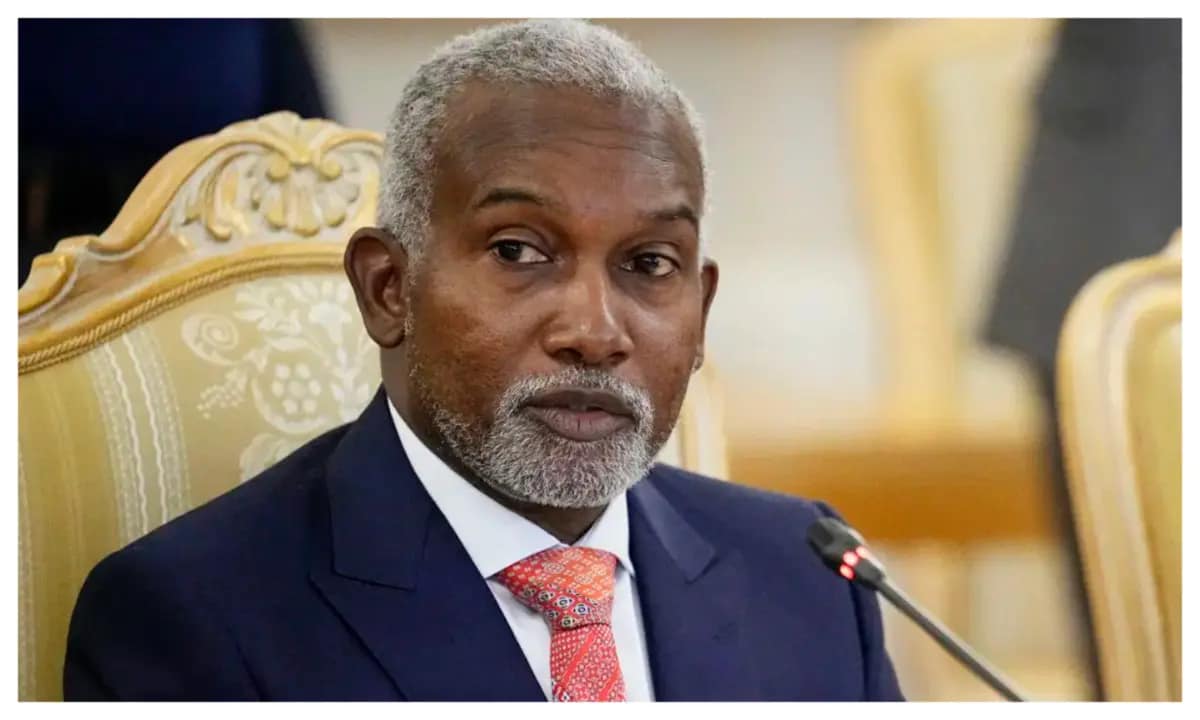
The Minister of Foreign Affairs, Yusuf Tuggar, has said that the recent United States military airstrikes carried out in parts of Nigeria’s North-West region did not violate the country’s sovereignty or territorial integrity. According to him, the operation was fully approved by the Nigerian government and carried out in collaboration with the United States.
Tuggar made this clarification on Friday during an interview with international news network CNN. His comments come amid growing public debate and mixed reactions across Nigeria following reports of US airstrikes targeting terrorist elements in parts of the North-West.
The minister said the operation was a joint effort between Nigeria and the United States and had the full backing of President Bola Tinubu before it was carried out.
“We collaborated on this attack,” Tuggar said. “It was a collaborative effort between Nigeria and the US, and President Tinubu gave the go-ahead before it took place, and we don’t see it violating our sovereignty or territorial integrity, which is very important.”
His statement was aimed at addressing concerns raised by some Nigerians who questioned whether the involvement of a foreign military force amounted to a loss of control over Nigeria’s territory.
According to Tuggar, Nigeria remains fully in charge of all decisions related to its security and territorial defence. He stressed that the country’s partnership with the United States was based on shared security interests and the urgent need to deal with terrorism.
The foreign affairs minister explained that the cooperation was not influenced by external pressure or religious reasons. Instead, he said it was driven by the responsibility of the government to protect lives and restore peace in areas affected by violence.
“Our cooperation with the US is strictly about combating terrorism and protecting Nigerians,” he said. “Nigeria is fully in control of its territory and security operations.”
The comments followed a statement by US President Donald Trump, who announced on Thursday that American forces had carried out airstrikes against Islamic State terrorists in north-western Nigeria. Trump said the strikes were deadly and warned that more attacks would follow if militants continued killing Christians.
In a post on his Truth Social platform, Trump said the US Department of War had carried out “numerous perfect strikes” against terrorist targets.
The US announcement quickly sparked reactions in Nigeria, with some people welcoming the action as support in the fight against terrorism, while others raised concerns about national sovereignty, civilian safety, and transparency.
Nigeria has faced serious security challenges for more than a decade. While the North-East has been the main centre of Boko Haram and Islamic State West Africa Province (ISWAP) activities, the North-West has also seen growing violence linked to armed groups, banditry, and kidnapping.
States such as Sokoto, Zamfara, Katsina, and parts of Kaduna have recorded repeated attacks on villages, highways, and security forces. Thousands of people have been killed or displaced, and many communities have struggled to return to normal life.
In response, the Nigerian military has increased both ground and air operations against armed groups. The government has also worked with international partners, including the United States, to improve intelligence gathering, training, and equipment.
Tuggar’s remarks suggest that the recent US airstrikes were part of this broader security cooperation. He made it clear that Nigeria invited and approved the support, rather than having it imposed.
However, foreign military involvement often attracts public debate, especially when details of operations are not fully disclosed. Some Nigerians worry about civilian casualties and the possibility of mistakes during airstrikes.
The Federal Government has repeatedly said it is committed to protecting civilians and ensuring that all military operations follow clear rules and accurate intelligence.
Tuggar’s interview appears to be part of efforts by the government to reassure the public and clarify the facts surrounding the airstrikes. By stressing presidential approval and joint planning, the minister sought to counter claims that Nigeria’s sovereignty had been undermined.
So far, the Nigerian Defence Headquarters has not released detailed information about the targets or outcomes of the airstrikes mentioned by the US president. This has led to speculation and calls for more transparency.
Some civil society groups and commentators have urged the government to provide clear briefings to avoid confusion and misinformation. They argue that open communication is important to maintain public trust, especially on sensitive security matters.
Despite the controversy, many residents in areas affected by violence say they welcome any effort that can help bring peace. In communities that have suffered repeated attacks, there is strong desire for lasting security, regardless of who provides support.
The Federal Government has maintained that its priority remains the safety of Nigerians and the restoration of peace in all troubled regions.