
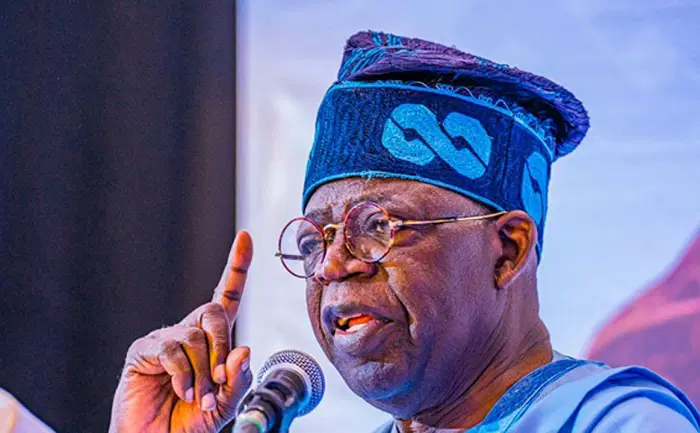
President Bola Ahmed Tinubu has assured Nigerians that his administration’s ongoing efforts to reform the country’s security system will soon produce positive results and restore public confidence. He said while the security challenges facing the nation are serious, the government remains determined to overcome them.
The President gave this assurance on Friday during a meeting with a delegation of the Christian Association of Nigeria (CAN), led by its President, Archbishop Daniel Okoh. The meeting took place at Tinubu’s residence in Lagos.
The discussion focused on national security, the role of religious leaders in promoting peace, and the government’s plans to strengthen the country’s security structure. A statement on the meeting was later issued by the Presidential Spokesperson, Mr. Bayo Onanuga.
Speaking during the meeting, President Tinubu acknowledged that insecurity remains a major concern across many parts of the country. However, he expressed confidence that the steps being taken by his administration would address the problem over time.
“The mood of the nation is peaceful, although our ungoverned spaces are so large,” the President said. “The challenge is real, but we will surmount it.”
Nigeria has faced persistent security challenges for more than a decade. These include terrorism in the North-East, banditry and kidnappings in the North-West and North-Central regions, as well as other forms of violent crime in different parts of the country. Many rural areas have remained difficult for security agencies to control due to poor infrastructure and vast land mass.
President Tinubu said his government is working to reform the security sector in a way that responds better to these challenges. He highlighted the plan to establish state and community policing as a key part of the reforms.
According to him, local policing will help states and communities respond faster to security threats, especially in areas where federal security forces are overstretched.
The President explained that state and community policing would become a reality once the National Assembly completes the necessary legislative processes. He noted that changes to the constitution and other laws are required before the system can be fully implemented.
President Tinubu also called on religious leaders to play a supportive role in the fight against insecurity. He urged them to encourage cooperation, vigilance, and prayer among their followers.
“We are very religious. We are prayer warriors,” Tinubu said. “We need your focus, vigilance and cooperation.”
He explained that some security measures take time before their impact becomes visible. According to him, patience and unity are needed as the government works to strengthen national security.
Religious bodies like CAN and the Nigerian Supreme Council for Islamic Affairs have often played key roles in promoting peace and unity, especially during times of crisis. Their influence across communities makes them important partners in efforts to reduce violence and build trust.
During the meeting, President Tinubu also addressed concerns about the slow pace of military operations in some areas. He explained that delays in acquiring modern military equipment have affected public perception of the government’s efforts.
He noted that military hardware is expensive and not easily available, especially in a global environment where many countries are competing for the same equipment.
To address this challenge, the President disclosed that Nigeria has ordered four attack helicopters from the United States. He also said the government is engaging Turkey for additional military support.
These efforts, he said, are aimed at strengthening the armed forces and improving their ability to respond to threats posed by bandits, insurgents, and other criminal groups.
President Tinubu acknowledged that many of these groups use guerrilla tactics, making them difficult to defeat through conventional military operations. Despite this, he said the government remains resolute and focused on restoring peace across the country.
“Our priority is to restore peace and ensure that Nigerians can live and work without fear,” the President said.
The meeting with CAN also touched on recent cases of abduction, including the kidnapping and later release of schoolchildren in Niger and Kebbi states. Such incidents have continued to raise concerns about the safety of schools and vulnerable communities.
President Tinubu urged Nigerians to remain vigilant and to support security agencies by providing useful information when necessary. He stressed that security is a shared responsibility and cannot be left to the government alone.
In recent years, the abduction of students has become a recurring problem, particularly in northern Nigeria. Although many victims have been released, often after negotiations, the incidents have left deep emotional scars on families and communities.
The President’s engagement with CAN comes at a time when many Nigerians are demanding stronger action against insecurity. Since taking office, Tinubu has promised to tackle the problem head-on by reforming security agencies, improving intelligence, and investing in modern equipment.
The government has also made efforts to improve coordination among security agencies and strengthen cooperation with neighbouring countries. This is seen as important, given that many armed groups operate across borders.
Archbishop Daniel Okoh, who led the CAN delegation, commended the President for meeting with religious leaders and listening to their concerns. He assured Tinubu of CAN’s support in promoting peace, unity, and moral values across the country.
CAN has often spoken out against violence and has called on political leaders to protect lives and property, regardless of religious or ethnic background.
The meeting reflects the Tinubu administration’s approach of engaging key stakeholders in addressing national challenges. By involving religious leaders, the government hopes to build trust and encourage citizens to play an active role in promoting security.
As Nigerians continue to face security challenges, the President’s assurances have offered some hope that lasting solutions are being pursued. However, many citizens are watching closely to see how quickly these promises will translate into real improvements on the ground.