
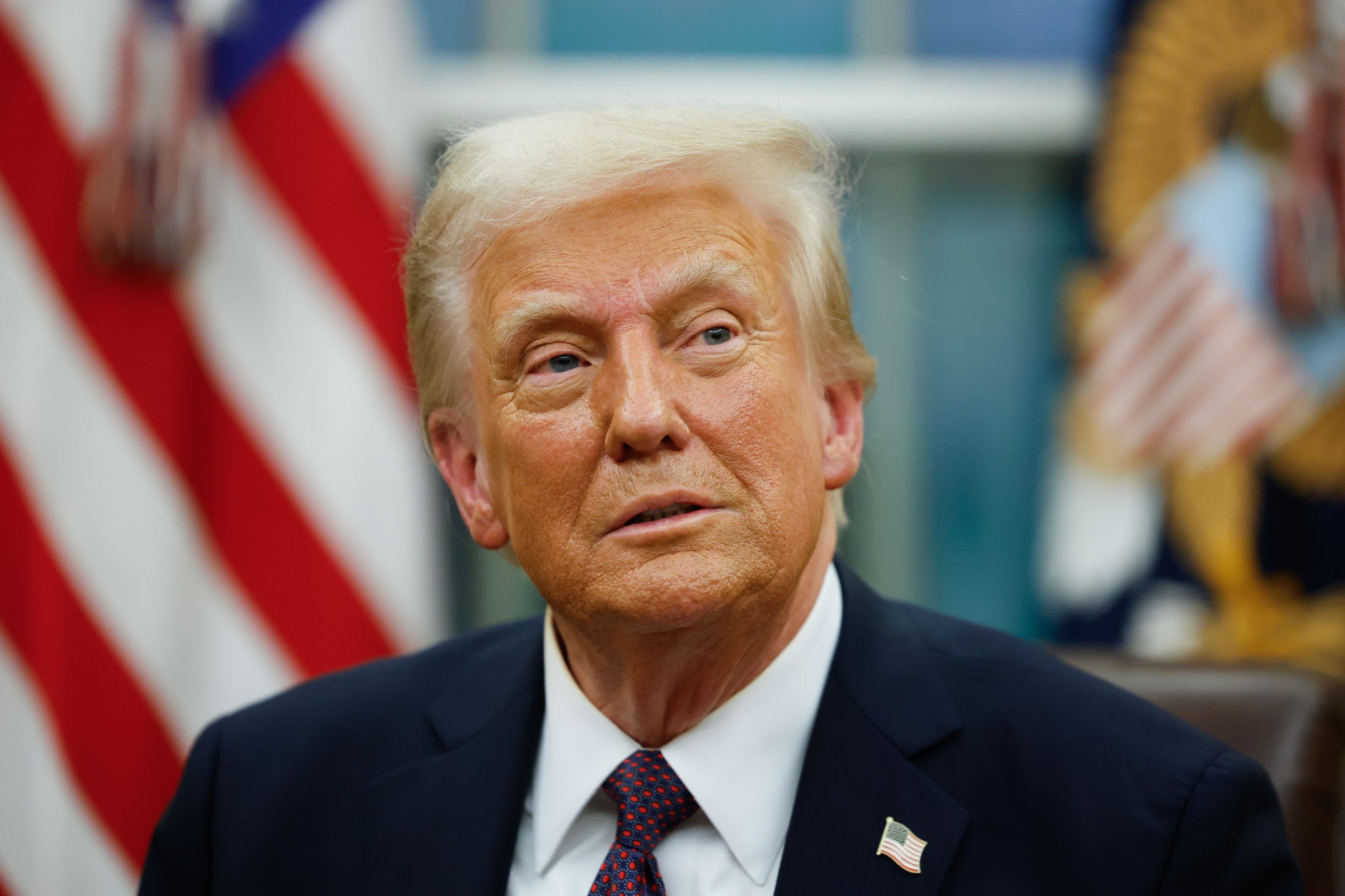
United States President Donald Trump has sparked fresh international controversy after branding Colombian President Gustavo Petro a “sick man” and threatening possible military action against Colombia. The comments were made on Sunday while Trump was speaking to reporters aboard Air Force One.
During the interaction, Trump accused President Petro of being involved in cocaine production and selling drugs to the United States. He claimed that Petro “likes making cocaine and selling it to the US” and warned that such actions would not continue for long.
“We have a very sick neighbour. Colombia is very sick too,” Trump said. “Run by a sick man who likes making cocaine and selling it to the US, and he’s not gonna be doing it very long.”
Trump’s remarks have drawn attention across the world, especially coming at a time of already strained relations between the United States and several Latin American countries. His comments also came just a day after he made another shocking claim that the Venezuelan President, Nicolas Maduro, and his wife had been captured.
On Saturday, Trump announced what he described as the capture of President Maduro and his wife. However, no official confirmation has come from Venezuelan authorities, the United States government, or international bodies to support the claim. Many observers have described the statement as unclear and controversial.
President Maduro remains the leader of Venezuela and has often been at the centre of political tension with the United States. Washington has accused his government of human rights abuses, election manipulation, and links to drug trafficking, claims which Venezuela has repeatedly denied.
Trump’s comments about Colombia add another layer to the long history of US involvement in Latin America. Colombia has been a key ally of the United States in the region, especially in the fight against drug trafficking. For decades, the two countries have worked together through security agreements and drug control programmes, including the well-known “Plan Colombia.”
Despite this partnership, Colombia has continued to struggle with cocaine production, largely due to the presence of armed groups, illegal drug networks, and long-standing internal conflict. Successive Colombian governments have said the problem is complex and cannot be solved by military force alone.
President Gustavo Petro, who took office in 2022, is Colombia’s first left-wing president. Since becoming president, Petro has pushed for changes in drug policy, arguing that the long-running war on drugs has failed. He has called for alternative approaches, including focusing on social development and reducing poverty in rural areas where coca is grown.
Petro has also been vocal in criticizing past US-backed drug policies, saying they have caused violence without stopping drug supply. His views have sometimes put him at odds with Washington, especially with conservative leaders like Trump.
Trump’s threat of military action has raised concerns among international observers, who warn that such statements could increase tension in an already fragile region. Military action against Colombia, a sovereign nation and long-time US partner, would mark a serious shift in US foreign policy.
So far, the Colombian government has not issued an official response to Trump’s remarks. However, political analysts expect a strong reaction, as the comments directly attack the country’s leadership and accuse it of criminal activity.
Trump’s language follows a pattern seen during his presidency, where he often used strong words when speaking about foreign leaders and countries he viewed as unfriendly or problematic. During his time in office, he made similar remarks about leaders in Mexico, Venezuela, North Korea, and Iran.
In Nigeria and other parts of Africa, Trump’s comments are being closely watched. Many African countries have also faced pressure from Western nations over drug trafficking, security, and governance. Analysts say the situation highlights the power imbalance in global politics, where powerful countries can openly threaten others.
For now, Trump’s comments remain just words, but they have already caused concern. Whether they will lead to real diplomatic or military action remains to be seen. What is clear is that the statements have added to global tension and raised questions about the future of US relations with Colombia and other Latin American nations.
As the situation develops, the world will be watching closely to see how Colombia, Venezuela, and the wider international community respond to Trump’s latest remarks.