
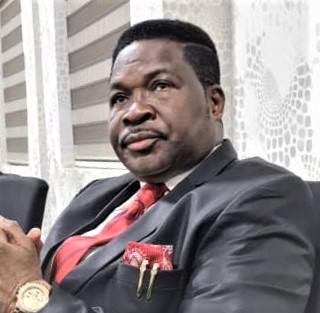
The Independent Corrupt Practices and Other Related Offences Commission (ICPC) has filed a criminal charge against a senior Nigerian lawyer, Mr Mike Ozekhome, SAN, over allegations of fraud linked to the ownership of a property in London, United Kingdom.
The charge, which was filed at the High Court of the Federal Capital Territory (FCT), Abuja, is part of an ongoing investigation into what the anti-corruption agency described as a large-scale corruption case involving foreign property.
According to court documents, the ICPC filed a three-count charge against Ozekhome on January 16, 2026. The case is marked FCT/HC/CR/010/26, and the senior lawyer is listed as the sole defendant.
The charge was filed by the ICPC’s lawyer, Mr Osuobeni Akponimisingha, who is the Head of the High Profile Prosecution Department of the commission. As of the time of filing this report, the case has not yet been assigned to a judge.
Ozekhome, who is 68 years old and resides at No. 53 Nile Street, Maitama, Abuja, is accused of actions relating to the alleged transfer and ownership of a house located at No. 79 Randall Avenue, London NW2 7SX.
In the first count, the ICPC alleged that Ozekhome, sometime in August 2021 or thereabout, while in London, directly received the property from one Mr Shani Tali. The commission claimed that the property was “purportedly given” to the senior lawyer under circumstances that amount to a felony.
According to the ICPC, the alleged act is an offence contrary to Section 13 and punishable under Section 24 of the Corrupt Practices and Other Related Offences Act, 2000. These sections deal with issues of corruption, abuse of office, and illegal benefits.
In the second count, the ICPC accused Ozekhome of making a false document while being a legal practitioner and a Senior Advocate of Nigeria. The commission alleged that he created or caused to be created a Nigerian passport bearing the name of Mr Shani Tali, with passport number A07535463.
The ICPC claimed that the alleged false passport was made with the intention of using it to support a claim of ownership of the London property at 79 Randall Avenue. According to the charge, this was done with the intent to commit fraud.
The commission said this alleged offence is contrary to Section 363 and punishable under Section 364 of the Penal Code, Cap 532, Laws of the Federal Capital Territory, Abuja, 2006. These sections relate to forgery and the making of false documents.
In the third count, the ICPC further accused the senior lawyer of dishonestly using the alleged false Nigerian passport as a genuine document. The commission said Ozekhome used the passport to support his claim of ownership of the London property, despite allegedly knowing that the document was false.
The ICPC said this act is contrary to Section 366 and punishable under Section 364 of the same Penal Code of the FCT. Section 366 deals with using forged documents as genuine, while Section 364 prescribes the punishment for such offences.
To support its case, the ICPC attached a list of documents and exhibits to the charge. One of the key documents listed is a judgment with reference number REF/2023/0155, dated September 11, 2025. Although details of the judgment were not fully stated in the charge, it is believed to be connected to earlier proceedings involving the disputed London property.
Also listed among the exhibits is an extra-judicial statement allegedly made by Ozekhome on January 12, 2026. Other documents include papers relating to interim forfeiture proceedings on the London property, which were previously filed at the Federal High Court in Nigeria.
The ICPC also listed a letter dated December 18, 2025, a data page of Mr Shani Tali’s passport, and other documents it described as relevant to proving the allegations against the defendant.
In its proof of evidence, the anti-corruption commission listed several witnesses who are expected to testify during the trial. Among them are Mr Wakili Musa and Mr Tosin Olayiwola, both investigators with the ICPC who were involved in the investigation of the case.
Other listed witnesses include Mr Ebenezer Nduo and Mr Blessing Monokpo, who are also investigators with the commission. The ICPC said these officers would give evidence on how the investigation was carried out and how the alleged offences were uncovered.
In addition, the commission said a representative of the Nigerian Immigration Service (NIS) would testify in court. Although the name of the immigration officer was not mentioned in the proof of evidence, the ICPC said the witness would help establish facts relating to passport records and travel documents linked to the case.
The commission also indicated that it may call additional witnesses through subpoenas or by filing an additional list of witnesses, depending on how the trial progresses.
The case has drawn public attention because of Ozekhome’s status as a Senior Advocate of Nigeria, one of the highest professional titles in the Nigerian legal system. Senior Advocates are expected to uphold high ethical standards and serve as role models within the legal profession.
Over the years, the ICPC and other anti-corruption agencies in Nigeria have increased their focus on alleged cases of corruption involving high-profile individuals. The commission has repeatedly stated that no one is above the law and that it will continue to pursue cases involving public officers and influential figures where there is evidence of wrongdoing.
Foreign property ownership has also become a sensitive issue in Nigeria’s anti-corruption fight. In recent years, authorities have investigated several cases involving the purchase or transfer of properties abroad, especially where such assets are suspected to be linked to proceeds of corruption or illegal activities.
The ICPC has often worked with foreign authorities and local agencies, such as the Nigerian Immigration Service and the Economic and Financial Crimes Commission (EFCC), to trace assets and documents connected to such cases.
At this stage, the charges against Ozekhome remain allegations, and the court is expected to determine the matter after hearing from both the prosecution and the defence. Legal experts say the trial will likely attract close public interest because of the issues involved and the profile of the defendant.
As of the time of filing this report, the Abuja High Court had not assigned the case to a trial judge, and no date had been fixed for Ozekhome’s arraignment.
The ICPC has maintained that it is committed to ensuring transparency, accountability, and the rule of law. The commission said it would diligently prosecute the case and allow the court to decide based on the evidence presented.