
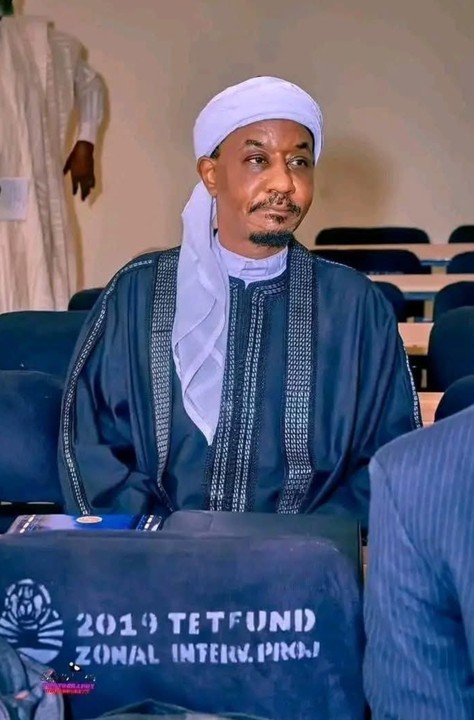
The Emir of Kano, Muhammadu Sanusi II, has said that his greatest happiness comes from being in the classroom, either as a teacher or a student. He described learning as a lifelong process and stressed that education remains important at every stage of life.
The monarch made the remarks on Friday while speaking with journalists after attending lectures at Northwest University, Kano. The Emir was recently admitted to study Common and Sharia Law at the institution, a move that has drawn attention and admiration from many Nigerians.
Sanusi, a former Governor of the Central Bank of Nigeria (CBN), said returning to the classroom has brought him personal joy and renewed excitement. He explained that his decision to study Law was driven by a long-standing desire to deepen his understanding of how society is governed.
“I am at my happiest in the classroom either studying or teaching because it is a process of learning,” the Emir said. “Learning does not stop at any age. It continues throughout life.”
The Emir revealed that the Law programme marks his third bachelor’s degree, making him a rare example of a public figure who continues to pursue formal education despite already achieving academic and professional success.
“The first time I was at level 200 was in 1978, and the second time was in 1992. So, this is actually my third bachelor’s degree I’m going for,” he said with a smile.
Sanusi already holds a doctorate degree and has had a long career in banking, public service, and traditional leadership. He served as Governor of the Central Bank of Nigeria from 2009 to 2014 and later became the Emir of Kano. Over the years, he has remained a strong voice on issues such as education, governance, economy, religion, and social development.
Speaking further, the Emir said his interest in Law had existed for many years but circumstances did not allow him to pursue it earlier. He noted that studying Law later in life is not unusual and is often taken up by people after retirement or after long careers in other fields.
“Law is a subject many people go to after retirement,” he said. “People like General Olusegun Obasanjo, Alex Ekwueme, Nasir el-Rufai, Osita Chidoka. So this is not strange at all. It is a subject that we all need to live with.”
According to the Emir, Law plays a central role in human society because it shapes behavior, regulates relationships, and provides structure to governance. He stressed that understanding the law helps individuals become better citizens and leaders.
“The law is all over us,” Sanusi said. “It is the law that holds society together.”
He added that legal knowledge is not only for lawyers and judges but for everyone, especially those in leadership positions. According to him, a good understanding of the law improves decision-making and promotes fairness and accountability.
The Emir also spoke about the wider importance of education, saying it plays a major role in shaping responsible and informed citizens. He argued that education helps people understand their rights and duties and encourages them to contribute positively to society.
“The more education you have, the better citizen you become,” he said.
Sanusi revealed that even though he had only spent a few days in class, he had already gained new knowledge and fresh perspectives. He said interacting with lecturers and students had been refreshing and mentally stimulating.
In a light-hearted moment, the Emir joked about how studying Law might help him deal with his critics more effectively. Known for his outspoken views on social and political issues, Sanusi has often faced criticism from different quarters.
“Maybe if I understand the law, I can give my traducers some trouble,” he said jokingly. “Maybe I’ll sue them.”
The comment drew laughter from journalists and students around, showing a relaxed and human side of the traditional ruler.
Sanusi also used the opportunity to thank the management of Northwest University, Kano, for granting him admission. He expressed appreciation for the lecturers and academic staff, praising their dedication to teaching and research.
He urged society to place greater value on educators, describing teachers and lecturers as the backbone of national development.
“We do not appreciate our teachers enough,” he said. “They shape minds, build character, and prepare the future leaders of society.”
The Emir’s return to the classroom has been widely discussed across Kano State and beyond. Many residents and observers have described it as a strong message on the importance of education and self-improvement, regardless of age or social status.
Kano State, one of Nigeria’s most populous states, continues to face challenges in education, including school dropouts and low literacy levels in some areas. Public figures encouraging learning are often seen as role models capable of influencing positive change.
As both a traditional ruler and a former public official, Emir Sanusi has often spoken about the need for educational reform, especially in northern Nigeria. His personal decision to return to school is seen by many as matching his words with action.
Students at Northwest University who share classes with the Emir expressed excitement and pride. Some said his presence in class has motivated them to take their studies more seriously.
For now, the Emir says he is focused on learning and contributing positively in the classroom, just like every other student.
As lectures continue, Emir Muhammadu Sanusi II’s journey once again highlights a simple but powerful message: education has no age limit, and learning truly never ends.