
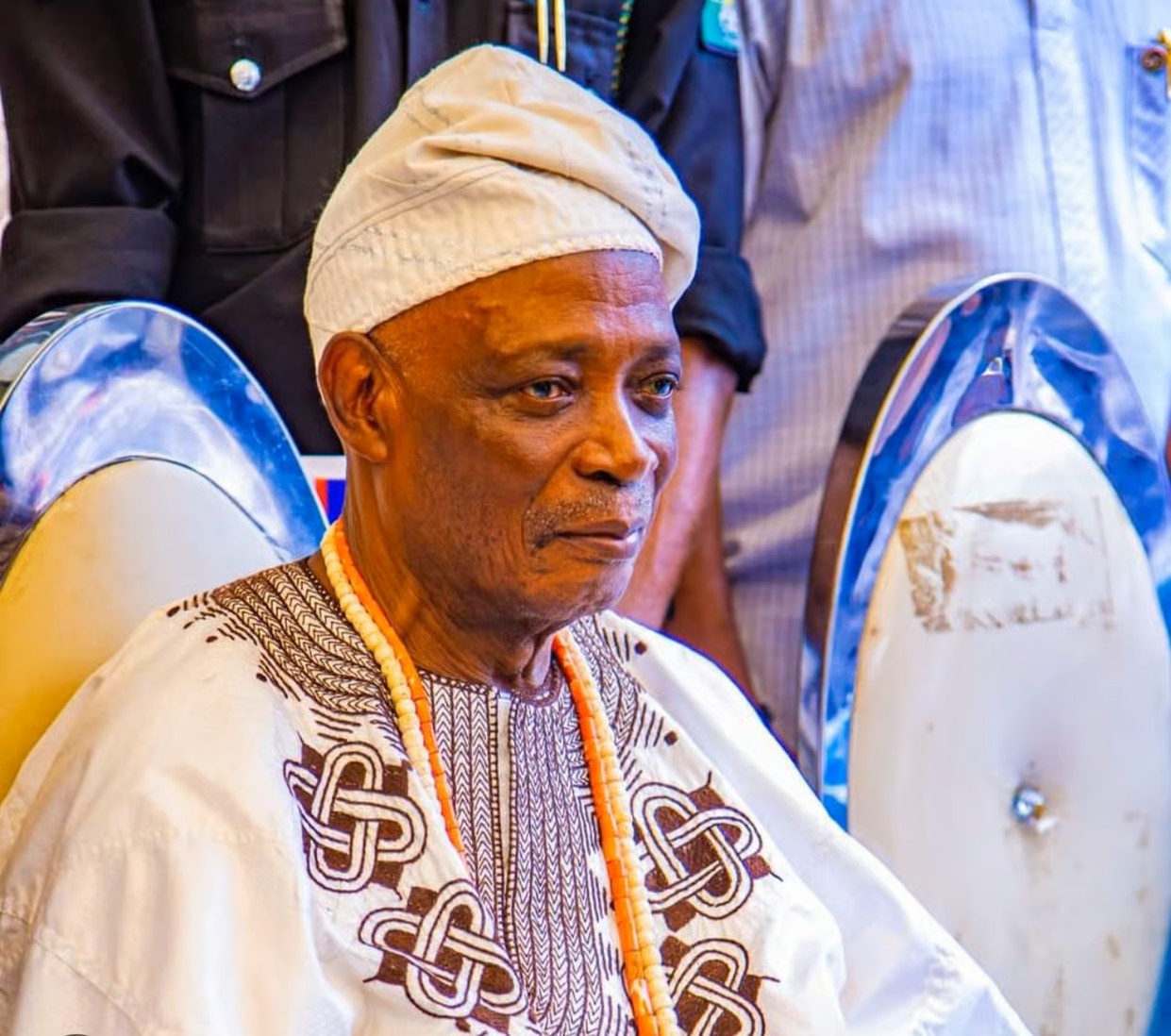
The Olubadan of Ibadanland, Oba Rashidi Ladoja, has said Nigeria’s insecurity problem, though serious, is not beyond solution, expressing confidence in President Bola Ahmed Tinubu’s efforts to address the challenge.
The traditional ruler made this known on Friday in Abuja while speaking with journalists after paying a courtesy visit to President Tinubu at the Presidential Villa. During the visit, discussions reportedly focused on national security, the economy, and the general state of the country.
Oba Ladoja described insecurity as Nigeria’s most pressing problem, noting that it has continued to affect lives, livelihoods, and economic activities across many parts of the country. According to him, the situation has gone beyond isolated incidents and is now affecting both rural and urban communities.
“The major problem that we really have now is the problem of insecurity,” the Olubadan said. “Farmers find it difficult to go to their farms. It is already coming to the South also.”
His comments reflect growing concerns among Nigerians over rising cases of banditry, kidnapping, armed robbery, and attacks on farming communities. For years, insecurity has been more visible in parts of northern Nigeria, but recent reports show that southern states are also facing similar threats.
The Olubadan pointed out that the fear of attacks has forced many farmers to abandon their farmlands. This, he said, is affecting food production and threatening food security across the country. When farmers are unable to farm safely, crop yields fall, food prices rise, and ordinary Nigerians feel the impact.
Agriculture remains one of Nigeria’s largest sources of employment, especially in rural areas. Any disruption to farming activities has direct effects on income, food supply, and national stability. Experts have repeatedly warned that insecurity in farming areas could worsen poverty and hunger if not addressed.
Despite these challenges, Oba Ladoja said he believes the Federal Government under President Tinubu is taking steps to confront the problem. He stressed that while the issue is complex and deep-rooted, it is not impossible to solve.
“I don’t think it is insurmountable,” he said. “We believe that the President is tackling it currently.”
The Olubadan’s remarks come at a time when the Tinubu administration is facing pressure from Nigerians to deliver improved security and economic relief. Since assuming office in May 2023, President Tinubu has made security a top priority, pledging to tackle crime, terrorism, and banditry through improved coordination among security agencies.
The Federal Government has also continued to invest in military operations, intelligence gathering, and security equipment. In addition, there have been ongoing discussions around community policing and the role of state governments in supporting federal security efforts.
Oba Ladoja said President Tinubu’s past record as governor of Lagos State gives him confidence in the President’s ability to handle difficult challenges. Tinubu served as governor of Lagos from 1999 to 2007 and is widely credited with laying the foundation for the state’s growth in infrastructure, revenue generation, and governance reforms.
“If you know from where he is coming, you will know that he knows what he is doing,” Ladoja said. “He was able to get Lagos from where it was to where he left it.”
The Olubadan also spoke on governance at the state level, noting that states now have more financial resources than they did in the past. According to him, this improved financial position should help states better address their responsibilities, including security and development.
“The states have more money than we had when we were governors,” he said. “They are able to meet their commitments more than what we had when we were governors.”
His comment refers to changes in revenue sharing, improved internally generated revenue in some states, and recent economic reforms that have increased funds available to subnational governments. With more resources, state governments are expected to invest more in infrastructure, healthcare, education, and local security support.
Oba Ladoja, who previously served as governor of Oyo State from 2003 to 2007, drew from his own experience in government to explain the challenges leaders face. He suggested that while progress may be slow, reforms often take time to produce visible results.
The monarch expressed optimism that the economic and security reforms being implemented by the Tinubu administration would stabilise the country over time. He said strong institutions and consistent policies are key to addressing Nigeria’s long-standing problems.
Nigeria has faced multiple security challenges over the past decade, including insurgency in the North-East, banditry in the North-West, farmer-herder conflicts in the Middle Belt, and rising kidnapping cases across several regions. These issues have placed heavy pressure on security forces and tested public confidence in government.
Traditional rulers like the Olubadan play an important role in Nigeria’s society, often acting as voices of their communities and intermediaries between the people and government. Their views on national issues often carry weight, especially at the grassroots level.
Oba Ladoja said his visit to President Tinubu was part of efforts to support dialogue and national unity. He stressed the importance of collective effort in addressing insecurity, noting that government alone cannot solve the problem without the cooperation of communities and leaders at all levels.
Looking ahead, the Olubadan said he hopes President Tinubu’s leadership will leave Nigeria in a stronger and more stable position by the end of his tenure.
“We hope that when he is leaving in 2031, he will have put Nigeria where all of us would be proud of,” he said.