
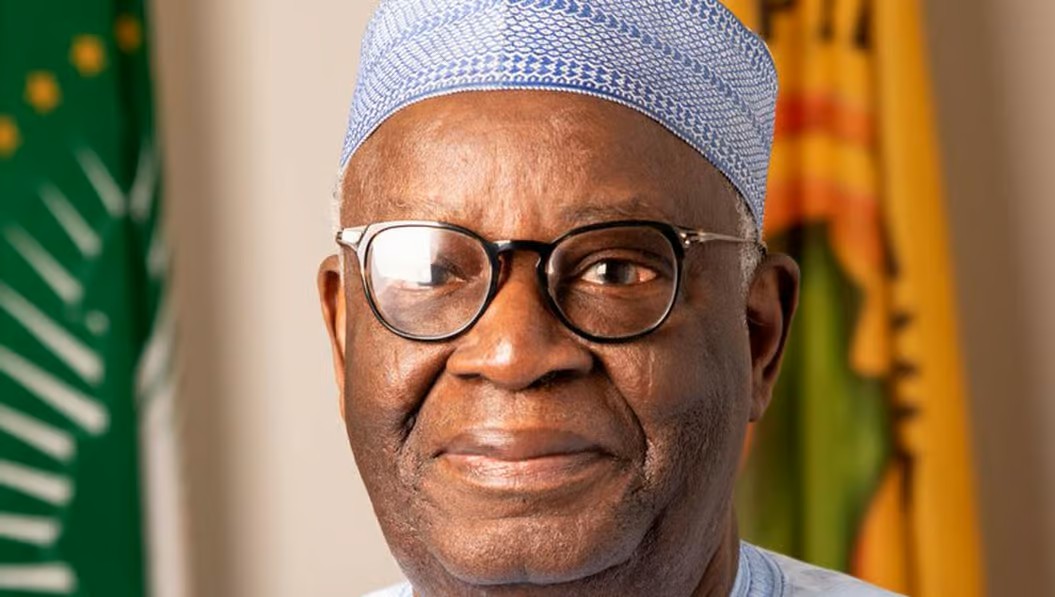
A former Chief of Staff to the late former President Muhammadu Buhari, Professor Ibrahim Gambari, has dismissed claims that a secretive cabal hijacked power during Buhari’s administration, insisting that every president operates with an inner circle of trusted aides.
Gambari, a retired diplomat and former United Nations Under-Secretary-General and Special Adviser on Africa, made the clarification on Monday while appearing on Politics Today, a programme aired on Channels Television. During the discussion, he reflected on governance under Buhari and addressed long-standing controversies surrounding the late president’s tenure.
His remarks come amid persistent public debate over the influence of unelected power brokers in the Buhari administration. Critics often accused a so-called “cabal” of sidelining formal institutions and wielding excessive authority, but Gambari insisted such claims were overstated.
“Every president had a cabal of a sort,” Gambari said. “You might call them the inner circle or the inner caucus. These are people who are close to the president, with shared experiences, a perception of the future, and the ability to advise him frankly.”
He added that while some members of any presidential inner circle may try to tell the leader only what they want to hear, not all wield undue influence. “Some cabals tend to want to tell the president not what he needs to know, but what he wants to hear. They exist in every government. Some are more influential than others. Some are more faithful to the principle than others, but they all exist,” Gambari explained.
The retired diplomat stressed that the power of those often labelled as the “Buhari cabal” was limited. “Sometimes more powers are ascribed to this cabal than actually is the case,” he said. “I know the so-called people who are called cabal in Buhari’s administration knew their limitations and they dared not push beyond that.”
Gambari said Buhari’s personal leadership style also placed clear limits on the influence of anyone around him. “Everybody also knew Buhari had what I call creative stubbornness. Something similar, in a way, to the late Chief Obafemi Awolowo in terms of stubbornness—what they believe and the direction in which they want to move,” he noted.
He explained that the former president valued loyalty and competence, and expected aides to execute their duties responsibly. Gambari stressed that a president’s effectiveness often depends on the calibre of the people supporting him. “A president, in many ways, can be only as good as the people who support and back him,” he said.
During the interview, Gambari also addressed one of the more bizarre conspiracy theories that trailed Buhari’s presidency—the claim that the former military ruler had been replaced by a body double, popularly dubbed “Jibril of Sudan.”
Laughing, Gambari dismissed the theory as “silly” and noted that such rumours revealed the tendency of some people to believe the worst about any president. “I had no doubt at all that he was the Buhari that I knew in 1984 and now,” he said.
Gambari recalled personal conversations with Buhari, pointing to his long history of public service. “He was talking to me about the things we did in 1984, ’85 to the ’90s when he offered me the job. He was talking about Idiagbon and the kind of loyalty he got from him,” Gambari said.
The former Chief of Staff explained that competent and loyal aides are critical to effective leadership. He noted that presidents rely on trusted personnel to gather information, advise on key decisions, and implement policies efficiently. Without such support, he said, governance could become ineffective.
Buhari, who served as Nigeria’s president for eight years, faced frequent criticism from political opponents and media commentators who argued that a small group of advisors held undue influence over decision-making. Gambari’s intervention suggests that while Buhari’s inner circle existed, its role was within reasonable limits and constrained by the late president’s leadership style.
Gambari’s remarks are significant as they come amid ongoing discussions about transparency, accountability, and governance in Nigeria. They also serve to clarify misconceptions about Buhari’s administration, which was often portrayed in media and public debates as being dominated by unelected power brokers.
By highlighting the distinction between legitimate advisory roles and undue influence, Gambari offered insights into how the Buhari presidency functioned behind the scenes. He noted that while some advisers might seek to sway the president’s decisions, the ultimate authority remained with Buhari, whose personal determination and principles shaped policy and direction.
The former Chief of Staff also addressed the broader public perception of leadership in Nigeria. He said the tendency to create conspiracy theories often arises when there is insufficient understanding of how governments operate. Gambari encouraged citizens to consider the complexities of governance before attributing excessive power to a few individuals.
Reflecting on his time in public service, Gambari praised Buhari for surrounding himself with competent and loyal aides who shared his vision and values. He emphasized that effective governance requires both the leader’s wisdom and the support of capable staff.
Political commentators suggest that Gambari’s statements could reshape public discourse about presidential governance, especially regarding the so-called influence of cabals. By presenting a more nuanced perspective, Gambari encourages citizens to focus on institutional mechanisms rather than attributing political outcomes solely to inner circles.