
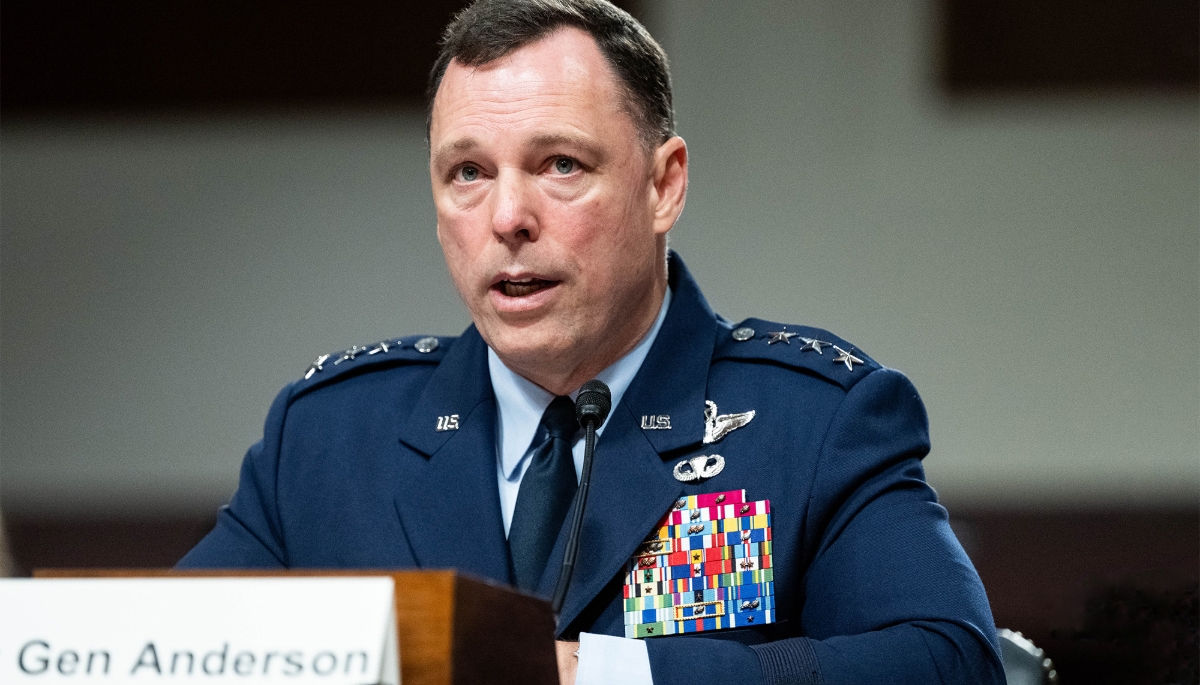
The United States military has officially confirmed the deployment of a small team of American troops to Nigeria, marking the first public acknowledgment of US soldiers operating on Nigerian soil in recent months.
The confirmation was made by General Dagvin Anderson, the head of the United States Africa Command (AFRICOM), amid growing security challenges across Nigeria. According to him, the deployment followed a bilateral understanding between the governments of the United States and Nigeria to strengthen cooperation in the fight against terrorism.
Although reports had earlier suggested that US military personnel were present in Nigeria, this is the first time a senior American official has openly confirmed the deployment.
General Anderson explained that the American troops were deployed to provide what he described as “unique US capabilities” to support Nigeria’s counterterrorism efforts. However, he did not disclose the number of troops involved, where they are stationed, or the specific nature of their mission.
He said such details were being withheld for security reasons.
Nigeria’s Defence Minister, General Christopher Musa (retd.), also confirmed the presence of US military personnel in the country. Like his American counterpart, he did not provide further clarification on their role or location.
The confirmation comes weeks after the United States carried out airstrikes in North-east Nigeria in December 2025. At the time, US President Donald Trump announced that American forces had bombed what he described as camps belonging to the Islamic State group.
According to US officials, the airstrikes were conducted on December 25, 2025, and were aimed at weakening terrorist networks operating in the region. Both the US and Nigerian authorities initially described the operation as successful.
However, controversy followed after reports emerged that unexploded ordnance, believed to be remnants of the airstrikes, was found in civilian-populated areas in Kwara, Niger, and Sokoto states. Local residents reportedly raised concerns about safety risks, especially to farmers and children.
Neither the Nigerian nor the US government has publicly released detailed findings on how the suspected remnants reached those areas, but the reports added to public debate over foreign military operations in Nigeria.
The December airstrikes took place against a tense diplomatic background. Weeks earlier, President Trump had publicly criticised Nigeria after the country was redesignated by the US as a “country of particular concern” over alleged violations of religious freedom.
Mr Trump had accused Nigeria of allowing what he called a “Christian genocide” and threatened to respond forcefully. He reportedly said the US would go “guns-a-blazing” in response to the situation.
The Nigerian government strongly rejected the claims, describing them as misleading and harmful. Officials insisted that insecurity in Nigeria affects people of all religions and ethnic groups, and that the conflict is not based on faith.
The Federal Government urged the United States and other international partners to support Nigeria in fighting terrorism rather than promoting narratives that could worsen divisions in the country.
Despite the disagreements, security cooperation between Nigeria and the US has continued, especially in intelligence sharing, training, and surveillance.
Nigeria has been battling a prolonged insurgency for over a decade, mainly led by Boko Haram and its offshoot, the Islamic State West Africa Province (ISWAP). The groups are most active in the North-east, particularly in Borno, Yobe, and Adamawa states.
In recent years, the insurgents have stepped up attacks on military bases, villages, and key infrastructure. They have also targeted civilians through abductions, killings, and destruction of property.
These areas are already facing serious security problems, including mass kidnappings, farmer-herder clashes, and communal violence linked to land and resource disputes.
In addition to ground cooperation, reports indicate that the United States has been supporting Nigeria through aerial surveillance. Surveillance flights are said to be operated from neighbouring Ghana, providing intelligence on terrorist movements and activities.
The presence of US troops in Nigeria has sparked mixed reactions among Nigerians. Some see it as a necessary step to help Nigeria tackle a growing security threat that has overstretched local forces.
Others have raised concerns about national sovereignty and the risk of civilian harm, especially following reports linked to the December airstrikes.
For years, Nigeria has received security assistance from the United States and other Western partners. This has included training for soldiers, supply of equipment, and intelligence sharing.
However, Nigeria has also faced restrictions in the past, including delays in arms sales due to human rights concerns raised by US lawmakers.
The latest deployment suggests a renewed level of trust and cooperation between Abuja and Washington, despite earlier diplomatic tensions.
Neither government has indicated how long the US troops will remain in Nigeria or whether the deployment will be expanded in the future.
For now, both sides insist the arrangement is limited and focused on counterterrorism support.
As Nigeria continues to face rising insecurity across several regions, many citizens hope that increased international cooperation will help restore peace and stability.
At the same time, calls remain strong for long-term solutions that address the root causes of violence, including poverty, unemployment, and weak governance.
The confirmation of US troops on Nigerian soil marks a significant moment in the country’s security journey, one that could shape future responses to terrorism and regional instability.