
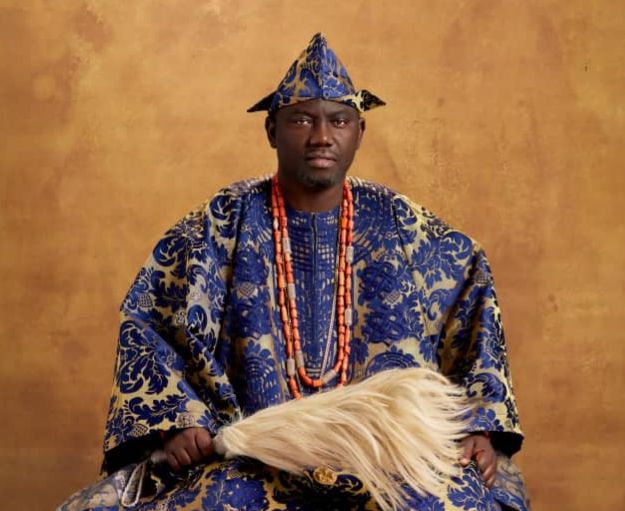
A group of princes from Oyo town have taken the Alaafin of Oyo, Oba Akeem Owoade, to court in a legal battle aimed at protecting what they describe as the historic supremacy and dignity of the Alaafin stool.
The princes have filed a suit at the Oyo State High Court sitting in Oyo town, asking the court to place restrictions on the Alaafin’s conduct, especially his participation in events and traditional councils which they claim diminish the status of the ancient throne.
The suit, marked HOY/18/2026, was filed by Ladigbolu Adegboyega, Owoade Tesleem, Adeyemi Adesina, and Adeyemi Adebayo. The claimants are members of the royal families of Oyo and say they are acting to protect the cultural and historical integrity of the Alaafin institution.
According to court documents, the Alaafin has been summoned to appear in person or through a legal representative to respond to the claims brought against him.
In the suit, the princes are seeking several declaratory and injunctive reliefs. One of their key demands is an order of perpetual injunction restraining the Alaafin from attending or continuing to attend functions and occasions which they say are not befitting the status of the Alaafin as the symbolic head of the Yoruba people.
They also want the court to restrain the monarch from acting in any traditional or official role that would make him appear “subservient or inferior to any Oba in Yorubaland.”
According to the claimants, the Alaafin should not be seen under the authority of any other traditional ruler or participate in council matters in a way that undermines his standing as a paramount ruler.
“The office of the Alaafin of Oyo is of immense historical importance,” the princes stated in their suit, adding that the throne is not only significant in Yorubaland but also in Nigeria, West Africa, and beyond.
They further asked the court to declare that the Alaafin of Oyo is the symbol of unity and togetherness of the Yoruba race and the main custodian of Yoruba culture, customs, and traditions.
The princes are also asking the court to affirm that the Alaafin of Oyo is the paramount ruler and appointing authority over all chieftaincies in Oyo town, as well as Oyo North and Oyo South.
According to them, this authority is rooted in history and tradition and should not be diluted by modern political arrangements or administrative decisions.
They argue that any action by the Alaafin that suggests equality or subordination to other traditional rulers weakens the prestige of the Alaafin stool and confuses the traditional hierarchy of Yorubaland.
As part of their request, the princes want a perpetual injunction restraining the Alaafin from engaging in duties or appearances that could compromise the dignity of the Alaafinate.
The writ of summons states that Oba Owoade is required to enter an appearance either personally or through a legal practitioner by filing the necessary documents at the High Court registry. He may also forward the documents by registered post, in line with court procedures.
As of the time of filing this report, no date has been fixed for the hearing of the suit.
Efforts to reach the palace spokesman, Mr Bode Durojaiye, for comments were unsuccessful.
The legal action is the latest development in a long-standing dispute over hierarchy and authority among traditional rulers in Oyo State. At the centre of the crisis is the Oyo State Council of Obas and Chiefs, a body created to advise the state government on traditional and cultural matters.
Over the years, tensions have grown following the reconstitution, grading, and elevation of traditional rulers by successive Oyo State governments. These changes have seen some monarchs elevated in status and new traditional structures created, leading to disagreements over ranking and authority.
A major point of contention is the decision by the Oyo State Government to recognise the Alaafin of Oyo, the Olubadan of Ibadanland, and the Soun of Ogbomoso as co-chairmen of the Council of Obas and Chiefs.
Many traditional historians argue that this arrangement places the Alaafin on the same level as other monarchs, a position some believe contradicts historical records that describe the Alaafin as the political and cultural leader of the old Oyo Empire.
The tension became more visible on January 16, 2026, during the inauguration of the Oyo State Council of Obas and Chiefs by Governor Seyi Makinde. While other top traditional rulers were present, the Alaafin was noticeably absent.
Although no official reason was given for his absence, observers linked it to the ongoing disagreement over the leadership structure of the council and issues of supremacy among traditional rulers.
The absence further fueled speculation that the Alaafin was uncomfortable with arrangements that, in his view or that of his supporters, placed him on equal footing with other monarchs.
Beyond Oyo State, the Alaafin has also been involved in supremacy debates with other prominent Yoruba traditional rulers, especially the Ooni of Ife, Oba Adeyeye Ogunwusi.
The Ooni of Ife is traditionally regarded as the spiritual head of the Yoruba people, while the Alaafin is often seen as the political head, based on the history of the Oyo Empire. These overlapping roles have, over time, led to differing interpretations of supremacy and leadership within Yorubaland.
The current court case reflects deeper concerns among some Oyo princes that the Alaafin’s position is being gradually weakened by modern political decisions and inter-traditional rivalries.
Traditional institutions remain influential in many parts of Nigeria, especially in matters of culture, land, and community leadership. Disputes involving revered stools like the Alaafin of Oyo often attract wide attention because of their historical weight.
While the court case is still at an early stage, it raises important questions about the role of traditional rulers in modern governance and how ancient institutions can adapt without losing their identity.
For now, all eyes are on the Oyo State High Court as Nigerians await the response of the Alaafin and the next steps in what could become a landmark case on traditional authority in Yorubaland.