
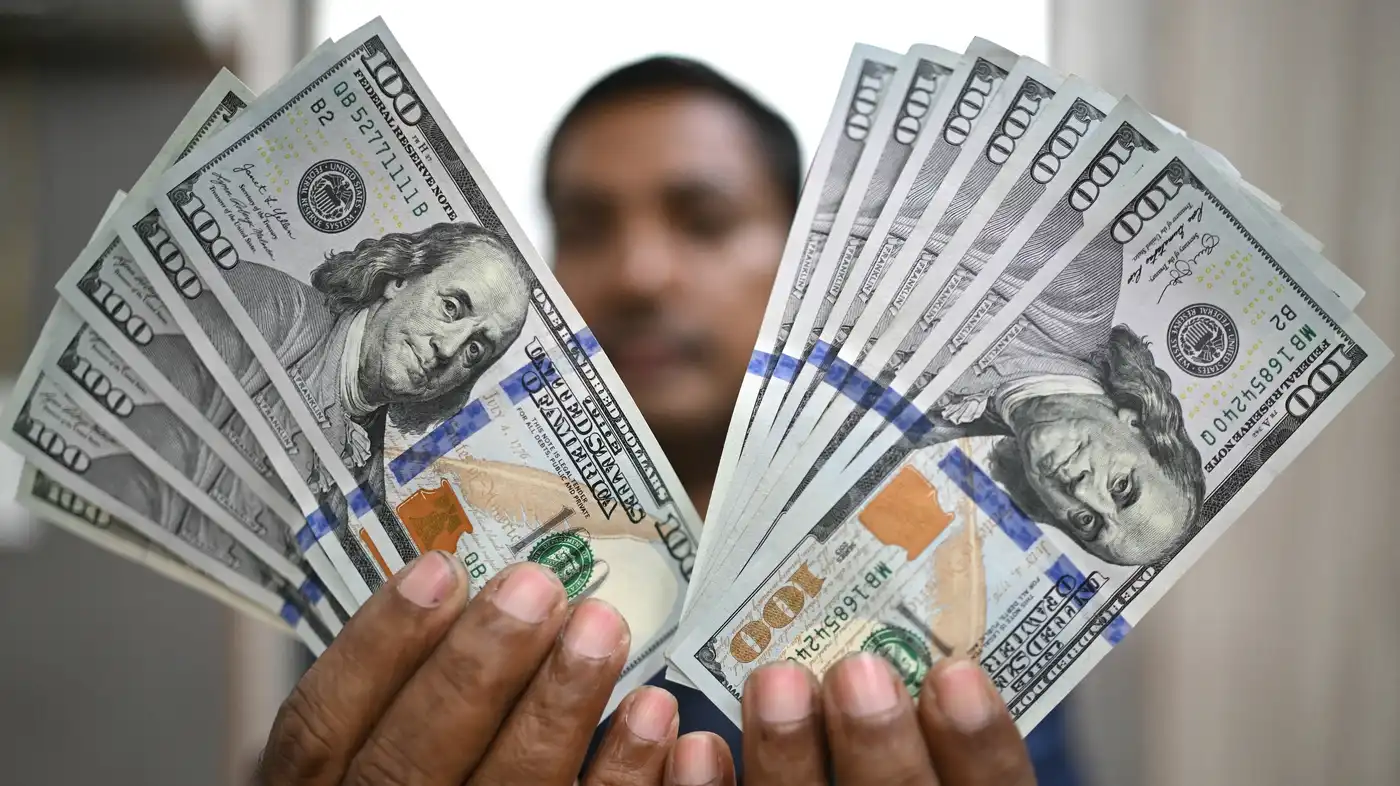
The Central Bank of Nigeria (CBN) has approved the participation of licensed Bureau De Change (BDC) operators in the Nigerian Foreign Exchange Market (NFEM), allowing each BDC to purchase up to $150,000 weekly.
The directive was contained in a circular dated February 10, 2026, and signed by the Director of the Trade and Exchange Department, Dr Musa Nakorji. The circular was addressed to authorised dealer banks and the general public.
According to the apex bank, the decision is aimed at improving foreign exchange liquidity in the retail segment of the market and meeting the legitimate needs of end users.
In recent months, Nigeria’s foreign exchange market has experienced pressure, with the gap between the official exchange rate and the parallel market rate widening significantly. For the first time in three years, the difference between the two markets exceeded N90, raising concerns among businesses and individuals who rely on foreign exchange for imports, school fees, medical bills, and travel expenses.
The CBN said the new measure would allow all duly licensed BDCs to access foreign exchange through any authorised dealer bank of their choice at the prevailing exchange rate.
“To ensure the availability of adequate foreign exchange liquidity in the retail segment of the foreign exchange market to meet the legitimate needs of end users, this is to inform market participants that all BDCs that are duly licensed by the CBN are allowed to access foreign exchange from the NFEM through any Authorised Dealer of their choice, at the prevailing exchange rate,” the bank stated.
This move marks another step in the CBN’s ongoing efforts to reform and stabilise the foreign exchange market after years of multiple exchange rates and tight currency controls.
The decision to allow BDCs to buy up to $150,000 weekly is widely seen as an attempt to narrow the gap between the official and parallel market rates.
In Nigeria, BDCs play an important role in supplying foreign exchange to small businesses and individuals who may not have direct access to banks. In the past, restrictions on BDCs reduced their ability to source dollars officially, leading many customers to rely more heavily on the parallel market, where rates are often higher.
The widening gap between the official and street rates has been a source of concern for investors and economic experts. A large difference between the two rates can encourage speculation and round-tripping, where individuals buy dollars at the official rate and sell at a higher rate in the parallel market.
By allowing BDCs to access dollars directly from the official market, the CBN hopes to increase supply at the retail level and reduce pressure on the parallel market.
Economic analysts say that improving dollar availability through formal channels may help stabilise the naira and restore confidence in the market. However, they also note that the success of the policy will depend on proper monitoring and compliance by market participants.
The circular made it clear that authorised dealer banks must carry out full Know-Your-Customer (KYC) and due diligence checks on BDC clients before selling foreign exchange to them.
“Authorised dealers are required to complete the necessary KYC and due diligence for their BDC clients in line with applicable regulations and the internal risk management framework,” the circular stated.
After completing these checks, banks may sell foreign exchange to BDCs in line with existing operational guidelines, but strictly within the approved weekly limit of $150,000 per BDC.
The CBN’s decision reflects a balancing act between expanding access to foreign exchange and maintaining strict control to prevent abuse.
Over the past few years, the Nigerian economy has faced foreign exchange shortages due to lower oil revenues, declining foreign investment inflows, and rising demand for imports. As Africa’s largest oil producer, Nigeria depends heavily on oil exports for foreign exchange earnings. When oil production or global prices fall, dollar supply often comes under pressure.
This situation has contributed to volatility in the exchange rate and rising costs for goods and services, as many items consumed in the country depend on imports.
Alongside the approval for weekly dollar purchases, the CBN has introduced strict reporting and transparency requirements for BDCs.
The apex bank directed that all licensed BDCs must ensure timely and accurate submission of returns to the CBN electronically, in line with existing regulations.
To prevent hoarding and speculative activities, the CBN warned that BDCs must not retain unutilised foreign exchange purchased from the market.
“Any unutilised balances are expected to be sold back to the market within 24 hours,” the circular stated.
The bank also stressed that BDCs are not permitted to keep funds purchased from the NFEM in their positions. This measure is designed to discourage operators from holding onto dollars in anticipation of further depreciation of the naira.
In addition, the CBN tightened settlement rules. It directed that all foreign exchange transactions by BDCs must be conducted exclusively through settlement accounts held with licensed financial institutions.
“Settlement of foreign exchange transactions by BDCs with Authorised Dealers and/or with end user customers shall be conducted exclusively through settlement accounts held with licensed financial institutions,” the circular added.
The bank also prohibited third-party transactions and limited cash settlements. According to the directive, third-party transactions are not allowed, and cash settlement of foreign exchange sales is limited to a maximum of 25 per cent of each transaction amount.
These measures signal that while the CBN is widening market access for BDCs, it is also strengthening oversight to ensure transparency and compliance.
Over the years, the CBN has repeatedly adjusted its policies on BDC operations. At different times, it suspended dollar sales to BDCs over concerns about misuse and market distortions. The latest move suggests a shift towards controlled participation rather than outright restriction.
Market watchers say the coming weeks will show whether the policy can help narrow the gap between official and parallel market rates and improve confidence in the naira.
For many Nigerians, the key concern is whether the decision will make it easier and cheaper to access foreign exchange for genuine needs. As the country continues efforts to stabilise its economy, the CBN’s latest action represents another attempt to manage dollar supply, curb speculation and support exchange rate stability.