
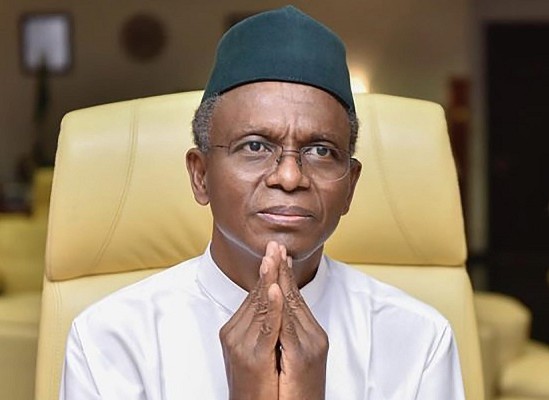
Former Governor of Kaduna State, Malam Nasir El-Rufai, has said he believes he could be arrested at any moment by the Federal Government led by the All Progressives Congress (APC).
El-Rufai made the statement on Wednesday during an interview with BBC Hausa, where he spoke about the current political climate in the country and his recent criticisms of President Bola Ahmed Tinubu’s administration.
The former governor, who is now a leading member of the opposition African Democratic Congress (ADC), said although he has not yet been arrested, some of his close associates have already been detained.
“Four people we worked with in Kaduna have been arrested; so it’s only a matter of time before they come for me too,” El-Rufai said during the interview.
He did not give details of the reasons for the arrest of his associates, but he suggested that the actions were politically motivated. According to him, the present administration is targeting members of the opposition.
The Federal Government and the APC have not officially responded to El-Rufai’s claims as of the time of filing this report.
El-Rufai served as governor of Kaduna State for eight years from 2015 to 2023 under the platform of the APC. During his time in office, he was known as a strong supporter of former President Muhammadu Buhari and was also seen as one of the influential voices within the ruling party.
However, since leaving office, his relationship with the APC leadership appears to have changed, especially after he became more vocal in his criticism of President Tinubu’s policies.
In the BBC Hausa interview, El-Rufai also alleged that there is pressure on some politicians to either defect to the ruling APC or remain in the party against their wishes.
According to him, the current political environment is tense, with many politicians allegedly being forced to make decisions out of fear.
He claimed that some individuals are joining the APC not because they believe in its policies, but because they want to avoid problems with federal authorities.
In recent months, Nigeria has witnessed a wave of defections from opposition parties to the APC. Political observers say such movements are common in Nigerian politics, especially when a party controls power at the federal level.
El-Rufai himself was once a strong member of the APC and played a key role in its activities in Kaduna State. His recent association with the ADC marks a major political shift.
The African Democratic Congress is one of Nigeria’s opposition parties. Though smaller than the APC and the Peoples Democratic Party (PDP), the ADC has been trying to attract notable political figures as it prepares for future elections.
El-Rufai’s comments are likely to add to ongoing debates about political freedom, party loyalty, and the use of state institutions in political matters.
Some political analysts believe that his statements may increase tension between the ruling party and opposition groups. Others argue that such public comments are part of Nigeria’s active political culture, where strong opinions are often expressed openly.
El-Rufai’s remarks come at a time when the Economic and Financial Crimes Commission (EFCC) is prosecuting former Attorney-General of the Federation, Abubakar Malami.
Malami, who served under former President Muhammadu Buhari, was recently arrested and is currently facing trial. The EFCC has accused him of abuse of office and money laundering. Authorities later rearrested him, adding allegations of involvement in terrorism financing.
Malami has denied all the allegations. He described the charges as a political witch-hunt, especially after his reported defection from the APC to the ADC. He is widely seen as a key figure among politicians who are critical of President Tinubu’s administration.
The EFCC is Nigeria’s main anti-corruption agency. Over the years, it has investigated and prosecuted many former governors, ministers, and other public officials. The commission says its actions are based on evidence and the law, not politics.
However, in Nigeria’s political history, arrests and investigations of top politicians often lead to claims of political targeting, especially when those involved are members of opposition parties.
The current situation has raised concerns among some citizens about the state of democracy and political tolerance in the country. Nigeria returned to democratic rule in 1999, and since then, the country has experienced both cooperation and conflict among political actors.
El-Rufai’s political journey has been marked by strong opinions and bold actions. Before becoming governor, he served as Minister of the Federal Capital Territory (FCT) from 2003 to 2007, where he carried out major reforms in Abuja. He has remained a prominent voice in national politics.
Whether his fears will materialize remains to be seen. But his comments have once again drawn attention to the growing political rivalry in Nigeria and the debate over the use of law enforcement agencies in political matters.